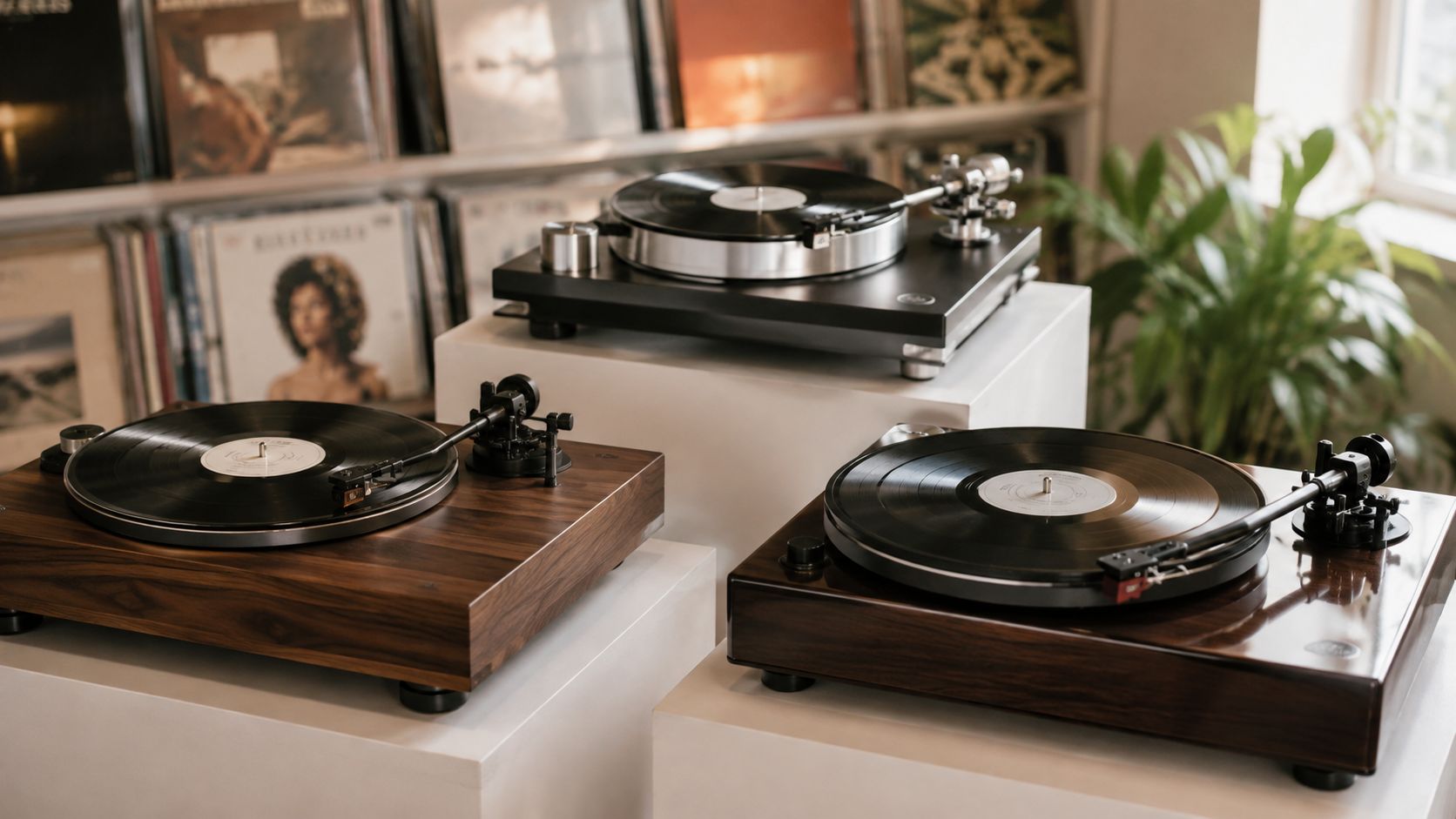
The popular advice is wrong: the best turntable for audiophiles isn't automatically the most expensive manual belt-drive deck with a naked motor and a tonearm that demands a small engineering degree. The best table is the one whose compromises fit your room, cartridge, phono stage, and listening habits.
I'm Marque Hersh, founder of Supermarket Sound. I care about the ritual, but I care more about the music surviving it. A turntable should give bass its shape, keep voices planted, and leave enough silence around cymbals that the recording can breathe. Price helps. Prestige doesn't.
Table of Contents
- Why the Audiophile Turntable Market Is Different Now
- The Four Engineering Tradeoffs That Actually Matter
- Belt Drive vs Direct Drive in the Real World
- The Best Audiophile Turntables by Price Tier
- The Case for Automatic Decks That Sound Serious
- Setup, Cartridge Match, and Getting the Sound Right
- Which Turntable You Should Actually Buy
Why the Audiophile Turntable Market Is Different Now
Vinyl isn't a nostalgic sideshow waiting for the last record collector to switch off the lights. In 2023, U.S. vinyl LP sales reached 40.5 million units, the highest annual total since 1986, while vinyl revenue exceeded $1.3 billion and stayed ahead of CD sales for a second consecutive year, according to reported turntable industry statistics. Global vinyl shipments were described as roughly 41 million units in 2024, keeping the format at multi-decade highs.
That scale changes the hardware. Manufacturers can justify better bearings, quieter motors, stiffer platters, and more carefully tuned cartridges at prices that would once have bought compromised machinery. The turntable market now supports real engineering across multiple tiers, not just expensive nostalgia furniture.
North America accounted for about 34% of global turntable revenue in 2024, while Canada's market was estimated above USD 42 million. The UK sold more than 6.2 million records in 2023, its strongest result in over 30 years, as outlined in turntable market analysis. Those figures don't tell you which deck sounds best in your room. They do explain why the floor has risen.
The new buyer isn't chasing the past
A lot of current buyers streamed first. They're not necessarily trying to recreate a childhood hi-fi system, and they don't want a museum piece with fussy controls and ceremonial setup. They want a serious source that makes physical media feel rewarding without turning every record into a maintenance appointment.
That shift has made entry audiophile mean something different. A good modern table needs stable speed, sensible isolation, a usable tonearm, and a cartridge that doesn't starve the rest of the chain. A beautiful plinth alone won't get the job done.
I've written a more focused guide to turntable sound quality because the key question isn't whether a deck looks expensive. It's whether the design keeps noise and mistracking away from the groove.
My buying rule: Spend on the parts that control the signal. Treat limited editions and decorative finishes as optional.
The best deck isn't the one with the loudest marketing. It's the one with tradeoffs you can live with.
The Four Engineering Tradeoffs That Actually Matter
A turntable's character comes from four load-bearing decisions. Drive type controls how the platter receives motion. Chassis design controls how the deck handles vibration. Tonearm geometry controls tracking. Cartridge matching determines whether the whole arrangement behaves like a system or a pile of expensive mismatches.
Drive type sets the mechanical argument
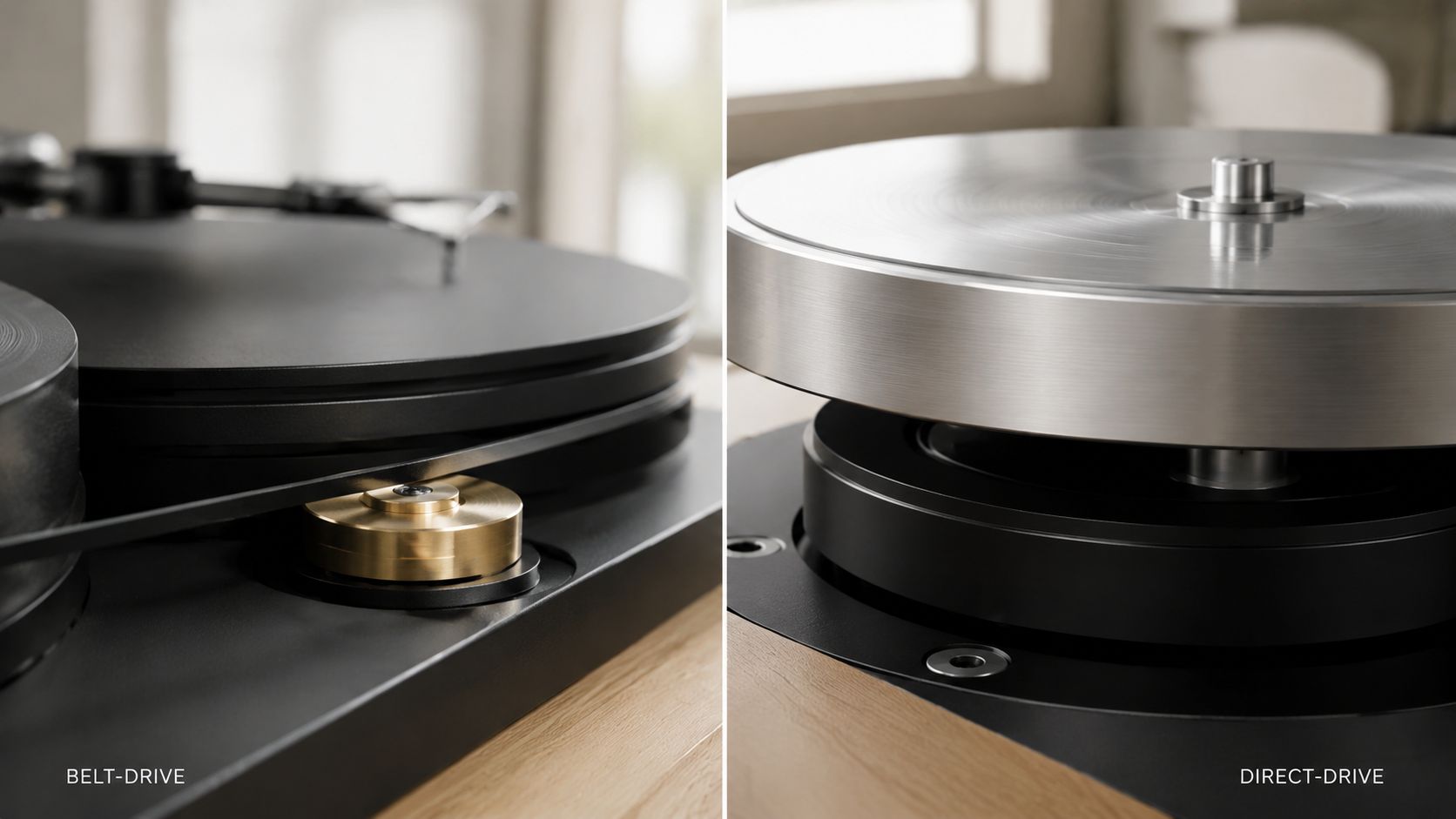
A belt-drive table isolates the platter from the motor with an elastic belt. Done well, that can produce a quiet, relaxed presentation with convincing low-level texture. The weakness is ownership. Belts age, motors need careful isolation, and a poor interface between motor and plinth can put vibration back into the signal.
A direct-drive table couples the motor to the platter. It starts quickly, holds torque confidently, and can deliver a more immediate, rhythmically firm sound. Modern servo control has dealt with many of the historical problems associated with motor cogging and rumble. The old belt-good, direct-bad argument belongs in the bin.
An idler-drive design uses a wheel to transfer motor force. It can sound forceful and alive, but it also asks more from maintenance and vibration control. You're choosing a mechanical personality, not a moral position.
Chassis philosophy changes the noise floor
A suspended chassis separates the platter and arm from outside vibration through a spring-based structure. That approach can create a spacious, unforced presentation, but setup and placement matter. A mass-loaded design uses weight and damping to resist vibration. It often sounds grounded and substantial, though the rack beneath it becomes part of the equation.
A light, rigid belt-drive deck and a heavy, damped deck can both work. The better choice depends on what your room and furniture are already doing.
Tonearm geometry is audible
Tonearm length, effective mass, bearing quality, and geometry affect tracking error and cartridge compatibility. Published examples include a J-shaped static-balance arm with a 247 mm effective length and less than 2.3° maximum tracking error, alongside another arm with 230 mm effective length, 22 mm overhang, and adjustable anti-skating, as shown in published tonearm and setup documentation.
Straight, J-shaped, and S-shaped arms can all work. What matters is whether the arm moves cleanly, holds adjustment, and suits the cartridge's compliance and mass.
Cartridge matching decides whether the table sings
Moving-magnet cartridges usually offer straightforward loading and replaceable styli. Moving-coil designs can extract more texture and spatial information, but they demand a phono stage with appropriate gain and loading.
That last point matters more than brand mythology. A great arm with the wrong cartridge is still the wrong front end.
Four dials. Every recommendation turns them differently.
Belt Drive vs Direct Drive in the Real World
The belt-drive versus direct-drive debate survives because it's easy to repeat and hard to finish. People hear a quiet belt table and call it organic. They hear a well-designed direct-drive table and call it immediate. Both descriptions can be true, but neither tells you which deck belongs in your system.
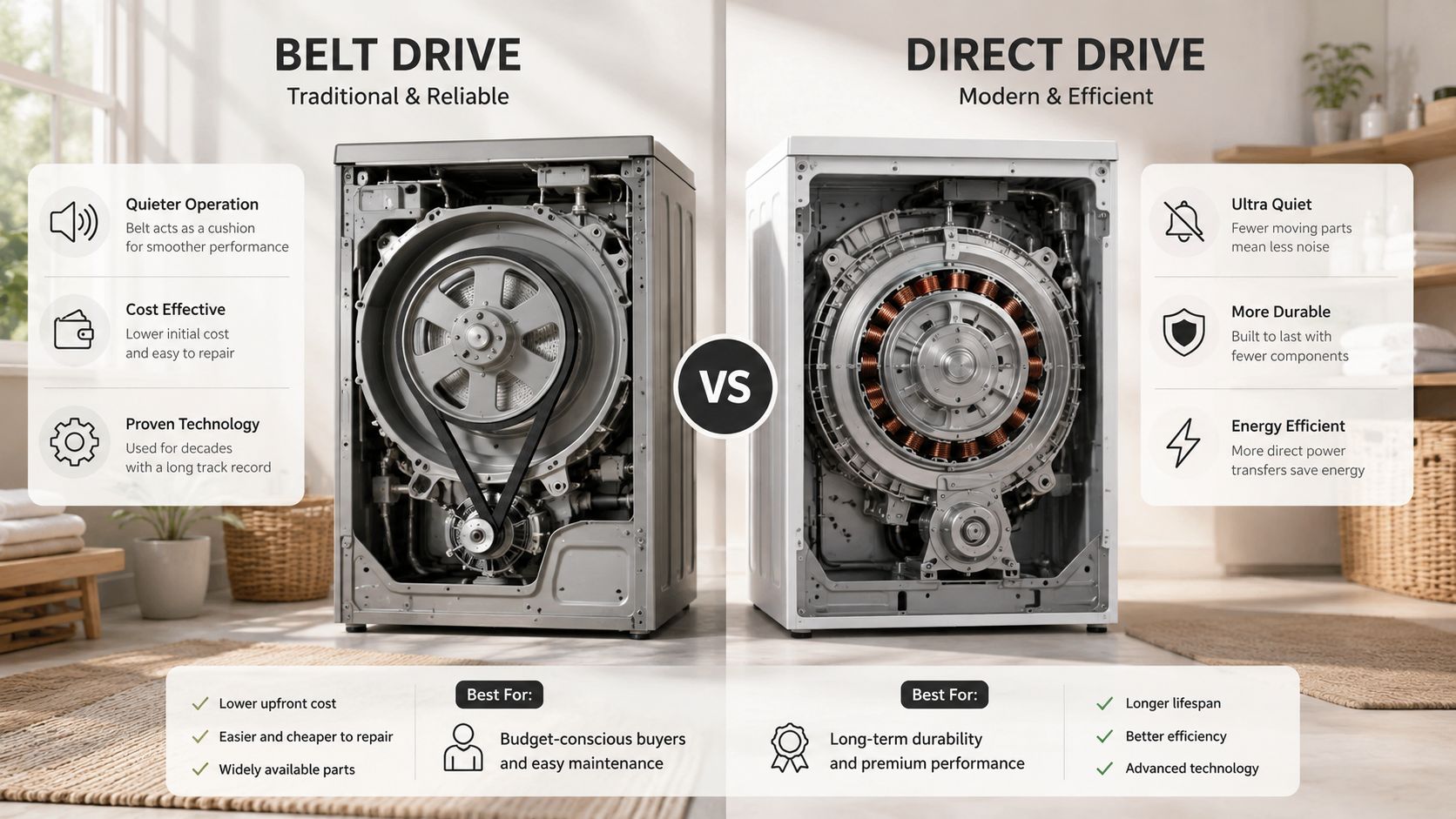
A good belt drive often gives me a darker background and more delicate separation around instruments. Bass can feel rounded rather than blunt, and small changes in vocal texture survive with less mechanical glare. A badly isolated belt-drive motor does the opposite. It pushes a faint gray film over the presentation, and the design label won't save it.
Direct drive brings a different strength. Start-up feels decisive, pitch tends to stay locked, and drum attacks arrive with less hesitation. A competent modern direct-drive implementation can sound clean and controlled rather than sterile. The engineering has moved on, even if some audiophile arguments haven't.
The useful line is lower than the mythology
Wow and flutter measure short- and long-term speed instability. A practical listener-focused range is often described as roughly 0.05% to 0.20%, while one published turntable specification lists 0.06% at 33 1/3 rpm, a value that sits comfortably in audiophile-friendly territory, according to the referenced turntable manual.
At mainstream prices, the audible difference between drive systems often matters less than the chassis, arm, cartridge, and setup. A table with a stable arm and sensible isolation will usually beat a theoretically superior motor attached to a resonant platform.
The blunt version: “Instant wow” and “tight bass” are marketing shortcuts. Listen to the whole mechanical system.
This video can help illustrate the mechanical distinction, but don't mistake an animation for a listening test.
Choose belt drive for isolation, graceful texture, and a clear upgrade path. Choose direct drive for speed confidence, torque, and daily-use toughness. Neither one gets a free pass.
The Best Audiophile Turntables by Price Tier
I'm not interested in pretending that one deck wins for everybody. A useful recommendation has to explain what the owner gets and what the rest of the system must provide.
| Tier | Model | Drive / Chassis | Tonearm / Cartridge Match | Best For |
|---|---|---|---|---|
| Entry audiophile | Rega Planar 3 RS Edition | Belt drive, rigid light chassis | RB330 arm, compliant moving magnet or suitable moving coil | Musical drive and simplicity |
| Entry audiophile | Technics SL-1500C | Direct drive, substantial chassis | Integrated arm, moving magnet cartridges and compatible coils | Quartz-locked speed and convenience |
| Mid tier | VPI Prime 16 | Belt drive, mass-loaded chassis | Unipivot arm, careful cartridge matching | Isolation, weight, and detail |
| Mid tier | Pro-Ject X8 | Belt drive, mass-oriented design | Low- to medium-compliance cartridge options | Clean, expansive presentation |
| Mid tier | Clearaudio Concept Active | Belt drive, integrated phono convenience | Matched cartridge approach | Simple high-quality integration |
| High tier | Linn Sondek LP12 | Suspended belt drive | Arm and cartridge chosen as a complete system | Reference systems and upgrade culture |
| High tier | SME Model 15 | Precision belt drive, rigid platform | High-quality arm, demanding cartridge matching | Pitch stability and low rumble |
| High tier | Acoustic Signature Double Neo | Mass-loaded belt drive | Flexible arm and cartridge combinations | Deep bass and system building |
Entry tier
The Rega Planar 3 RS Edition remains my default recommendation when the buyer wants musical rhythm, dynamic contrast, and minimal nonsense. It's a manual belt-drive design with a serious tonearm and a direct path to better cartridge choices. It doesn't flatter a weak setup, which is exactly why it remains useful.
The Technics SL-1500C makes more sense for someone who values quartz-locked speed, direct-drive authority, and practical operation. The MoFi MasterDeck belongs on the shortlist when built-in phono capability and a more feature-rich ownership experience matter.
For more guidance in this range, use turntables under $1,000 as a second opinion, not a substitute for cartridge matching.
Mid tier
The VPI Prime 16 brings mass, isolation, and a unipivot arm that can pull subtle spatial information from records when setup is handled properly. It sounds muscular and spacious, but it demands patience. The rest of your system needs enough resolution to justify the expense.
The Pro-Ject X8 offers a broad, composed presentation without turning ownership into a laboratory project. The Clearaudio Concept Active makes a strong case for integrated convenience when you want fewer separate boxes and still care about a clean, dimensional result.
High tier
The Linn Sondek LP12 remains an honest answer for listeners who want a suspended chassis and a platform that can evolve with the system. The SME Model 15 is the precision-first choice. Independent testing measured roughly -0.005% speed error at 33.33 rpm, with 0.01% peak-weighted wow and 0.02% peak-weighted flutter. Its rumble measured -75.5 dB through the groove and -76.5 dB through the bearing, using DIN-B weighting referenced to 5 cm/sec, as documented in the SME Model 60 laboratory report.
The Acoustic Signature Double Neo is for the listener who wants mass, scale, and long-term system building. High-end decks don't erase bad rooms or poor phono stages. They expose them.
The Case for Automatic Decks That Sound Serious
Manual operation became an audiophile virtue partly because early automation often sounded cheap. Extra mechanisms meant extra vibration, extra tolerances, and extra ways for the motor and return system to contaminate the signal. That history still shapes the culture, even though the engineering has improved.
The Rekkord F400 received top billing in the affordable and automatic category of StereoNET's 2026 awards, with the coverage treating serious automatic decks as no longer a compromise, as described in the 2026 turntable awards guide. That matters less as a trophy than as a sign that the old taboo has weakened.
Automation adds complexity, not automatic failure
An automatic deck needs a start cycle, a sensing system, and a return mechanism. Each component can introduce vibration or mechanical noise. Cheap implementations reveal that compromise through a flat soundstage, softened attacks, and a motor character that sits on top of the music.
A properly engineered automatic deck separates those functions from the platter and arm. Quiet control electronics, precision bearings, and sensible motor isolation can preserve the important things. Automation can then become a user feature rather than a sonic penalty.
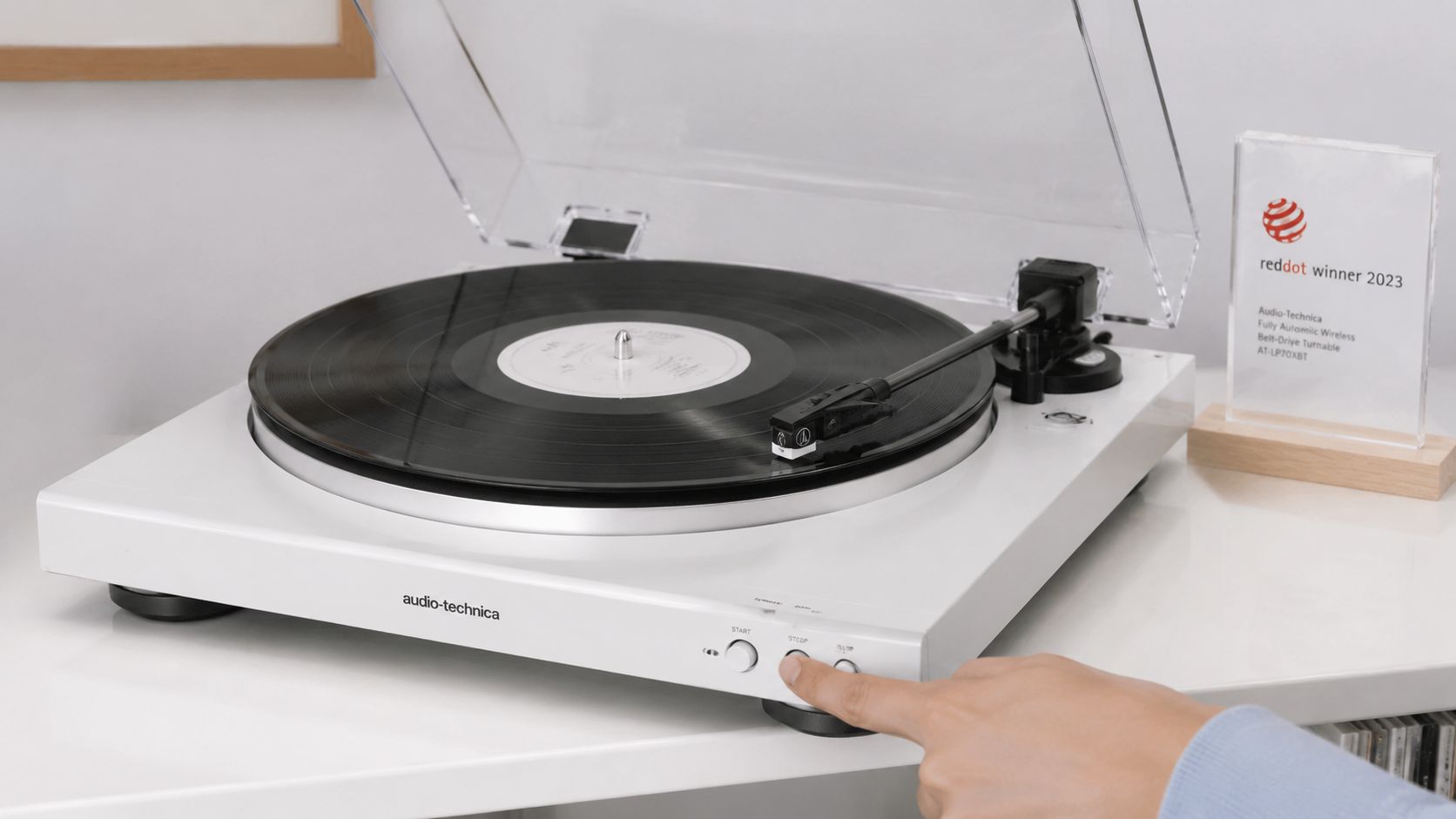
Convenience belongs in the performance conversation
If you play records every day, automatic return reduces stylus wear caused by a record spinning endlessly after the music ends. It also makes the format easier to share with people who don't want to hover over a tonearm like a bomb technician.
Manual decks still offer fewer moving parts and a purer mechanical path. That's a valid preference. It isn't a universal law.
The honest test: If automation keeps you listening longer and you can't hear its mechanism, it's doing its job.
The best automatic deck isn't an apology. It's a serious source with manners.
Setup, Cartridge Match, and Getting the Sound Right
A turntable only becomes a proper source after you set it up correctly. Level the plinth first, then work through tracking force, arm height, and cartridge alignment. The earlier choice of suspended or rigid chassis still matters, but these adjustments decide whether the design performs as intended.
Four adjustments protect the signal
Level the plinth first. Use a stable surface and a small spirit level. A tilted platform changes the arm's behavior across the record and can upset a suspension system.
Set tracking force with a digital stylus gauge. The counterweight scale gets you close, while a gauge measures what the stylus receives. Set the force to the cartridge maker's specified value, following this turntable setup guidance.
Adjust VTA with a record playing. Begin with the arm roughly parallel to the record surface, then listen. VTA changes stylus contact geometry and can move the tonal balance from thick to lean.
Align the cartridge with a proper protractor. Baerwald alignment uses published null points at 66 mm and 120.9 mm, with 16.21 mm overhang in the example. Stevenson and Löfgren B use different offsets because each makes a different distortion tradeoff.
Cartridge matching comes next. A high-output moving coil into a moving-magnet phono input can produce overload and noise. A low-compliance cartridge on a heavy arm can compromise tracking and blur the bass. Match cartridge compliance to effective arm mass, then confirm that the phono stage provides suitable gain and loading.
The Ortofon 2M Red on a Planar 3 is a straightforward pairing. It gives the arm an easy partner and keeps the system responsive. A Hana SL on the VPI Prime 16 demands more care, with arm mass, phono gain, and loading chosen together. It can retrieve impressive texture, but careless setup will show.
For a focused guide to turntable cartridge selection, start with the arm and phono stage, not the cartridge's reputation.
A costly deck paired with a weaker phono stage and less resolving speakers can sound worse than a modest table supported by stronger downstream equipment. Spend across the system. The deck starts the signal chain, but every later component must preserve what it retrieves.
Which Turntable You Should Actually Buy
Start with your room and habits, not the badge on the plinth.
A warm room with modest amplification and shelves heavy on jazz needs control without extra thickness. I'd choose a belt-driven, mass-loaded deck with a reasonably compliant arm. That combination gives bass body while keeping horns, brushes, and upright-bass texture from turning congested.
A reference system with resolving electronics wants a different approach. Choose a suspended-chassis belt drive and pair it with a low-compliance moving coil, provided the arm and phono stage can support that match. The reward is scale, quiet separation, and a more stable image. The demand is setup discipline.
A daily listener with hundreds of records who refuses to baby equipment should consider a serious automatic deck. You'll give up some mechanical simplicity, but you may gain more actual listening time. That trade is better than owning a purist table you avoid using.
Three buying paths
- You want rhythm and low fuss: Choose a rigid belt-drive table with a proven arm and a sensible moving-magnet cartridge.
- You want reference resolution: Choose a suspended or heavily isolated platform, then budget properly for the arm and phono stage.
- You want daily usability: Choose a well-engineered automatic deck and judge it by silence, tracking, and return behavior, not by audiophile folklore.
What Hi-Fi currently positions the Rega Planar 3 RS Edition as its best overall turntable, while TechGearLab's metric-based testing singled out the Pro-Ject Debut Carbon as its highest-scoring model, according to its turntable recommendations. That split proves the point. “Best” changes with the test, the listener, and the system.
Match the deck to the cartridge. Match the cartridge to the phono stage. Then listen.
Pick the recommendation path that fits your room and habits, shortlist the Rega Planar 3 RS Edition, Technics SL-1500C, VPI Prime 16, or a serious automatic alternative, and audition the complete front end before you buy. A turntable earns its place when the record disappears and the music stays.

