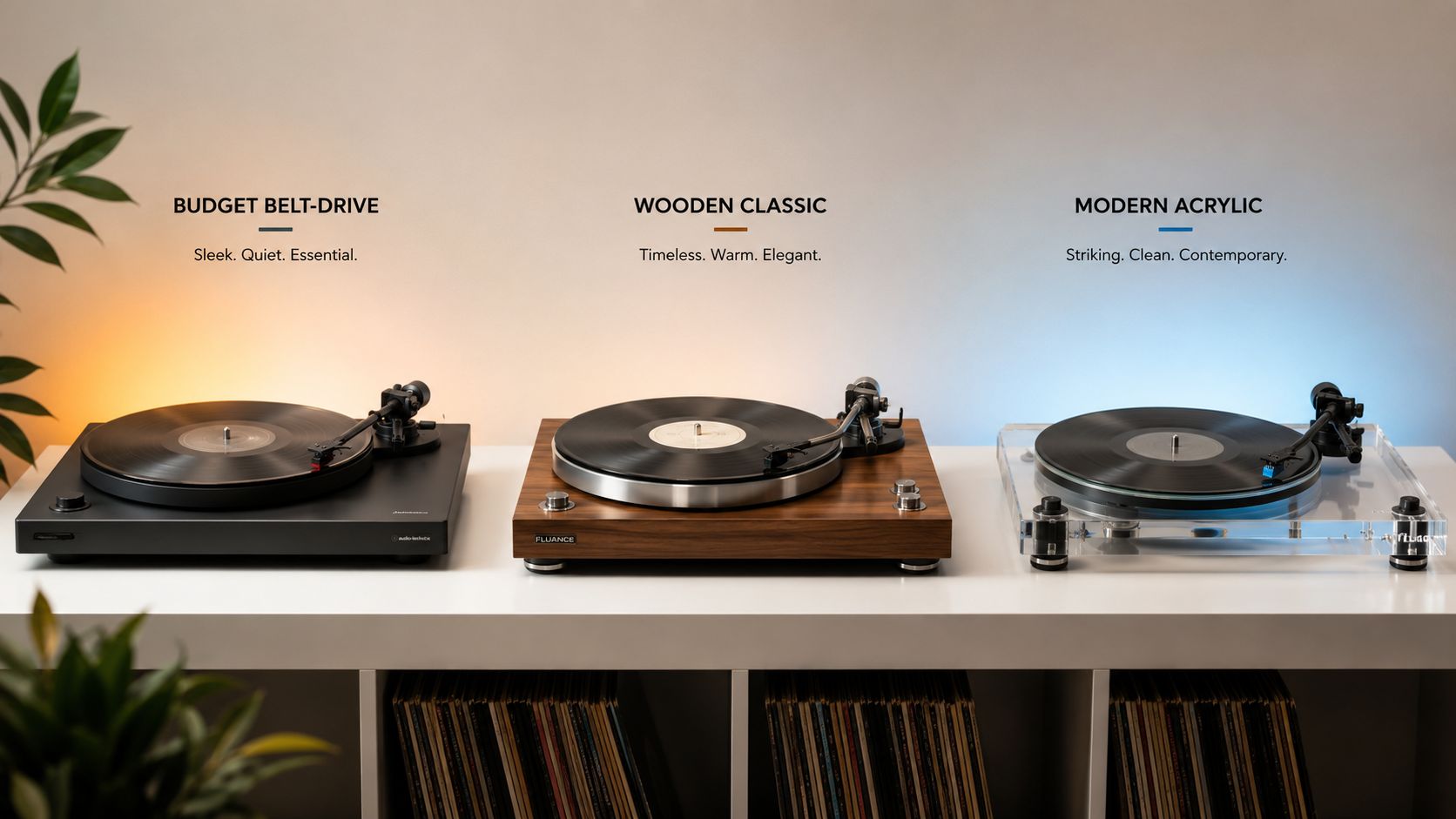
The $1,000 turntable is a lie. There isn't one “best” machine in this bracket, because the fight happens in the parts that make records sound alive, the tonearm, cartridge, isolation, and speed stability. Once you get into this tier, the difference is no longer whether the deck works. It's whether it keeps the stylus honest and lets the room keep its shape.
That's why the best turntables under 1000 aren't defined by flash. They're defined by engineering that survives contact with a real listening room. A cartridge can run from roughly $40 at the entry level to several hundred dollars for a serious upgrade, and that gap is exactly why this price range still offers so much value, the deck either supports the cartridge or strangles it. On the macro side, vinyl sales in the U.S. crossed $1 billion in 2025, the first time that's happened since 1983, which tells you this is not a dead hobby, it's a very active upgrade market, and the gear at this level has to earn attention, not just occupy shelf space. U.S. vinyl sales crossed $1 billion in 2025
This isn't a ranking. It's the ten decks I'd point a serious listener toward when the budget is real and the excuses are over.
Table of Contents
- 1. Audio-Technica AT-LP120X-USB
- 2. Pro-Ject Debut Carbon EVO
- 3. Technics SL-1200MK7
- 4. Music Hall MMF-2.3
- 5. Rega Planar 6
- 6. Thorens TD-402 DD
- 7. VPI Scout Scout Prime
- 8. Clearaudio Concept
- 9. Denon DP-400F
- 10. Sota Sapphire
- Top 10 Turntables Under $1000, Comparison
- Your Downstream Is Your Destiny
1. Audio-Technica AT-LP120X-USB
The AT-LP120X-USB is the workhorse I recommend when someone wants a deck that behaves like a tool, not a mood board. It's direct-drive, it gives you 33, 45, and 78 speeds, and it adds USB output for people who want to archive records without building a recording rig around the table. That's not sexy. It is useful.
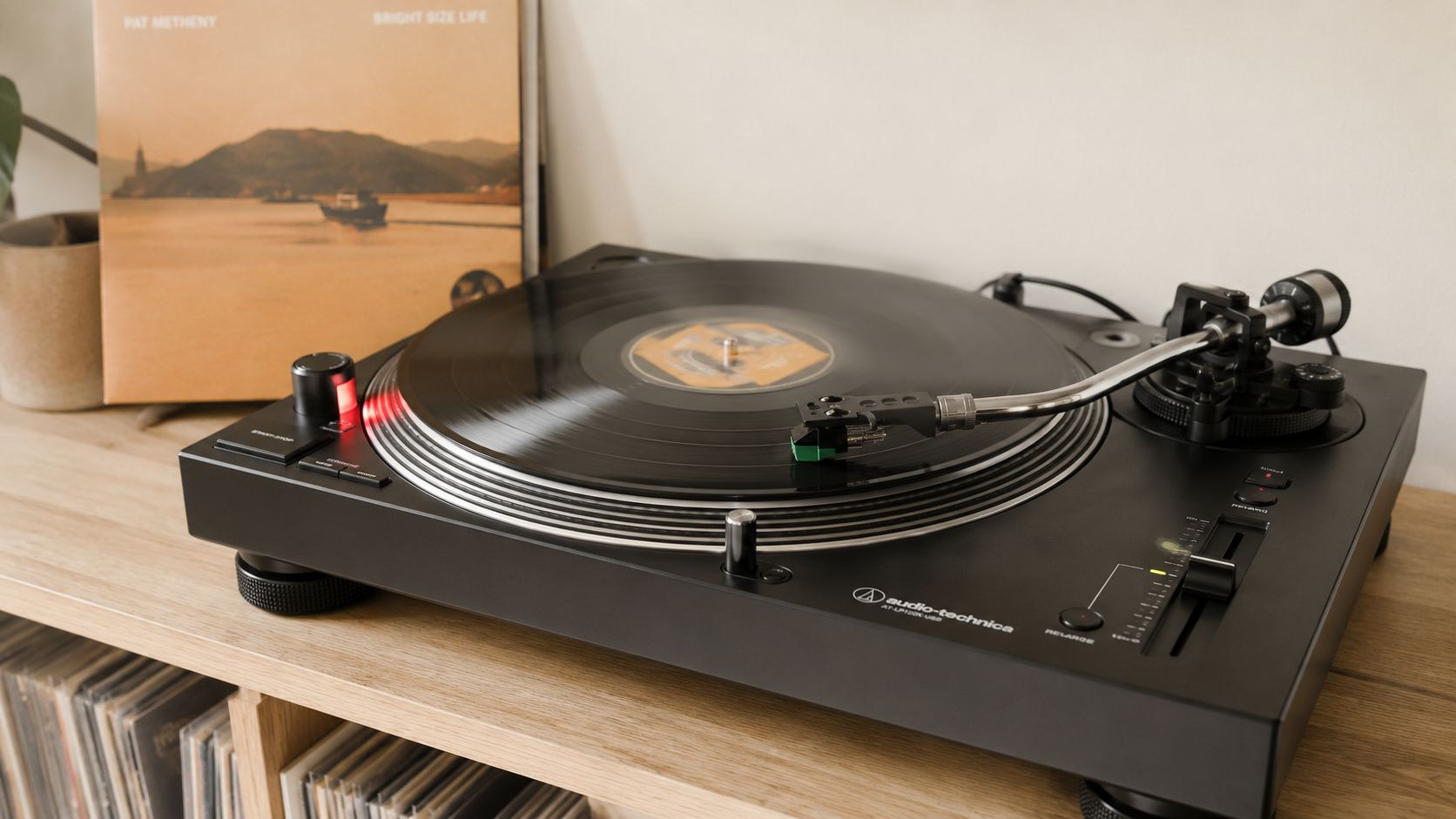
What it sounds like in a room is straightforward and steady. The platter stays composed, the pitch holds together, and the sound doesn't wobble when the music gets dense. I hear it as a deck that puts bass and timing ahead of romance, which is exactly what small studios, DJs, and people graduating from plastic all-in-ones usually need.
The upgrade that actually matters
Swap the cartridge first. Even a modest cartridge upgrade changes this table more than a pile of cosmetic tweaks ever will. If you've got a proper phono stage, use it through the balanced chain you trust, because USB is convenient, not the cleanest path.
Practical rule: isolate the deck properly or you'll hear the motor's honesty in the wrong way. The turntable won't hide a bad shelf.
For buying guidance around the rest of your system, I'd pair this with the right amp for a turntable before chasing a prettier cartridge box. This is a deck that rewards smart downstream choices.
2. Pro-Ject Debut Carbon EVO
The Debut Carbon EVO is what happens when minimalism stops being a pose and starts being a virtue. The single-piece carbon-fiber tonearm keeps the presentation light on its feet, and the included Ortofon 2M Black tells you Pro-Ject expects you to listen, not admire a pile of buttons. It's a belt-drive table that gets out of the way and lets the record open up.
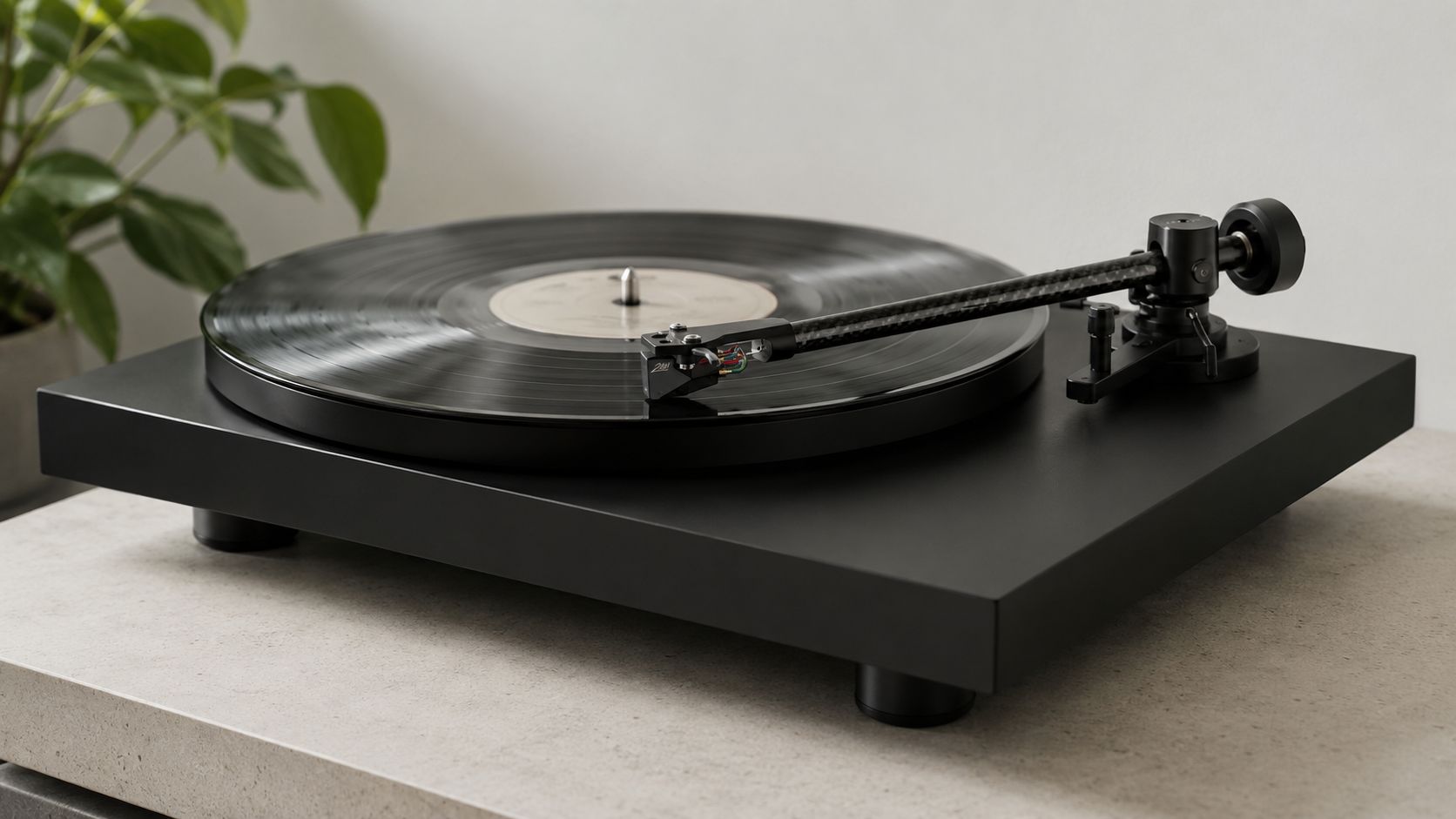
To my ears, this one disappears better than most decks in the class. The noise floor stays low, the midrange breathes, and the whole thing has that calm, uncluttered quality that makes late-night listening dangerous. If you've outgrown fiddly starter gear and want to hear the mastering instead of the machine, this is a strong answer.
Keep the chain quiet
The signal path on this deck is lean, which means upstream noise shows up fast. A quiet preamp matters here more than fancy footwork later. If you want the table to show its full range, put it on a proper isolation platform and let the suspension do its job.
The Debut Carbon EVO rewards cleanliness. Not ceremony. Cleanliness.
If you want setup basics without turning vinyl into a weekend project, this beginner turntable setup guide is worth your time. The deck itself is simple. The system around it still matters.
3. Technics SL-1200MK7
The Technics SL-1200MK7 is the one people mythologize for a reason. It's direct-drive, built like a reference tool, and its 0.02% wow and flutter spec is the kind of number that means something when the platter has to stay nailed down under pressure. This isn't a decorative audiophile object. It's a precision machine that happens to play records beautifully.
What gives it authority is the way it holds the center of the music. Drum transients land cleanly, piano doesn't smear, and damaged records sound less ragged than they do on lighter decks. I hear it as relentless, not warm. That's the point. It tells the truth without decorating it.
Who actually needs this much stability
Serious DJs know why this matters. So do mastering engineers who want a reference deck that doesn't drift or flinch. And collectors who've already lived with softer, prettier tables usually hear the difference immediately, this thing makes lesser decks sound slightly sleepy.
The stock cartridge is fine to start with, but the key lesson here is pitch control. Learn it. Even if you never mix a record into another one, understanding pitch adjustment changes how you hear speed stability in every deck after this.
The platter weight and motor stability also make this deck unusually kind to beat-up vinyl. On a lighter table, bad pressings can fall apart. On this one, they just reveal their flaws more clearly. Good. That's the job.
4. Music Hall MMF-2.3
The Music Hall MMF-2.3 is for listeners who want honesty without theater. Belt drive, low-mass tonearm, and a plinth that manages vibration instead of pretending paint solves physics. It doesn't try to be a status object. It tries to let records play.
To my ears, this is a warm, grounded deck with enough control to avoid sounding sleepy. The bass doesn't lurch, the mids stay human, and the top end doesn't spit. It's the kind of table that makes apartment systems easy to live with because it leans toward subtlety instead of glare.
Why the plinth matters more than the brochure
The plinth is the load-bearing part here. Good damping lowers the noise floor in a way your ears understand before your brain names it. That's why this deck works so well for people who want to spend more time listening and less time checking whether the whole setup is “optimized.”
The stock cartridge is fine for a long stretch, then a better cartridge wakes the whole thing up. A Grado Gold or Sumiko Blue Point style upgrade gives it more color and presence without turning it brittle.
If your phono stage is noisy, this turntable will tell on it immediately.
That's not a fault. That's a filter. Better turntable sound quality starts with the chain, not with wishful thinking.
5. Rega Planar 6
The Rega Planar 6 is load-bearing design done right. Every part earns its place, and nothing is there just to pad the price. The RB330 tonearm is the star, and the Elys 2 cartridge is matched to the arm in a way that makes the whole system feel deliberate instead of assembled. This deck doesn't flatter sloppy setup. It rewards good ones.
What it sounds like is clean, quick, and unsmeared. Rega tables have a way of making other decks sound as if someone laid gauze over the speakers, and the Planar 6 keeps that edge. Bass lines stay readable, timing feels taut, and transient detail comes through without turning thin.
Use the right electronics or waste it
This is not the place for a bargain-bin preamp. A decent phono stage, like a Rega Fono MM or anything in that league, lets the table keep its speed and focus. Pair it with neutral amplification and speakers, and the deck pays you back in clarity instead of body blow bass.
Isolation matters too. A proper shelf or wall mount can pull more detail out of the grooves than any shiny accessory. The deck already gives you the floor. Don't choke it.
I'd call this the serious listener's choice, not the showpiece choice. Under a grand, it's one of the strongest values around if your system already knows what it's doing.
6. Thorens TD-402 DD
The Thorens TD-402 DD is compact, but it doesn't sound small. That's the useful distinction. The low-resonance plinth and damped tonearm keep the presentation composed, and the direct-drive approach gives it a kind of calm certainty that works especially well when space is tight and the room is unforgiving.
Small desks and apartment shelves can make otherwise decent turntables sound cramped. This one resists that. It keeps image boundaries intact and doesn't let the bass smear across the furniture.
Tight space, serious ears
If you've got powered speakers on a desktop or a small room that doubles as an office, this is a very sane choice. It behaves like a proper hi-fi component, not a compromise dressed as convenience. I like that about it.
Cartridge compatibility deserves a little homework, because Thorens doesn't hand you a lazy answer and call it a day. Check support before buying, then place it on a firm surface and stop there. Its own damping does a lot of the heavy lifting.
A compact deck only works if it stays physically calm. This one does.
The speed control is there for fine tuning, which matters more than people admit when the wall power isn't perfect. The result is a table that feels engineered, not marketed.
7. VPI Scout Scout Prime
The VPI Scout Scout Prime is American turntable thinking in its purest form, no apologies and lots of metal. The gimbal arm, proprietary motor isolation, and heavyweight platter all push toward one goal, keep the record stable and let the rest of the system deal with the consequences. It's the kind of deck that makes good pressings feel worthy of the trouble.
Sound-wise, this one gives you scale and grip. Dynamics hit harder, complex recordings hold together, and the bass has real authority without turning bloated. I hear it as a deck for people who already know what their collection contains and want to stop second-guessing the front end.
Use it with real cartridges
The Scout Prime is too good to be held back by a budget cartridge. Move up to something in the Sumiko Celebration neighborhood or better, and the deck stops merely impressing and starts making sense. VTA adjustment matters here too, because this table rewards exact cartridge setup more than casual placement.
A proper record weight adds control, especially on older pressings that aren't perfectly flat. It sounds like a small thing until you hear the image lock in.
This is for serious collectors, not tourists. If your amplification is already strong, the Scout Prime gives you a front end that won't crumble under the rest of the chain.
8. Clearaudio Concept
The Clearaudio Concept is German precision without the usual intimidation. It's a complete system in one box, and that matters because a lot of people don't want a science project. The unipivot tonearm, ceramic platter, and onboard preamp all make the table easier to live with than its pedigree might suggest.
It sounds refined. Not soft, refined. The kind of refinement that keeps textures distinct and lets vocals sit in their own pocket without hardening the edges. If you swap cartridges often, this deck is one of the friendliest ways to do it without turning setup into a ritual.
Don't overdo the accessories
The ceramic platter already damps itself, so stacking more isolation under it isn't automatically an upgrade. Let the design work. Use the fluid damping correctly, tune it for your cartridge weight, and the deck settles into a clean, articulate presentation.
The internal preamp is competent, and I'm not going to sneer at a part that does its job. If you later move to an external stage, fine, but this table doesn't require you to rush there just to make it listenable.
It suits listeners who want control without complexity. That combination is rare enough to matter.
9. Denon DP-400F
The Denon DP-400F is for people who want to play records without building a ritual around it. Fully automatic cueing, auto-stop, a built-in preamp that doesn't get in the way, and a belt-drive platform that sounds more composed than the feature list suggests. It's practical in the best sense.
What it sounds like is calm, clean, and unfussy. You don't hear it reaching for attention. You hear the record, which is the whole idea. For first-time buyers escaping all-in-one plastic boxes, that alone feels like a revelation.
Busy people need this more than audiophiles like to admit
If your day is already full, a table that starts, plays, and stops without drama will get used more often. That matters. The best turntable is the one that leaves the sleeve open and the stylus moving instead of waiting for a free Saturday.
The internal preamp gives you an easy start, and the RCA outs let you bypass it later if you want to move up the chain. If you ever upgrade the cartridge, let a shop handle the work. A careless solder job turns convenience into regret very quickly.
This is the deck I'd give someone who wants vinyl in their life without turning the habit into homework. Simple wins.
10. Sota Sapphire
The Sota Sapphire is the argument for why precision matters when the rest of the system is already serious. The vacuum platter system grips records tightly, the suspension isolates properly, and the geometry has the feel of something refined over a long stretch of real use. This deck doesn't romanticize bad records. It exposes them.
That sounds harsh until you hear what a good pressing does through it. Then it becomes addictive. The Sapphire gives you the bass texture, the air around instruments, and the ugly truth when the mastering is poor. There's no syrup here.
This deck tells the truth on purpose
If you have a big collection with both great pressings and bad ones, the Sapphire is brutally instructive. It doesn't smear flaws into charm. It shows you the difference between a record that was handled with care and one that wasn't.
The vacuum system needs maintenance, so stay on top of the manual and don't pretend it's a forget-it machine. It also wants a good preamp and a cartridge that can carry its load. Give it those things and it becomes a reference tool.
It even handles 78 RPM for collectors with shellac. That alone makes it unusually serious for this bracket. Not forgiving. True.
Top 10 Turntables Under $1000, Comparison
| Model | Implementation complexity | Resource requirements | Expected outcomes | Ideal use cases | Key advantages |
|---|---|---|---|---|---|
| Audio-Technica AT-LP120X-USB | Low, plug-and-play with simple setup | Minimal: USB or phono input; isolation recommended; optional cartridge upgrade | Reliable, punchy sound with solid speed stability; good for archiving | Small studios, DJs, home upgraders | Direct-drive, USB, switchable preamp, durable value |
| Pro-Ject Debut Carbon EVO | Medium, manual belt-drive; limited adjustability | External preamp preferred; included Ortofon 2M Black cartridge; isolation platform helps | Wide soundstage, detailed analog clarity | Audiophiles who want minimalism and sound quality | Carbon tonearm, high-quality included cartridge, low vibration |
| Technics SL-1200MK7 | Low–Medium, straightforward but feature-rich | Good preamp or integrated system; no USB; sturdy placement | Exceptional speed stability and precise tracking | DJs, mastering engineers, precision-focused collectors | Industry-leading speed stability, rugged build, pitch control |
| Music Hall MMF-2.3 | Low, simple belt-drive, few tweaks | External preamp recommended; easy cartridge swaps | Warm, musical presentation with reliable tracking | Casual collectors, living-room systems, budget upgraders | Solid construction, musical voicing, user-friendly |
| Rega Planar 6 | Medium, requires precise setup and proper isolation | External preamp required; Elys 2 cartridge included; good speakers | Clean, transparent playback with immaculate tracking | Audiophiles with existing electronics seeking transparency | Exceptional tonearm geometry, factory-tuned cartridge, clarity |
| Thorens TD-402 DD | Medium, compact direct-drive with some setup nuance | External preamp; solid surface/isolation; check cartridge compatibility | Neutral, stable playback in a small footprint | Small apartments, desktop setups, upgraders | Compact form factor, damped arm, Swiss engineering |
| VPI Scout Prime | Medium–High, gimbal arm learning curve and adjustments | Quality preamp and likely cartridge upgrade; higher budget (~$900+) | Heavy, revealing presentation that rewards good recordings | Experienced audiophiles, large collections, high-end systems | Gimbal tonearm, strong motor isolation, VTA adjustment |
| Clearaudio Concept | Medium, unipivot needs setup patience; all-in-one simplifies use | Integrated preamp (bypassable); cartridge upgrades possible | Refined, transparent playback with cohesive integration | Space-limited listeners wanting a near-complete system | Integrated transparent preamp, ceramic platter damping, user-friendly design |
| Denon DP-400F | Low, fully automatic; minimal setup | Built-in preamp and AT95 cartridge; low maintenance | Convenient, honest sound for casual listening | Busy listeners, first-time buyers, gift purchases | Fully automatic operation, good internal preamp, strong value |
| Sota Sapphire | High, vacuum platter and suspension require maintenance | External preamp, high-quality cartridge, strong isolation; higher budget | Extremely revealing, reference-grade accuracy; unforgiving of poor sources | Serious collectors, mastering engineers, reference systems | Vacuum platter grip, three-point suspension, exceptional clarity |
Your Downstream Is Your Destiny
Don't let the turntable be the last decision. A great deck feeding a mediocre phono stage is a waste of potential, because everything downstream inherits the signal. The cartridge traces the groove, the arm keeps it steady, the preamp shapes the first real voltage, and your speakers decide whether all that care sounds like music or just expensive restraint. That chain is the whole game.
The market keeps pretending that the deck alone is the hero because that's easier to sell. It isn't. A $500–$999 turntable can absolutely outperform far pricier vintage gear in speed stability, wow-and-flutter control, and setup convenience, but only if the rest of your system stops sabotaging it. That's the floor I care about, the one where engineering beats nostalgia and the record starts sounding like it should.
Buy the turntable that matches your room and your tolerance for tinkering. If you want speed and utility, the AT-LP120X-USB makes sense. If you want a quieter, more revealing listen, the Debut Carbon EVO or Planar 6 is the better move. If you want reference honesty, the Technics, VPI, or Sota answer harder questions. There's no trophy for choosing the wrong personality because it looked good in a photo.
I'd start with the deck, then fix the preamp, then stop buying decorative nonsense. If you want help building the rest of the chain around one of these picks, read the related guides on Supermarket Sound, choose the front end that fits your room, and play a record tonight.

