People searching for the best turntable sound quality are usually asking the wrong question. Not because the question is stupid, but because the market trained them to hunt for a winner in a category where the winner changes the second you swap a cartridge, misalign a stylus, move the speakers, or drop the deck on a wobbly floor.
My take is simple. There is no single best turntable. There is only a better or worse system, and analog punishes lazy matching harder than almost any other format. If that sounds less sexy than a neat top pick, good. Sexy is what marketing writes when physics gets in the way.
Table of Contents
- The Search for Best Is a Search for Nothing
- The Foundation Is Mechanical Silence
- Your Cartridge and Tonearm Trace the Signal's DNA
- System Synergy Is Not Optional
- The Room and Speakers Have the Last Word
- Stop Shopping and Start Auditioning
The Search for Best Is a Search for Nothing
The phrase best turntable sound quality survives because it sells affiliate pages, not because it describes reality. Analog playback is not a toaster ranking. It's a chain of interdependent mechanical and electrical decisions, and one weak link doesn't just lower performance. It changes the character of the whole presentation.
There are no statistically valid, universally accepted measurements that define “best turntable sound quality” because performance depends on an interacting chain of variables, and major industry publications avoid declaring an absolute “best” because listening tests vary wildly based on cartridge, alignment, and room acoustics. That's the honest floor of the conversation.
Great Analog Sound Is Built, Not Bought
A turntable is only one actor in a relay. The tonearm has to control resonance. The cartridge has to suit the arm. The phono stage has to load the cartridge properly. The support under the deck has to keep stray vibration out. Downstream gear inherits whatever happens at the groove.
If the first steps are wrong, everything after them is cleanup.
Best isn't a product category. It's a compatibility outcome.
That's why the usual advice falls apart. People obsess over drive type, plinth material, or brand mythology as if any one of those is load-bearing by itself. It isn't. A lovely deck with a mismatched cartridge and sloppy setup can sound pinched, vague, and rhythmically dead. A saner combination can sound grounded, spacious, and alive.
Stop Asking the Wrong Retail Question
The useful question isn't “which model is best?” The useful question is this:
- Mechanical fit: Will the arm and cartridge behave together?
- Electrical fit: Will the phono stage load the cartridge correctly?
- Practical fit: Can I place this thing where the room won't kick it around?
That isn't less romantic. It's more honest.
If you're tired of marketing fluff, good. That means your ears are probably ready.
The Foundation Is Mechanical Silence
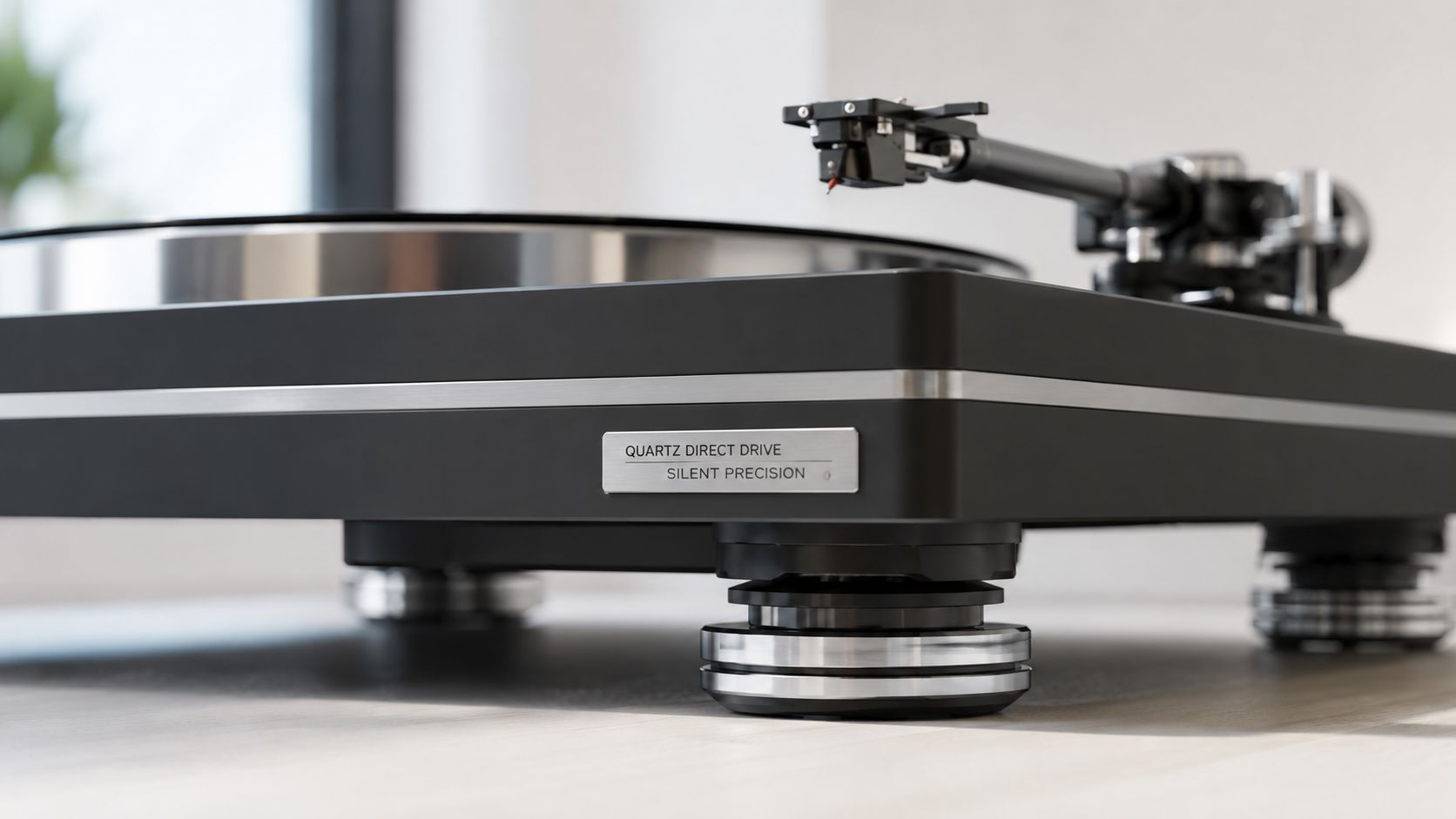
A turntable doesn't make sound. It prevents damage. That's its essential task. Everything glamorous about vinyl sits on a very unglamorous requirement. The platform has to stay quiet while the stylus reads absurdly small groove information without the rest of the machine joining the performance.
The Turntable's Real Job
A turntable's sound is shaped by its mechanical resonance, which must stay between 8 to 12 Hz. Outside that band, pitch instability creeps in. Wow and flutter over 0.1% is easily perceptible, while high-end designs get that down below 0.03% through better damping and materials. That isn't trivia. That's the difference between a piano note hanging in the air and a piano note sounding seasick.
When I hear a deck get this wrong, it doesn't always announce itself as a dramatic flaw. Sometimes it's subtler. Bass loses shape. Sustained notes wander. The music stops locking together. Rhythm goes soft at the knees.
For anyone still sorting the basics, my guide to turntable setup for beginners covers the practical side.
Three Load-Bearing Parts
The plinth, platter, and motor are the structural bones here. Not décor. Not brochure bait.
| Part | What it must do | What happens when it fails |
|---|---|---|
| Plinth | Resist and dissipate resonance | The deck adds haze and low-level smear |
| Platter | Provide rotational stability and inertia | Notes lose steadiness and image focus |
| Motor | Drive consistently without polluting the system | Vibration bleeds into the signal |
A good plinth isn't trying to look expensive. It's trying to avoid singing along. If the chassis stores energy and releases it back into the cartridge, you get a gray film over everything. Texture flattens. Space shrinks.
A good platter isn't there for visual drama either. Its mass helps smooth speed irregularities. That's why heavy platters often make music feel calmer and more anchored, assuming the bearing and motor can support the load without complaining.
Practical rule: If a turntable can't stay mechanically quiet, nothing you bolt onto it will turn it into a reference source.
Then there's the motor. It is often where cheap design reveals itself. A noisy or poorly isolated motor starves the signal before the phono stage ever sees it. You may hear that as grit, as a low-level fuzz behind notes, or as timing that never quite settles.
Mechanical silence is the floor. No floor, no house.
Your Cartridge and Tonearm Trace the Signal's DNA
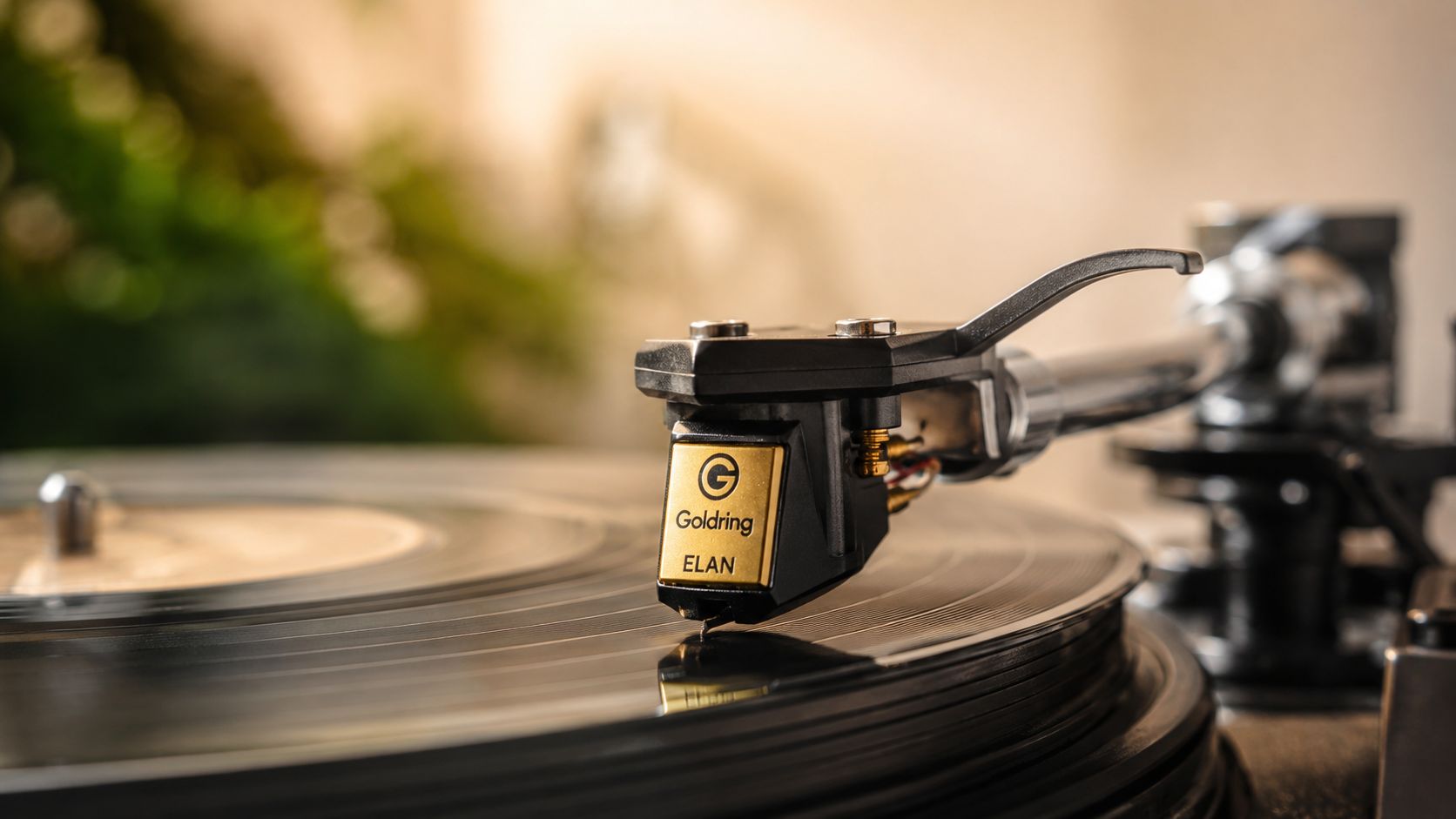
This is the fragile end of vinyl playback. The cartridge and tonearm aren't accessories hanging off the side of the turntable. They're the point where groove modulation becomes electricity. If that conversion is compromised, the rest of your system is just amplifying a mistake.
The First Contact Decides Everything
To my ears, cartridges don't just differ in detail. They differ in posture. Some push the midband forward and make drums feel punchy and tactile. Others pull more air out of the room and sketch edges with finer lines. Neither is automatically “better.” The problem starts when people treat those sonic traits like independent personality quirks instead of system behavior.
The tonearm's job is to let the cartridge move correctly, not editorialize. A bad arm either over-controls or under-controls. One sounds stiff and constipated. The other sounds loose, blurry, and annoyingly impressed with its own “warmth.”
If you're building around vinyl seriously, pairing it with the right downstream electronics matters too. That's where a sensible amp for turntable matching stops being a side quest and becomes part of the main build.
Loading Is Not Nerd Theater
The electrical relationship between cartridge and phono preamp shapes the sound directly. For moving magnet cartridges, 47 kΩ is the standard load. Miss that by 10%, and you can alter high-frequency response by up to 2.5 dB. That's not academic. That's enough to turn cymbals from crisp to splashy, or from open to shut-in.
For moving coil cartridges, improper impedance matching can reduce channel separation by 3 to 5 dB and introduce measurable distortion. Again, not a theory problem. A listening problem. The stage collapses inward. Images blur. Transients lose snap.
Here's a useful walkthrough before you tweak anything:
Downstream Can't Repair a Starved Signal
Spec-sheet shopping becomes comical. People will spend hours comparing materials and branding, then shrug at cartridge loading as if it's some monk-level ritual for forum lifers. It isn't. It's load-bearing.
- If the top end is off, don't assume the cartridge “just sounds like that.”
- If imaging is vague, don't blame the pressing first.
- If transients feel sleepy, don't rush to swap speakers.
Start at the source interface. The cartridge is generating the signal. The phono stage is receiving it. Get that handshake wrong and every downstream component inherits the error.
A bad cartridge-to-phono match is like shooting through a dirty lens, then arguing about the projector.
That's why I don't separate mechanics from electronics in analog. You can't. The stylus is tracing motion, the arm is controlling behavior, and the phono stage is deciding what that motion becomes.
That's the DNA.
System Synergy Is Not Optional
A lot of vinyl systems fail in a boring way. No explosions. No obvious defect. They just never sound settled. Bass gets lumpy, tracking feels uneasy, and the whole thing has that expensive-but-confused quality that makes people start chasing cables instead of fixing the actual mismatch.
Good Parts Can Make a Bad System
The biggest blind spot is the relationship between cartridge compliance and tonearm effective mass. People buy “good” parts in isolation, then act surprised when the combination behaves like a shopping cart with one busted wheel.
The non-linear relationship between compliance and arm mass is responsible for an estimated 40% of mid-tier system failures in real-world listening, even when the spec sheets seem to align, according to this turntable buying guide on cartridge and tonearm matching. That's a brutal number, but it tracks with what I hear all the time. Systems that should work on paper and don't quite land in the room.
A high-compliance cartridge on a heavy arm can turn bass into a wobble. A low-compliance cartridge on a light arm can sound strained, dry, and oddly underpowered. Neither failure looks dramatic in a product photo. Both are obvious once the needle drops.
Ask This Before You Buy Anything
The smarter question is not “belt drive or direct drive?” That question survives because it's easy to sell. The smarter question is whether your arm and cartridge will produce a resonant frequency safely between 8 and 12 Hz.
Ask these instead:
- What is the cartridge compliance at 10 Hz? That's the number that helps tell you how springy the suspension really is in use.
- What is the arm's effective mass? Not the marketing summary. The useful figure.
- Where will the resonance land? If it falls outside the safe band, stop there.
Expensive mismatch is still mismatch.
This isn't about turning vinyl into homework. It's about avoiding the one error that makes otherwise good gear sound clumsy. You don't need to become a human spreadsheet. You need to stop treating compatibility like an optional flourish.
The reason I push this so hard is simple. Synergy is not a seasoning you sprinkle on top of a finished system. It's the frame under the drywall. If it's crooked, the rest of the build only looks expensive.
The Room and Speakers Have the Last Word
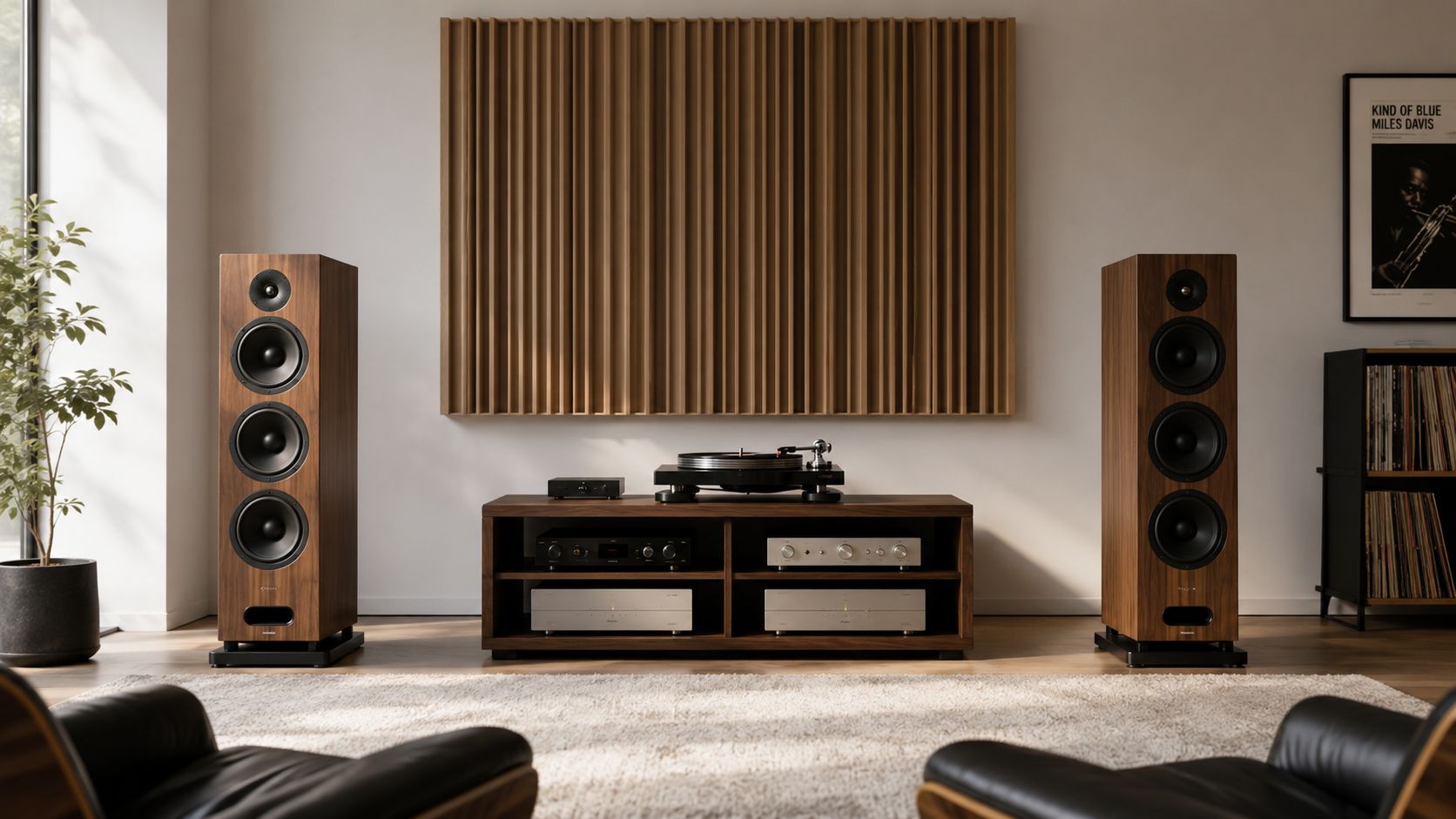
Once a turntable reaches basic competence, the room and the speakers start calling the shots. That's not an insult to the source. It's just reality. A properly functioning deck gives the rest of the chain something solid to work with. What you finally hear depends heavily on how the speakers launch sound into your room and how your room throws it back at you.
Your Room Is In The Signal Path
Once a turntable achieves “basic competency,” meaning it tracks reliably without obvious flaws, the speakers become the dominant factor in overall sound quality, outweighing the turntable's contribution by a significant margin, as discussed in this reader conversation about how much turntable quality matters.
That lines up with real listening. Swap a competent deck for another competent deck and you may hear meaningful differences. Move the speakers into a better position and you may hear the entire system wake up. Focus snaps into place. Bass stops pooling in corners. Vocals stop sounding like they're trapped in the wall behind the setup.
If you're still using weak speakers as the bottleneck, put your attention toward better bookshelf speakers for music. That's often the upgrade with actual teeth.
Where To Put Things So They Stop Fighting You
Turntable placement matters because floors and furniture are not neutral. If the deck sits on a resonant cabinet or springy floor, low-frequency vibration feeds back into playback. You hear that as smeared bass, unstable imaging, and a general lack of calm.
Speaker placement matters because side walls, front walls, and toe-in alter what arrives first at your ears. Not just amount of sound. Shape of sound.
A few practical fixes beat a lot of shopping:
- Get the turntable off the bounce zone. A rigid stand beats a flimsy shelf every time.
- Give speakers room to breathe. Pulling them away from walls usually cleans up bass and opens the stage.
- Adjust toe-in by ear. More toe-in can sharpen image focus. Less can relax the top end and widen the presentation.
- Watch symmetry. If one speaker fires into open space and the other into a side wall, the phantom center won't lock.
The room doesn't care what you paid for the cartridge.
That's the freeing part. Some of the biggest gains in best turntable sound quality don't come from another purchase. They come from getting the support right, the speaker spacing right, and your seat in the right place relative to both.
Free Improvements Usually Beat Glamorous Ones
Listeners love hardware because it's tangible. I get it. Boxes are fun. But the room is load-bearing in a way shopping habits don't like to admit. A capable analog front end feeding poorly placed speakers in a reflective room is still a compromised system.
When the setup is right, records do that thing people try and fail to describe. The center image gets flesh on it. A snare has crack and skin, not just brightness. A cello sounds wooden and resonant instead of like brown wallpaper. Space stops being an effect and starts being a believable place.
That's when vinyl stops sounding “nice” and starts sounding convincing.
Stop Shopping and Start Auditioning
The only useful definition of best turntable sound quality is the one you can hear and identify for yourself. Not in a comment war. Not in a roundup built to catch search traffic. In a chair, with a record you know, listening for what the system does.
Listen For Shape Not Hype
I don't audition a vinyl setup by asking whether it sounds “audiophile.” That's a fake category. I listen for whether music has shape, weight, and spatial sense.
Use familiar records. The point isn't to be impressed by novelty. The point is to catch what changed.
Listen for these:
- Imaging: Can you place instruments in stable positions, or do they drift and blur?
- Dynamics: Do drum hits and accents jump with intent, or does everything arrive in the same polite voice?
- Texture: Does a bowed string sound fibrous and woody, or just smooth and vague?
- Timing: Does the groove pull you forward, or does the system feel rhythmically sleepy?
- Tone: Are voices dense and human, or papery and thin?
If you can't hear where the singer stands, don't call the setup resolved.
A Better Way To Judge A Vinyl Setup
Make one change at a time. Then listen. Not for five seconds. Long enough for your brain to stop grading novelty and start noticing behavior.
I use a simple sequence.
First, listen for bass control. Not quantity. Control. Then move to midrange presence. Vocals tell on almost everything. After that, listen to decay. Piano notes, cymbals, reverbs. Good systems let them bloom and fade naturally instead of clipping them short or washing them into fog.
A few habits help:
- Keep one reference side handy. Familiar music reveals small shifts fast.
- Take notes in plain language. “More body.” “Less glare.” “Center image wandered.”
- Stop chasing approval. If a setup makes you play another record, that's evidence.
The market wants a winner because winners are easy to package. Your ears want coherence. Those are not the same thing.
So stop shopping for a mythical champion deck. Build a mechanically quiet platform. Match the cartridge and arm like it matters, because it does. Respect the room. Then trust your own listening.
That's the whole game.
Author: Marque Hersh
Publisher: Supermarket Sound
Author profile: Marque Hersh on Steam

