Most advice about the best bookshelf speakers for music is backwards. People shop the spec sheet first, then wonder why their new boxes sound like they're trapped in a tax audit instead of playing records.
Here's the key insight. The best bookshelf speaker isn't the one with the prettiest frequency chart or the one a ranking page shoved into first place. It's the one whose character fits your room, your amp, and the way you listen. Specs are the floor. Taste is the ceiling.
I'm not above the SEO circus. You searched for “best bookshelf speakers for music,” and I'd be an idiot to pretend otherwise. But I'm not going to hand you another fake universal winner. I'm going to help you hear the difference between speakers that analyze, speakers that seduce, and speakers that just get out of the way.
Table of Contents
- The Search for 'Best' Is a Trap
- The Spec Sheet Is a Map Not the Territory
- Your Room Is the Most Important Component
- What to Actually Listen For Besides Bass
- My Picks by Listening Profile and Price
- Your Speakers Are Only the Beginning
The Search for 'Best' Is a Trap
“The best” is a marketing word, not a listening word.
It exists because people want certainty. Fair enough. Audio is expensive, rooms are weird, and nobody wants to blow money on walnut-covered regret. But once you've heard enough systems in enough real homes, the fantasy collapses. A speaker that makes string quartets feel carved from air can leave punk sounding bloodless. A speaker that punches rock in the chest can smear a piano into oatmeal.
That's why most roundups fail. They treat speakers like exam papers. Highest marks win. Neat. Useless.
Practical rule: Don't shop for a champion. Shop for a personality you can live with.
The whole point is matching a speaker to your habits. Do you sit in the sweet spot and dissect recordings, or do you play albums while cooking, reading, and pretending your life is more organized than it is? Do you want a speaker that flatters rough recordings, or one that exposes every bad decision made at the mixing desk?
If you're browsing broader system options, my take on speakers under $1000 that actually earn their place follows the same rule. Character first. Vanity metrics later.
Taste Beats Consensus
Consensus is useful for avoiding disasters. It's terrible for finding love.
A lot of readers secretly want permission to trust what they enjoy. Good. Take it. If a speaker makes your favorite records feel bigger, richer, more human, that matters more than internet applause. The best bookshelf speakers for music are not universal winners. They're the right accomplice for your ears.
That's the whole game.
The Spec Sheet Is a Map Not the Territory
Specs matter. They're just not a personality test, and they're definitely not a prophecy.
I have to talk about numbers because otherwise the search gods throw a tantrum. Fine. But the useful way to read a spec sheet is not “bigger number good.” It's “what does this tell me about setup, matching, and likely behavior in a room?”
Read the Numbers Like Clues
Frequency response is not a trophy. It's a rough sketch of what a speaker can cover. For mid-sized rooms between 100–300 sq ft, bookshelf speakers with a sensitivity of 85 dB or higher and a frequency range between 50 Hz–20 kHz can deliver balanced, room-filling sound without a subwoofer, according to this bookshelf speaker buying guide. That doesn't mean every speaker with those numbers sounds the same. It means the floor is solid.
Sensitivity isn't about “quality.” It's about how hard your amplifier has to work. A speaker that needs more effort from the amp can sound flat and pinched if the amp is wheezing. People blame the speaker, but the amp starved the signal.
Impedance also matters, but not as a badge. It's a compatibility clue. Some speakers are an easy electrical load. Some are the audio equivalent of a stubborn mule. If your amp isn't comfortable with the pairing, dynamics shrink and music loses its spring.
Specs tell you whether a speaker can work. They don't tell you whether you'll love it.
What Matters for Real Matching
Here's the version that survives contact with reality:
- Small amp, harder-to-drive speaker: You get less jump, less ease, less life.
- Room too big for a tiny standmount: The presentation can go thin and strained.
- Room modest, speaker sensible: The system relaxes. Music breathes.
A speaker spec sheet is useful the way a street map is useful. It tells you where the roads are. It doesn't tell you what the neighborhood smells like at night.
That last part is the whole point.
Your Room Is the Most Important Component
Your room can make a smart purchase sound dumb.
You can spend like a maniac and still end up with smeared bass, collapsed imaging, and vocals that seem to arrive through drywall. Most “best bookshelf speakers for music” pages barely mention this because placement isn't glamorous and rugs don't generate affiliate lust. Shame, because the room is load-bearing.
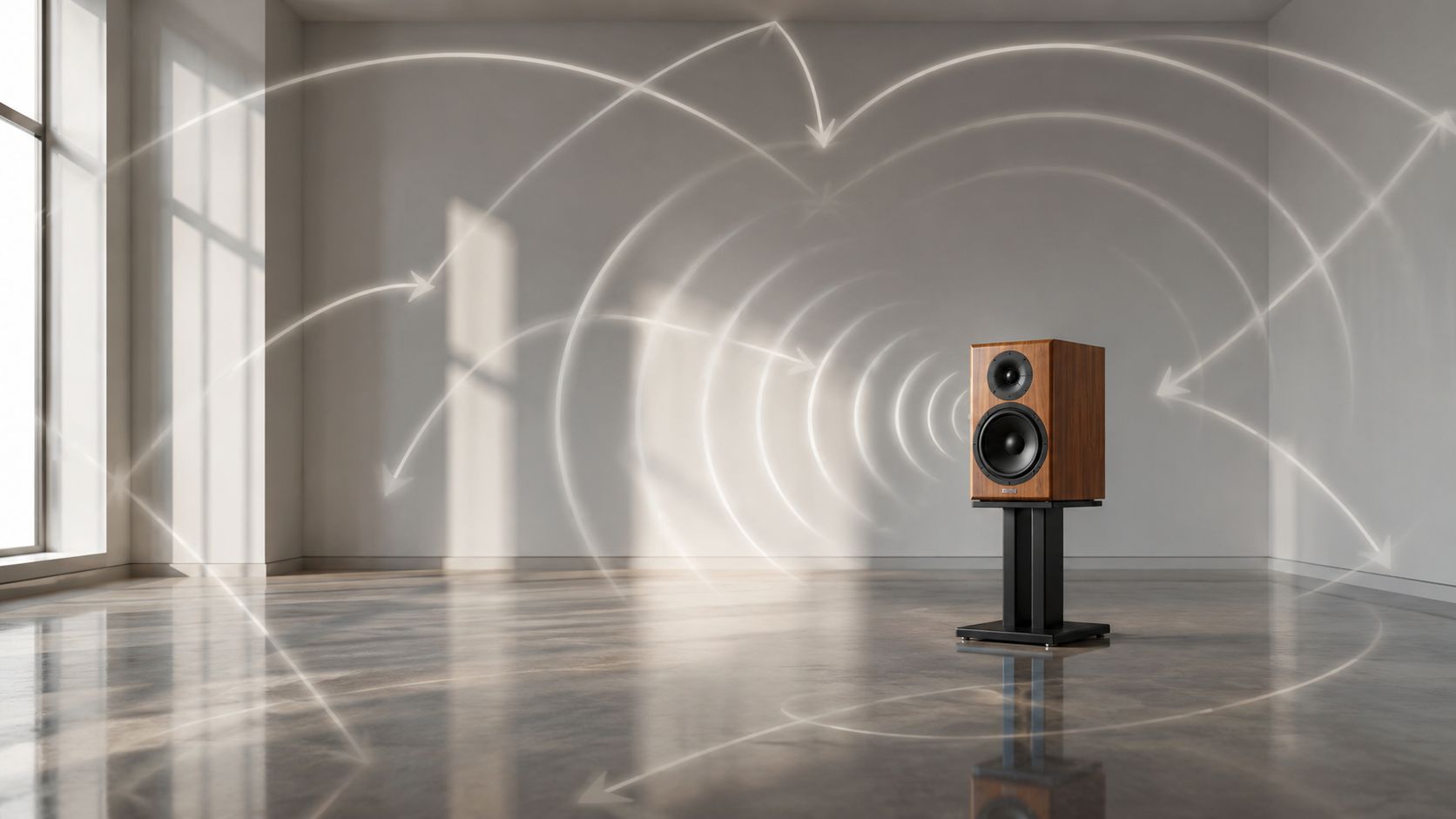
Placement Is Load-Bearing
Speaker placement alters bass response by up to 12dB and changes stereo imaging more than jumping from a $300 model to a $500 upgrade, as explained in ELAC's guide on where to place bookshelf speakers for the best sound. That's not a tweak. That's architecture.
If you've never experimented with setup, start with the boring essentials:
- Give them air: Don't jam them against the wall unless the design clearly likes it.
- Aim for symmetry: One speaker near an open hallway and the other beside a heavy cabinet is a recipe for lopsided nonsense.
- Get tweeters near ear height: Not because rules are fun, but because the stereo image depends on it.
- Build a triangle: You and the two speakers should form something close to a sensible listening triangle, not a random furniture accident.
If you want a more practical setup walkthrough, my guide to speaker placement for amazing bass gets into the ugly little details that fix the problem.
Fix the Room You Have
You don't need to turn your living room into a foam bunker. You need to stop obvious sabotage.
A bare floor between you and the speakers throws reflections at your ears. A rug helps. A huge glass table between the speakers and your seat acts like a reflection machine. Move it, lower it, or accept the sonic tax. An overstuffed couch, books on shelves, curtains, plants, asymmetry that isn't too chaotic. All of that can help a room calm down.
A decent room with sane placement beats a fancy speaker abused by bad positioning.
There's also a useful bass reality people miss. A typical bookshelf speaker with a 4.5-inch to 5.5-inch woofer and a 1-inch soft-dome tweeter can hit a -3dB low-frequency limit between 45Hz and 55Hz in free air, but if you place it 12 inches from a wall, boundary gain adds 3–4dB around 60–80Hz, which can make bass feel closer to 40Hz without a subwoofer. That's why some modest standmounts sound surprisingly full in real rooms and oddly anemic in heroic showroom spacing.
So no, the room isn't an accessory. It's the stage, the lighting, and half the performance.
What to Actually Listen For Besides Bass
Bass is easy. Everyone notices bass. Car stereos and bad bars have trained people to treat low end like proof of life.
That's not where the interesting stuff lives.
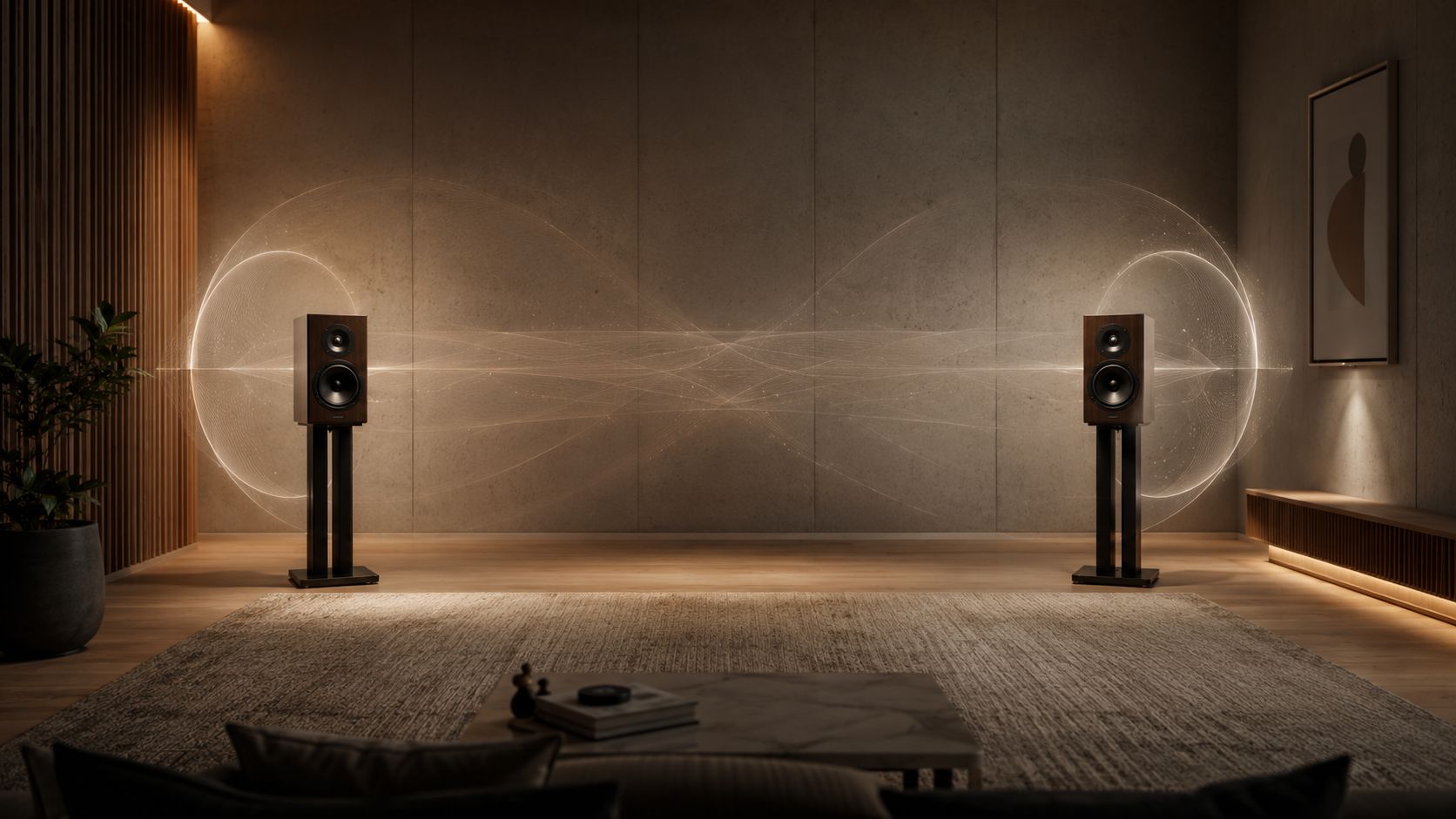
Soundstage and Imaging Are Not Audiophile Cosplay
A good pair of bookshelf speakers doesn't just make sound. It organizes space.
Soundstage is the size and shape of the musical picture. On a strong setup, the band doesn't huddle nervously between two boxes. It spreads. Vocals hang in the center. Instruments occupy air around them. Sometimes the stage pushes beyond the speaker boundaries and the cabinets seem to vanish. That's when things get fun.
Imaging is more precise. It's your ability to locate performers. Close your eyes. Can you point to the singer? Does the snare sit in a stable place, or does it wander like it's had two drinks too many?
Use familiar recordings. Listen for these cues:
- Lead vocal lock: It should stay anchored in the middle, not drift.
- Layer separation: Backing vocals and guitars should occupy different pockets of space.
- Depth: Good speakers let some sounds sit behind others. Flat speakers pin everything to one line.
A short visual explainer helps if this language still feels slippery.
Timbre Tells You If a Speaker Is Lying
Timbre is the texture of the thing. Not just the note, but the material.
A saxophone should sound like brass, reed, spit, and breath. A cello should have wood and body, not just a low moan. A ride cymbal should shimmer with metal decay, not splash and disappear like someone dropped cutlery in a sink.
Superior speakers separate themselves in this way. Not by being “more detailed” in a showroom-demo way, but by sounding less synthetic over time.
If vocals feel etched at first and exhausting later, the speaker isn't telling the truth. It's showing off.
There's also a technical clue that maps cleanly onto what you hear. Speakers using stepped or offset tweeter alignment can reduce intermodulation distortion by 15–22% in the 1–4kHz range, and to my ears that usually tracks with cleaner vocal articulation and less fatigue over longer sessions. You hear it where human hearing is touchy. The upper mids stop shouting. Voices sound embodied instead of cut out with scissors.
That's what to chase. Not more bass. Better information.
My Picks by Listening Profile and Price
I'm not giving you a fake throne-room ranking. I'm giving you listening profiles. That's how sane people buy speakers.
Start with who you are as a listener. Then care about price. In that order.
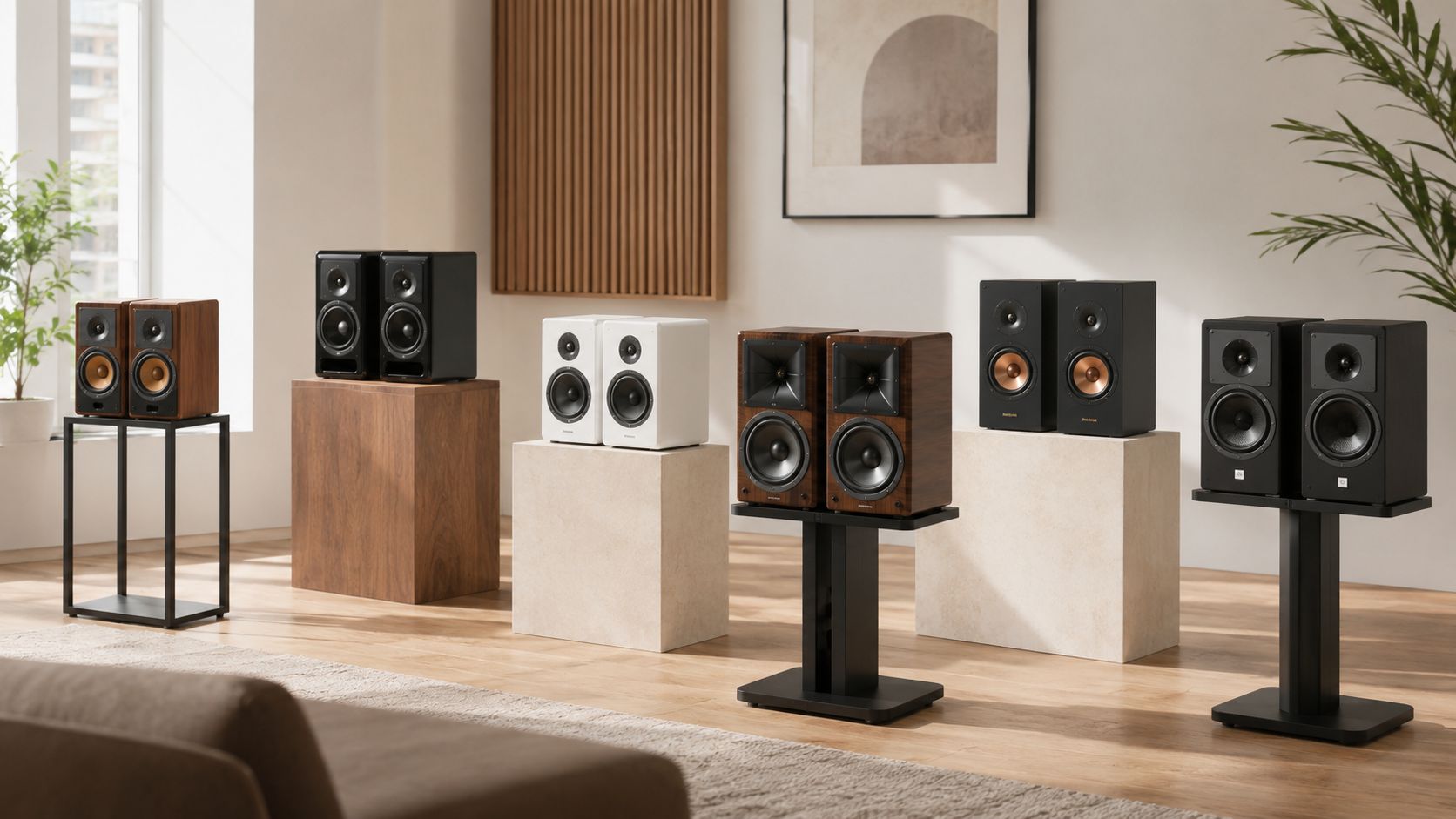
The Studio Analyst
This is for the listener who wants detail first. Not bright for the sake of bright, but explicit. You want to hear compression choices, mic placement, reverb tails, and whether the mastering engineer had a grudge against joy.
The right speaker for this profile should image cleanly, keep bass tight rather than swollen, and avoid editorializing too much. It's great for acoustic music, small ensemble jazz, vocal records, and well-recorded electronic music where spatial cues matter. It's less forgiving with rough indie records and old punk albums. That's the trade.
Who should buy this
- Critical listeners: You sit down and focus.
- Nearfield setups: Desk or small-room listening rewards precision.
- Clean front ends: A good source and stable amp matter more here because revealing speakers don't hide upstream sins.
The Late-Night Jazz Club
This is the profile I recommend to more people than the forums would like. Warm, forgiving, dimensional. Not sleepy. Not dull. Just human.
A speaker in this lane makes horns feel rounded, vocals richer, and bad recordings less annoying. If your library is all over the place, from old soul to live albums to folk to less-than-pristine streams, this kind of tuning keeps you listening longer. The best bookshelf speakers for music often aren't the ones that impress in ten minutes. They're the ones you forget to turn off.
Buy the pair that makes you play one more album, not the pair that makes you admire your own cleverness.
These speakers also work beautifully in ordinary living rooms because they don't demand perfect conditions to sound like themselves. Give them decent stands, sensible placement, and enough current. They'll meet you halfway.
The Rhythm Addict
Some people don't care where the third backing vocal sits in the stage. They care whether the song moves.
Fair. This profile is about drive, timing, punch, and snap. Drums should start and stop cleanly. Bass lines should propel, not puddle. Funk, rock, pop, and dance music live or die here. A rhythm-first speaker can be a little less airy on top if the groove is intact. I'll forgive a lot when the system makes me nod like an idiot.
This is also where placement can rescue or ruin things. A bookshelf speaker with a 4.5-inch to 5.5-inch woofer and 1-inch soft-dome tweeter can feel much fuller than expected when placed 12 inches from a wall, thanks to 3–4dB of boundary lift around 60–80Hz, extending perceived bass toward 40Hz. In plain English, don't assume you need a sub just because the cabinet looks compact.
The Safe First Serious Pair
This category matters because not everybody wants an identity crisis with every upgrade.
You want balance. Enough detail to hear into a mix. Enough warmth that mediocre recordings don't become punishment. Enough bass to enjoy music without rearranging the whole room around a subwoofer. Enough scale that the sound escapes the cabinets and stops feeling like desktop audio in a trench coat.
Here's the shorthand I'd use:
| Listening profile | Sound character | Best for | Watch out for |
|---|---|---|---|
| Studio Analyst | Clear, explicit, fast | Acoustic, vocal, focused sessions | Thin amps, harsh recordings |
| Late-Night Jazz Club | Warm, relaxed, textured | Long sessions, mixed libraries | Can sound too polite if overdone |
| Rhythm Addict | Punchy, agile, lively | Rock, funk, pop, electronic | Bad placement can bloat bass |
| Safe First Serious Pair | Balanced, adaptable | Most people, most rooms | Won't flatter ego extremists |
The point isn't to memorize a taxonomy. It's to stop buying by panic. If you know your profile, half the nonsense falls away.
Your Speakers Are Only the Beginning
A speaker is the mouth of the system. It is not the brain, the lungs, or the pulse.
People love buying speakers because they're visible. Big upgrade energy. Furniture with attitude. But downstream inherits upstream. If the source is flat, noisy, or thin, the speaker can't invent soul. If the amp can't control the speaker, dynamics sag and bass gets lazy. Then the owner blames the transducer, which is a bit like blaming shoes for your bad posture.
Downstream Inherits Upstream
I've heard excellent speakers sound half-awake because the amplifier was a mismatch. Not underpowered in the macho forum sense. Just wrong. No grip. No color. No sense of ease. The music arrives, but it doesn't bloom.
You don't need a tower of glowing boxes and a second mortgage. You need balance.
- Source first enough: Feed the system a clean signal.
- Amplifier with headroom: Don't starve the speaker of dynamics.
- Cables sane, not mystical: Competent matters. Worship does not.
- Placement repeated on purpose: Once the system is built, revisit setup. Always.
If you're sorting the electronics side, my guide to the best budget DAC and amp combinations is where I'd start before throwing cash at random boxes.
Build a System Not a Shopping Cart
Many people lose their way. They buy isolated “winners” and end up with a collection of respectable parts that don't speak the same language.
A balanced system feels inevitable. Nothing shouts. Nothing drags. You stop hearing “treble” and “midrange” and start hearing songs again. That's the target. Not endless upgrading. Not benchmark peacocking. Not collecting opinions from men whose rooms sound like tiled bathrooms and whose playlists are six demo tracks deep.
Trust your ears before you trust consensus. Your room, your amp, your records. That's the truth machine.
Buy the speakers that make your music feel alive. Then give them a system and a room that don't get in the way.
That's how you win.
Author: Marque Hersh
Publisher: Supermarket Sound
Author profile: Marque Hersh on Steam

