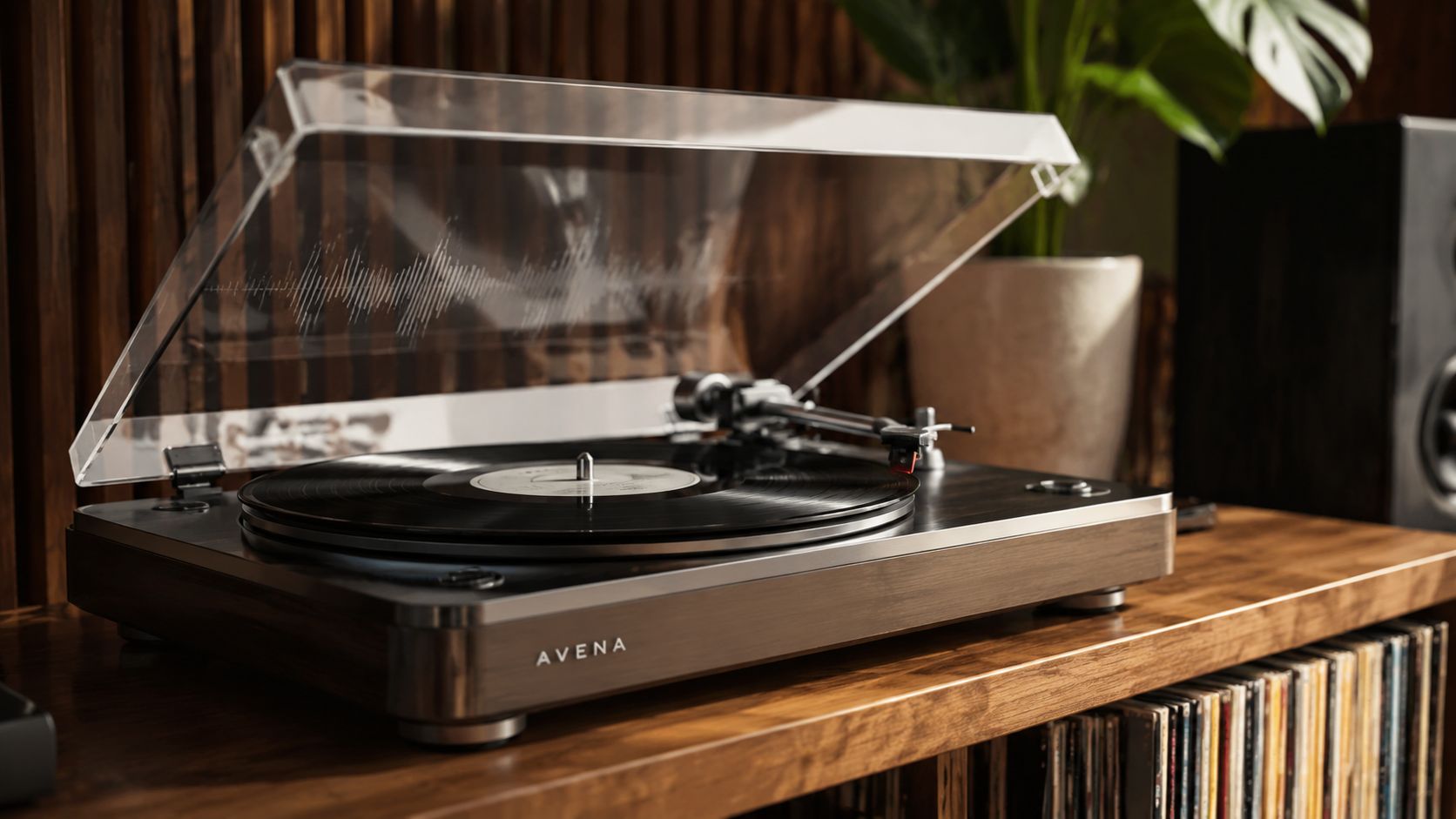
The worst advice about a turntable dust cover is that it's either always on or always off. That's too tidy for hardware that sits in the signal chain like a lazy piece of furniture and still manages to change what reaches your ears. The lid isn't packaging. It's a surface your room can shake.
I've lived with three different covers, and the lesson was simple, annoying, and useful. A cover can save a deck from dust, pet hair, and careless hands, but it can also turn into a vibrating panel that smears space and softens the top end. The right answer is never “covers are good” or “covers are bad.” It's which compromise your table, room, and listening habit can survive.
Table of Contents
- The Dust Cover Is Not An Afterthought
- Why Covers Exist Before The Cover Matters
- Acrylic Versus Fabric Versus Ghost Covers
- How To Measure For A Proper Fit
- The Open Versus Closed Debate, Settled
- Cleaning, Hinge Alignment, And Maintenance
- DIY Repairs And When To Replace The Cover
- A Practical Buying Checklist For Real Listening Rooms
The Dust Cover Is Not An Afterthought
A turntable dust cover is part of the deck's working structure, not a decorative extra. It keeps grit off the surface, reduces casual contact, and changes how the table behaves in a real room. The old publishing world understood the same basic idea through protective wrappers and jackets, including early publisher dust jackets that were used to shield books during handling and storage. That is a useful precedent, because the job stayed the same even when the object changed. Protect the surface. Keep the gear presentable. Help the thing survive the trip home and the years after that.
Protection Is Not Neutral
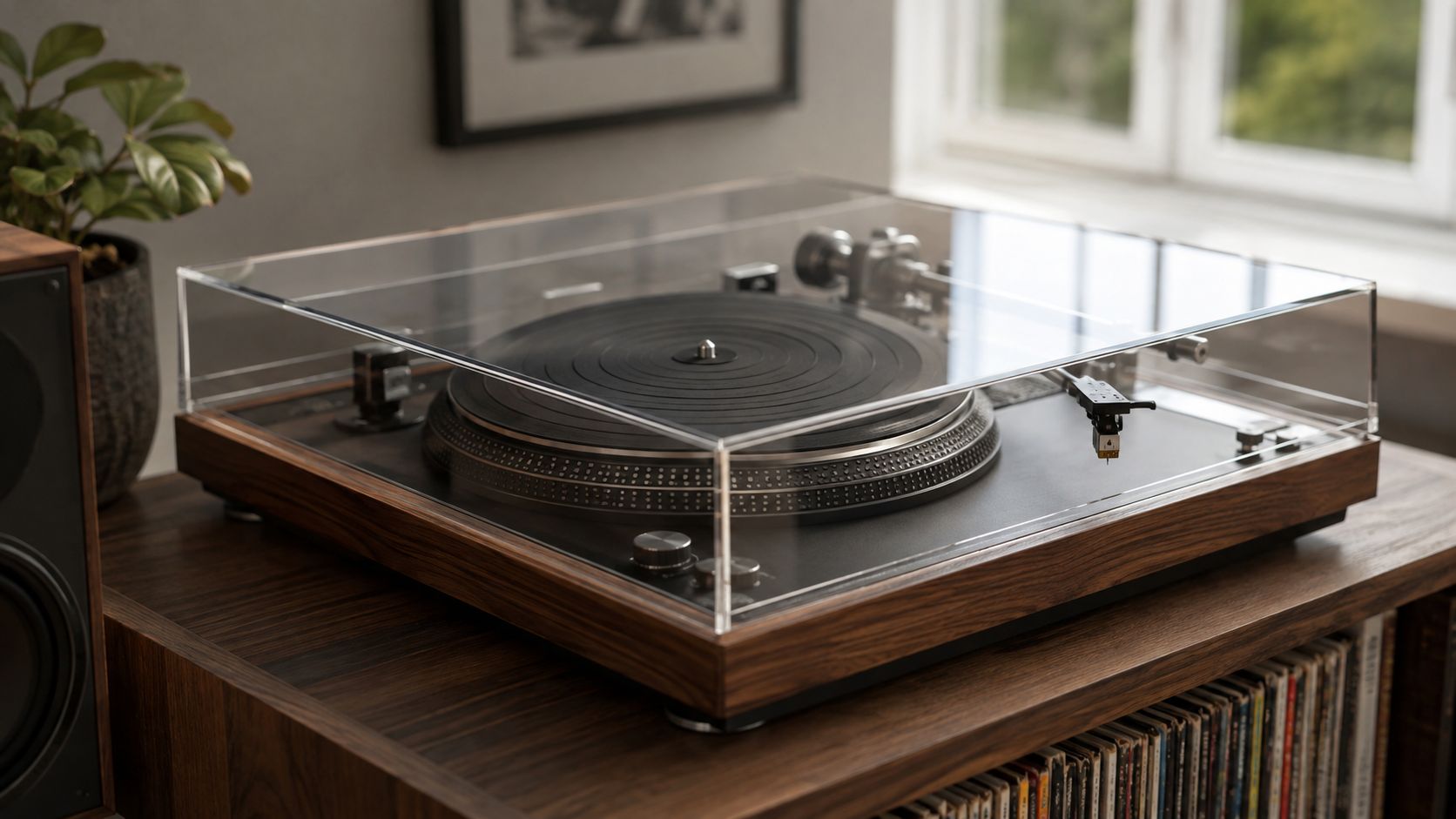
A cover sitting over the plinth, the tonearm, and the cartridge can pick up vibration from the room and feed it back into the deck. If the lid flexes, buzzes, or couples into the base, the sound can lose a bit of air and a bit of control. Bass can thicken. Treble can sound less defined at the edges.
That is why I do not treat a cover as simple insurance. On a running table, it is part of the system.
Practical rule: if the lid changes how the table feels when you tap the cabinet, it can change how the table sounds when the speakers play.
The old book-jacket comparison still helps, but the better point here is handling. A protective shell changes how people move around the object, and those small handling choices affect wear, alignment, and long-term condition. The same logic shows up in this beginner setup guide, because placement and isolation affect how the cover behaves as much as the cover itself. A table parked on a lively shelf and a table on a steadier support do not respond the same way.
Why Covers Exist Before The Cover Matters
The practical case for a cover starts with contamination, not audiophile theater. A dust cover shields the platter, tonearm, and stylus from airborne dust, pet hair, and accidental contact when the deck is idle. That part is boring because it works. Grit doesn't care about your favorite pressing, and neither do fingerprints.
The historical side points to the same habit. As record playback settled into everyday use, people had to think about what protected a surface between sessions, and that concern carried from earlier media into vinyl culture. Shellac-era habits did not map neatly onto the vinyl era, so the cover became normal because the use case demanded it.
The Hidden Acoustic Tax
Protection still has a cost. A closed lid can transmit or amplify vibrations, and audio advice keeps returning to the same practical point, leave it open or remove it during playback because the lid can behave like a resonant panel. The issue is mechanical, not mystical. A rigid shell has its own behavior, and even a softer cover changes how the deck sits in the room.
I've heard that tradeoff on real tables. One lid would add a faint haze in the upper range when it stayed down, while another would make the cabinet feel slightly more alive to room energy even before anyone touched the volume knob. Different covers behave differently, but the pattern is consistent. If the lid is part of the system, it can change the way the system behaves.
A cover is never just a barrier. It's a filter between your room and your playback chain.
The broader lesson is handling. Protective skins change how people move around the object, and those small handling choices affect wear, alignment, and long-term condition. The same logic shows up in this beginner setup guide, because placement and isolation affect how the cover behaves as much as the cover itself. A table parked on a lively shelf and a table on a steadier support do not respond the same way.
That is the tradeoff, protection against resonance. Every time the lid sits over the platter, you are choosing which problem matters more in your room.
Acrylic Versus Fabric Versus Ghost Covers
Rigid acrylic covers are the most common expression of the idea, and also the easiest to misjudge. They are usually made from 3 to 5 mm material thickness, and the working width often falls in the 400 to 550 mm range. That stiffness gives the lid its shape and helps it keep dust off the deck, but it also means you have to account for the tonearm, counterweight, and rear connectors before you buy or trim anything. A popular hinged acrylic cover uses outside dimensions of 471 × 133 × 386 mm, and another acrylic example lists 5 mm wall thickness with a 32 × 5 cm rear cut-out (reference). If the lid presses against the deck, the cover stops acting like protection and starts behaving like a resonant panel.
Fabric covers answer a different problem. They give up the crisp look of rigid acrylic in exchange for easier fit, easier storage, and better tolerance around awkward rear cabling or unusual deck shapes. A representative version uses 9000-denier Poliviskon fabric with reinforced lining and describes itself as waterproof, dustproof, and sunproof, while another common variant uses 600D nylon with PVC lining (reference). I reach for fabric when the table sits in a dusty room, in bright light, or in a spot where a rigid shell would be a nuisance every time I wanted to check a cable or lift the arm. It looks less polished. It is easier to live with.
Then there are the lightweight, minimal-mass options people call ghost covers. They make sense when the priority is keeping the lid from acting like a panel and adding as little structure as possible around the deck. The trade-off is obvious. You lose a lot of barrier protection to gain a lighter acoustic footprint, and that can be a smart choice on a stable rack in a controlled room. It makes far less sense in a room with kids, pets, or a turntable that sits near an open window.
Cover Materials At A Glance
| Cover Type | Protection | Resonance Risk | Clearance Tolerance | Typical Cost | Best For |
|---|---|---|---|---|---|
| Acrylic | High | Medium to high if it touches or flexes | Lower | Higher | Clean rooms, careful setups |
| Fabric | High for dust and grime | Low while the deck plays | High | Mid | Dusty rooms, awkward cable layouts |
| Hinged | Good when aligned | Medium | Medium | Mid | Convenience-first owners |
| Removable | Good when stored properly | Low during playback | High | Mid | People who remove the lid to listen |
| Ghost | Low to moderate | Low | High | Lower to mid | Minimal-mass setups and protected rooms |
The practical answer is straightforward. Choose acrylic if presentation and physical protection matter more than acoustic caution. Choose fabric if the room is harsh and the geometry is messy. Choose removable or ghost-style solutions if you already know you will pull the lid off during playback.
How To Measure For A Proper Fit
A bad fit is where most lid problems start, and it's the easiest mistake to avoid if you stop guessing. Put the platter, tonearm, counterweight, and rear panel into the same measurement thought process before you buy or trim anything. A cover that barely clears the counterweight isn't a cover. It's a buzz waiting for music.
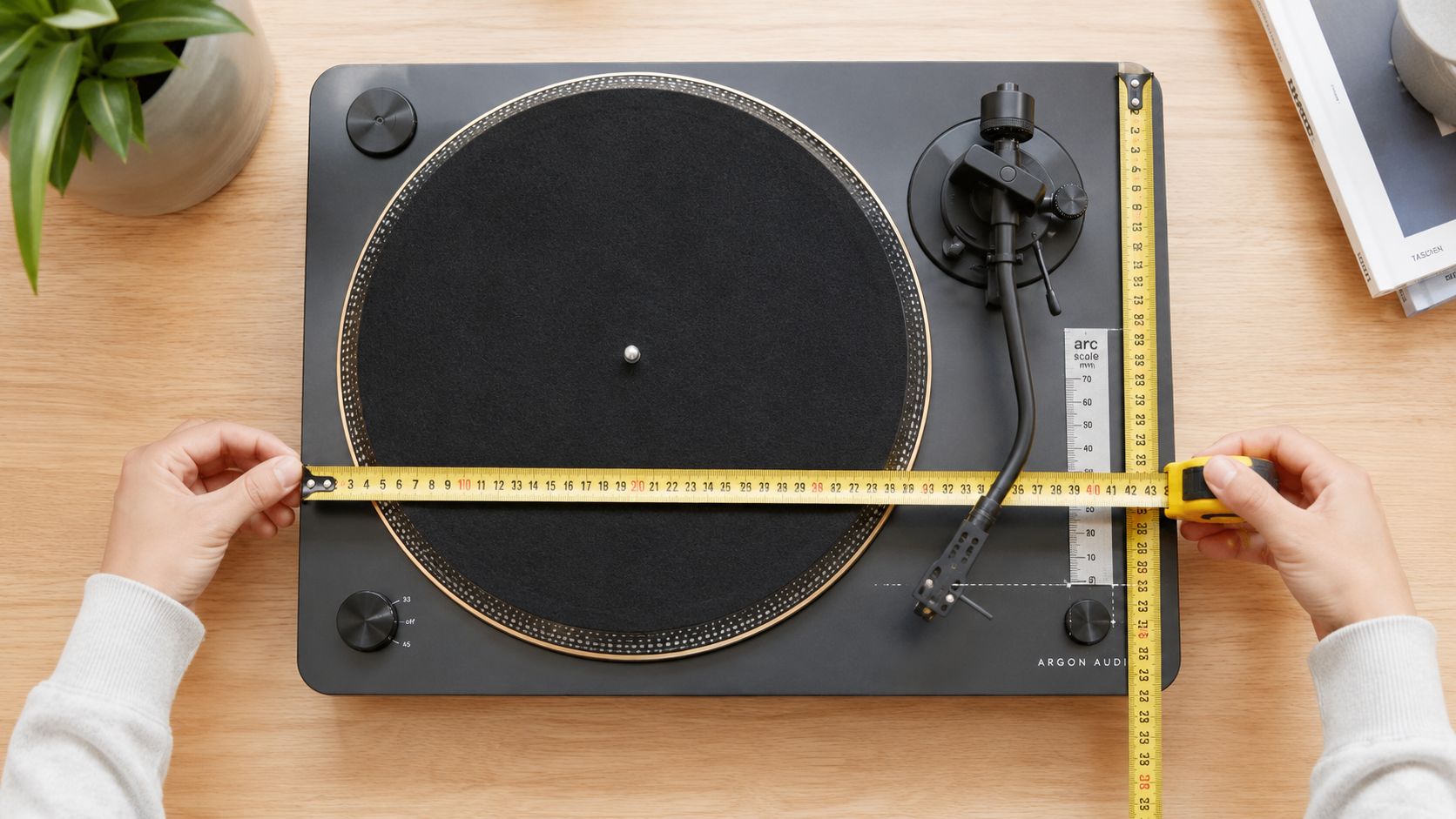
Start with the widest point of the plinth. Then measure from the platter surface to the top of the counterweight at full extension. After that, check the rear connector height and cable exit path. Add margin for the tallest fixed point plus cable exit before you order. That margin is what keeps the lid from kissing the hardware and turning into a resonant floor.
Measure In The Order The Lid Sees
The sequence matters because the cover doesn't care about the same dimensions you do. It cares about the tallest obstruction, the rear cut-out, and whether the tonearm can travel without contact. If the lid needs to float to clear one cable, the whole shell changes behavior. If the shell changes behavior, the sound does too.
A good fit has three properties. It clears hardware cleanly. It doesn't press on the plinth. It closes without stress at the hinges or edges. If one of those fails, the lid is telling you it wasn't designed for that deck.
Practical rule: measure the hardware, then measure again with the cable path included. The cable is part of the fit.
For readers comparing tables and setups, the bigger system question matters too. A lid that works on a low-mass deck with speakers across the room can fail on a more exposed shelf with the speakers closer in. The cartridge is only one piece of the chain, and the mechanical envelope around it matters just as much. If you're still sorting the table itself, this sound-quality guide is the better companion than another lid-shopping rabbit hole.
The Open Versus Closed Debate, Settled
This part gets treated like doctrine, but the room and the deck decide more than the slogans do. A turntable dust cover is part protection, part acoustic surface, and part mechanical test. Whether it stays on, stays open, or comes off depends on plinth mass, lid construction, and how much energy your speakers throw back at the table. A removable cover usually belongs off the deck during playback. A hinged cover is a compromise. A heavier base can sometimes tolerate a closed lid better than a lightweight one because the plinth damps the panel instead of letting it ring.
Match The Lid To The Room
On a quiet deck in a calm room, a hinged cover can work just fine if the speakers sit far enough away and the lid stays still. On a lightweight table in a lively room, that same cover can behave like a drum head. The room loads the panel, the panel loads the plinth, and the platter inherits the vibration. That is when the top end loses a little air and the stereo image gets less stable than it should.
If the lid speaks when the speakers play, the lid is part of the problem.
The split is practical, not ideological.
- Remove it during playback if the lid is light, the speakers are close, or you already hear a thump, buzz, or rattle.
- Leave it open if you want access to the controls and the table stays calm with the panel raised.
- Close it only if the deck tolerates it, the room is quiet, and the lid adds no noise of its own.
That is the trade-off most of the folklore skips. A cover can keep dust off a deck and still hurt playback if it stores vibration or reflects energy back into the chassis. A bare table can sound cleaner, yet it asks you to accept more exposure and more handling discipline. I have owned three different covers, and the pattern is the same every time. The right choice is the one that leaves the table mechanically quieter in your room, not the one that sounds best in a comment thread.
For readers deciding whether to keep the lid on or off, the larger setup question still matters. A cover that behaves on a low-mass deck with speakers across the room can misbehave on an exposed shelf with the speakers closer in. The cartridge is only one part of the chain, and the mechanical envelope around it matters just as much. If you are still sorting the table itself, this sound-quality guide is the better companion than another round of lid debate.
Cleaning, Hinge Alignment, And Maintenance
Acrylic scratches easily if you treat it like kitchen glass, so clean it with a soft microfiber cloth and a gentle cleaner meant for clear plastics. Don't grind dust into it with a dry rag. Don't use anything abrasive. The scratches catch light first, then annoyance, then your eye every time you sit down to listen.
Fabric needs a different habit. Shake loose dust outside, then clean the liner without packing grime deeper into the weave. The point isn't to make it spotless. The point is to preserve the seal and keep the cover from becoming a dust sponge. A filthy cover protects less than a clean one.
Hinges Need Real Attention
Hinge alignment is not a footnote. Misaligned hinges cause binding, uneven clearance, and stress points, and that stress eventually becomes a rattle source. Check that the lid opens smoothly, sits square, and doesn't sag toward one side. If the hinge fights you, don't force it into submission.
- Inspect the hinge screws first. Tighten loose hardware gently before you assume the shell itself is ruined.
- Look for contact marks. Shiny edges and rubbed spots usually tell you where the panel is touching.
- Open and close the lid slowly. If it binds, the bracket may be bent or the hole pattern may be off.
- Listen with music playing. If the lid buzzes when the table runs, the problem is already audible.
Maintenance is cheaper than replacement, and replacement is cheaper than living with a buzz you keep trying to ignore. If you're also sorting cartridge behavior and setup interactions, this cartridge guide fits naturally alongside lid care, because the stylus and the cover often reveal the same sloppy setup habits.
DIY Repairs And When To Replace The Cover
Some cover damage is fixable. Some of it is just delay wearing a nicer coat. Cracked acrylic can sometimes be stabilized, but a repaired crack often stays a resonance point. You've stopped the spread, not erased the problem. That matters when the lid is sitting over a running table.
Loose hinges are more forgiving. Tighten them if the mounting holes still bite and the bracket still seats correctly. Once the holes strip, the honest fix is usually a new bracket or a new cover. For fabric covers, torn lining is a bigger deal than it sounds. Once the seal fails, the protection argument collapses and the cover stops doing the only job it has.
Use The Lid Before You Decide
Before you patch anything, test the cover like a listening-room object, not a craft project.
- Check for contact marks. If the lid has been touching the deck, that's your first clue.
- Test for flex under light pressure. A shell that flexes too easily can buzz in use.
- Inspect hinge stress. Cracks around the mount mean the load has moved somewhere it shouldn't.
- Run the table and listen for buzz. If the cover speaks during playback, it has failed the basic test.
If the cover fails any of those checks while the music is playing, removal is better than denial. A compromised cover is worse than no cover because it gives you the illusion of protection while still polluting the signal path. That's a lousy bargain.
A Practical Buying Checklist For Real Listening Rooms
Start with the deck, not the brochure. If the table is high-mass, a more substantial lid may behave better than it would on a lightweight plinth. If the table is lightweight, stay suspicious of anything that flexes or sits too close to the hardware.
Then look at the room. If the speakers are close and the room is lively, lean toward a removable or off-during-play setup. If the room is dusty or busy, prioritize fit and sealing over romance. If the cover will stay on during playback, make resonance your main enemy. If it'll live on the shelf while you listen, make ease of handling your main concern.
Choose the cover that protects the record without borrowing from the sound. That's the whole game.
If you're choosing a turntable dust cover right now, use the room as your final filter, not the marketing copy. Measure the deck, decide whether the lid will stay on during playback, and pick the material that matches the noise in your space. If you want more no-nonsense hi-fi guidance like this, keep following Supermarket Sound through Marque Hersh's feed, because the lid on your turntable should protect your records without costing you your sound.

