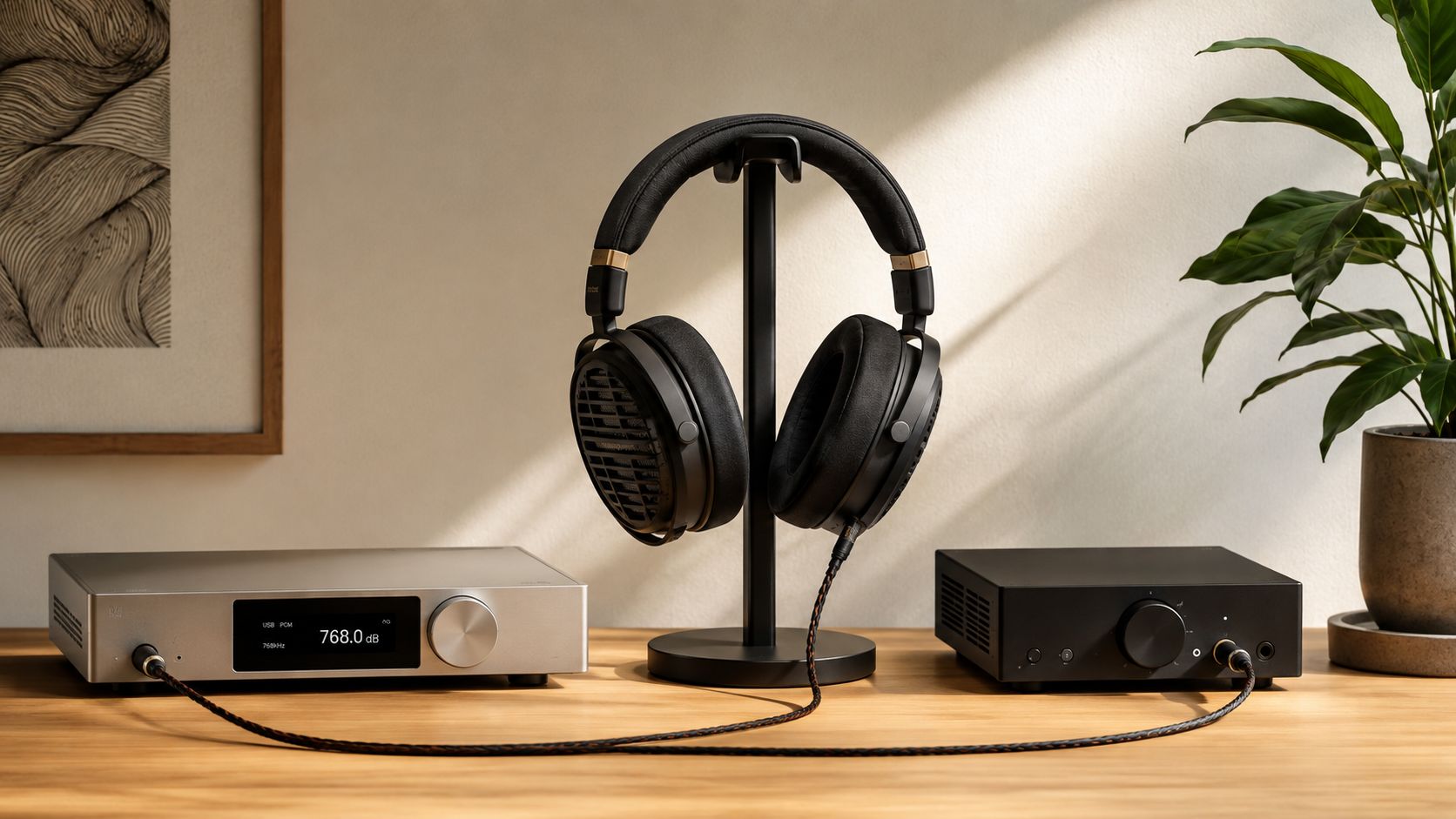
The popular advice gets headphone amp vs DAC backwards. You might not have a “sound quality” problem. You have a symptom: hiss, weak bass, low volume, a brittle laptop jack, or headphones that sound flat when the music gets busy. Buying the more prestigious box before identifying the symptom is how a simple fix becomes an expensive pile of aluminum.
My position is blunt. For most listeners in 2026, buy an integrated DAC/amp. Separate boxes make sense when your headphones, workflow, or taste creates a specific demand that one box can't meet. The split exists because conversion and amplification perform different jobs, not because audiophiles needed another argument to have online.
Table of Contents
- Why the DAC vs Amp Question Is the Wrong Question
- What a DAC Actually Does to Your Music
- What a Headphone Amp Does to Your Music
- The Real Differences Between DAC and Amp
- Three Real Setups and What They Actually Need
- DAC and Amp Myths Worth Killing
- When Separate Boxes Still Make Sense in 2026
- How to Choose What to Actually Buy
Why the DAC vs Amp Question Is the Wrong Question
A DAC translates digital audio into an analog signal. A headphone amp takes that signal and supplies the voltage and current needed to move a driver. One creates the waveform. The other gives it muscle.
That division has been part of the category's architecture since digital playback became mainstream. Burr-Brown demonstrated a 16-bit monolithic DAC in early 1982, around the same era that compact disc hardware brought digital playback into ordinary homes. CD audio standardized around 44.1 kHz and 16-bit quantization, formats that shaped DAC expectations for decades. The historical detail matters less than the engineering lesson: a DAC's output is analog, but it isn't automatically strong enough to drive a serious headphone load. This history of DAC development makes the progression clear, while the same engineering split explains why a separate amplifier exists.
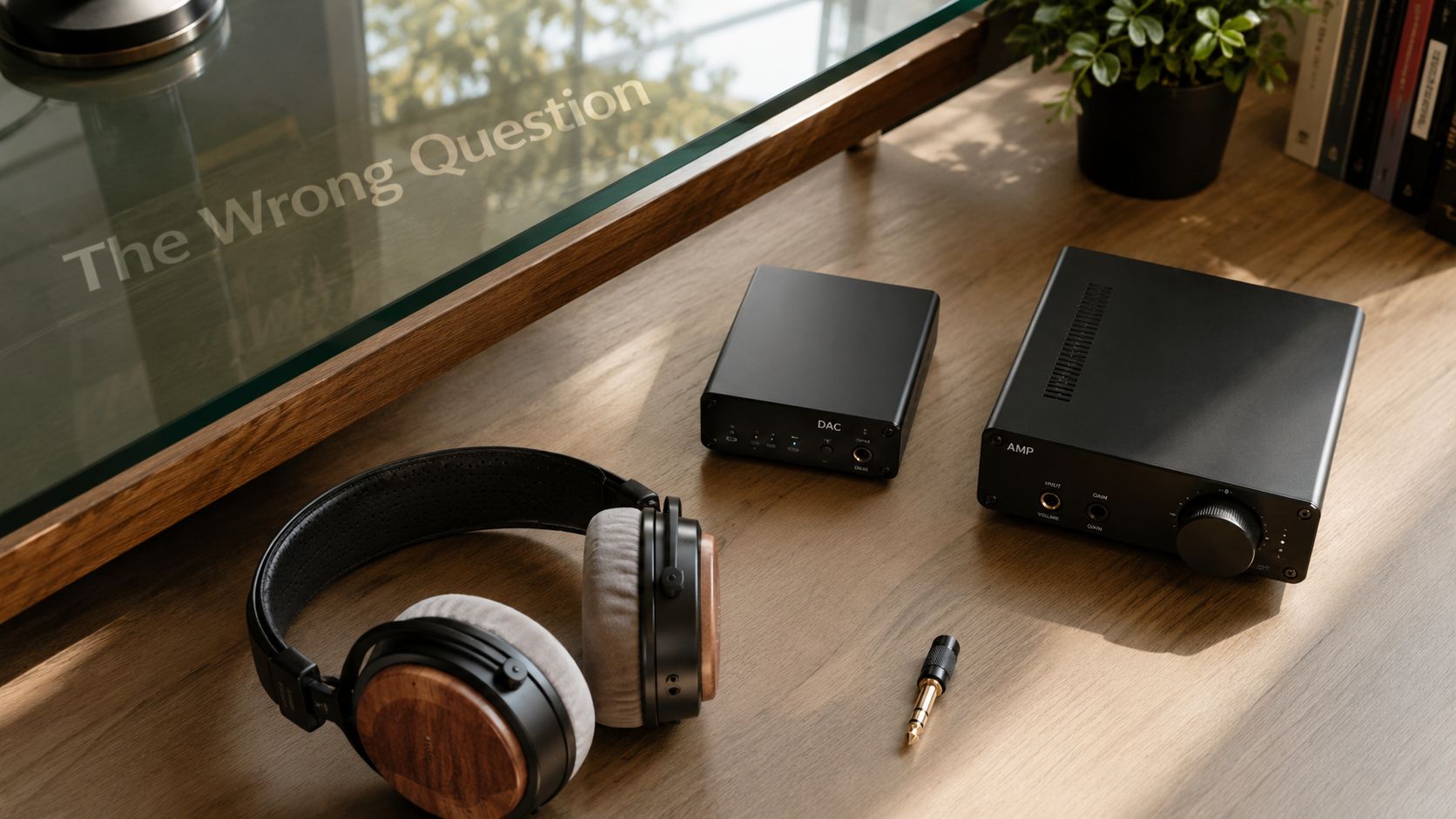
Diagnose the complaint first
If your headphones are too quiet, start with the amp. If they hiss, investigate the source output and noise floor. If your phone has no headphone jack, a DAC/amp dongle solves the connectivity problem. If the tonal balance changes when you connect sensitive multi-driver IEMs, output impedance deserves attention.
Forum culture turns this into a showdown between “better DACs” and “better amps.” That's mostly spec-sheet theater. The useful question is what you're hearing and which stage owns that failure.
The product category has grown beyond niche studio hardware. One industry estimate puts the global DAC headphone amplifier market at about USD 420 million in 2024, with a projection of roughly USD 830 million by 2033, and a 7.8% CAGR from 2025 to 2033. The market report points toward the same practical reality I see on desks and in travel bags: dongles and integrated units have become normal because they remove complexity.
Separate boxes still have their place. They just aren't the default answer.
What a DAC Actually Does to Your Music
A DAC takes stored digital information, whether PCM or DSD, and reconstructs it as an analog voltage. That voltage then travels to a preamp, headphone amplifier, powered speaker, or another downstream stage. The DAC is the translator, not the athlete.
The easiest way to understand it is as a two-part relay. The DAC turns numbers into a usable electrical waveform. The amplifier takes that relatively weak waveform and makes it capable of driving a physical transducer.
Three DAC concerns that survive contact with reality
Bit depth and sample rate describe the structure of the digital signal. They matter for compatibility and available resolution, but they aren't magic switches that automatically produce deeper bass or a larger soundstage. CD audio's 44.1 kHz, 16-bit standard remains a useful reminder that format numbers describe data handling, not amplifier power. Our plain-language DAC guide covers the basic conversion process without treating every specification as a personality trait.
Jitter refers to timing error in the digital clock. Modern consumer DACs generally handle clocking well enough that jitter isn't the first place I'd look when a system sounds wrong. Check gain, output impedance, grounding, and headphone matching before blaming the clock.
The output stage matters because the DAC must deliver a clean reference signal with low noise. A well-designed unit keeps that signal quiet before the amplifier receives it. Sensitive IEMs expose this more readily than many over-ear headphones because their high efficiency makes background hiss easier to hear.
A line-level DAC output isn't a headphone output. Line outputs are designed for high-impedance loads, commonly around 10k to 100k ohms, and modern consumer DACs often deliver 2 Vrms at full scale. Headphones can need less than 1 Vrms or roughly 4 to 5 Vrms, depending on their impedance and sensitivity, so the DAC output alone may starve the driver. This explanation of line-level and headphone impedance shows why the handoff matters.
The DAC sets the floor. It doesn't provide the shove.
What a Headphone Amp Does to Your Music
A headphone amplifier is a power amplifier built to drive headphones from a source or line output. It controls the voltage and current reaching the driver, so its contribution becomes obvious when demanding headphones sound thin, compressed, or unwilling to play loudly. In 2026, that diagnosis usually points to one good integrated DAC and amplifier before it points to separate boxes.
Impedance is the first checkpoint. Headphones commonly span about 16 to 600 ohms. Low-impedance designs generally demand more current, while high-impedance designs generally demand more voltage. This guide to impedance matching explains why the electrical relationship matters. A driver either receives enough electrical force or it does not.
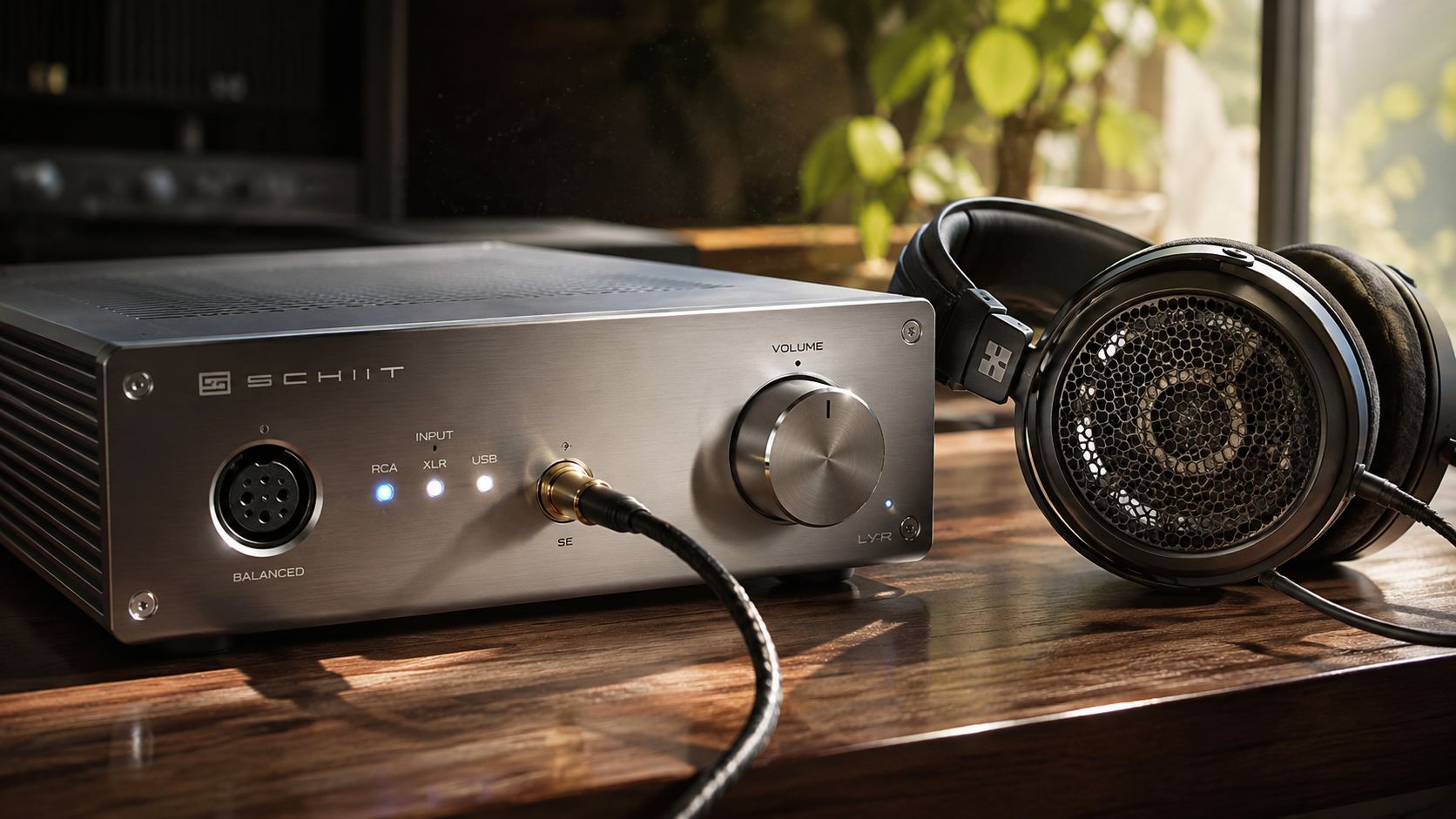
Output impedance is where the amp meets the headphone
Low output impedance gives the amplifier firmer control over the load. High output impedance can interact with a headphone's changing impedance curve, shifting frequency response and tonal balance. Multi-driver IEMs often reveal this quickly, while planar and dynamic headphones respond according to their designs.
Keep the amplifier's output impedance below one-eighth of the headphone's minimum impedance. That means 4 ohms for a 32-ohm headphone and 37 ohms for a 300-ohm headphone, although some engineers prefer 2 ohms or less as a safer universal target. This guide to impedance matching presents the rule in practical terms.
A 10-ohm output is a poor match for a 32-ohm headphone, though it carries less risk with an 80-ohm or higher load. The wrong pairing can loosen bass, shift treble, or make a balanced headphone sound colored.
Voltage swing handles the other half. A high-impedance dynamic over-ear may need substantial voltage for satisfying peaks. A low-impedance planar can demand stronger current delivery during transients, even when its nominal impedance looks friendly.
Gain matters too. A sensitive IEM connected to an amplifier designed for high-power over-ears can expose hiss and channel imbalance at low volume. Tube warmth, solid-state grip, and adjustable output impedance are valid taste choices, not universal proof of better sound.
The amp decides whether the driver plays loud, clean, and controlled.
The Real Differences Between DAC and Amp
A DAC faces a translation problem. An amplifier faces a delivery problem. That distinction clears up most of the confusion faster than another argument about chip families.
The DAC receives a digital stream and outputs a largely fixed line-level signal. It doesn't know whether you'll connect a sensitive IEM or a demanding planar next. The headphone amplifier sees the transducer and has to respond to its impedance, sensitivity, voltage requirement, and current demand.
The numbers that actually matter
The 1/8th rule is a useful matching guardrail, not a sacred law. Keep amplifier output impedance below one-eighth of the headphone's minimum impedance, and you reduce the chance that the amp will reshape the headphone's frequency response. A lower figure gives you more universal compatibility.
Voltage requirements tell you whether the amplifier has enough headroom. Current delivery tells you whether it can maintain control when the driver demands a quick burst. Power figures without the headphone's sensitivity and impedance are incomplete information, and manufacturers know that incomplete information looks impressive on a product page.
| Dimension | DAC | Headphone Amp |
|---|---|---|
| Core job | Converts digital data into analog voltage | Supplies voltage and current to the headphone |
| Load relationship | Designed to feed a high-impedance downstream input | Must match the headphone's impedance behavior |
| Main failure symptom | Noise, interference, poor connectivity, compromised signal floor | Low volume, weak dynamics, loose bass, clipping |
| Key practical concern | Clean output and low noise | Output impedance, gain, voltage swing, current delivery |
| Character change | Usually minimal in a competent design | Can be neutral, warm, tight, or intentionally colored |
Measured performance also shows why the amplifier stage deserves more attention. In Audio Science Review's measurements of the RME ADI-2 FS Version 2, the unit reached about 117 dB SINAD at nearly 7 volts output in one mode, while the combined DAC and amp path in high-power operation reached around 110 dB SINAD. The published measurements show the downstream stage becoming the ceiling when voltage and current demands rise.
Don't shop for resolution in isolation. Shop for a chain that remains clean at the output your headphones need.
Three Real Setups and What They Actually Need
The easiest way to settle the DAC and amp question is to follow the signal through actual systems. Start with the headphone, not the logo on the box.
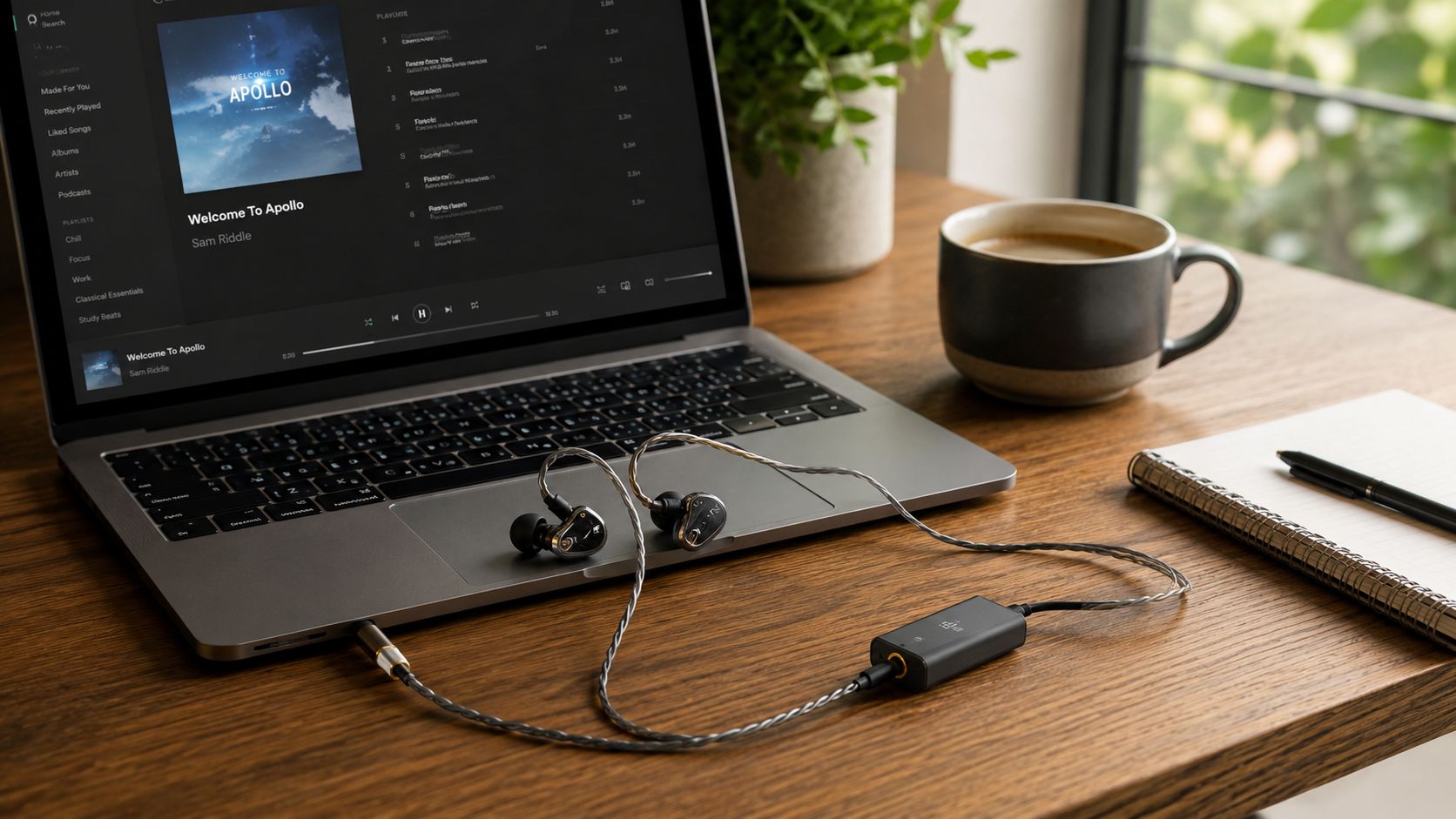
Efficient IEMs from a laptop
Take an efficient IEM rated at 16 ohms and 110 dB/mW. A laptop can often make it loud enough, so adding a huge desktop amplifier solves nothing. The audible problem usually arrives as hiss, USB interference, or a rough analog output stage.
Here, a clean integrated DAC/amp or a quiet dongle makes more sense than a power-focused amplifier. You want a low noise floor, sensible gain, and an output impedance that won't interfere with the IEM's tuning. More wattage is just unused machinery.
Planar headphones and a weak source
Planars can expose a phone or basic dongle when the music becomes dense. The presentation loses authority, bass transients flatten, and the volume control creeps toward its limit. In that case, the amplifier stage is the bottleneck.
A capable integrated desktop unit may still solve it. Buy separates only if you need more current, more input flexibility, or a particular amplifier flavor. The DAC doesn't become more important because the planar is difficult. The amp does.
High-impedance dynamic over-ears
A high-impedance studio headphone presents a voltage problem. The source may reach moderate listening levels, but the sound can feel constrained, especially on recordings with wide dynamics. The right amplifier provides voltage headroom and keeps output impedance low enough that the bass remains composed.
Matching beats brand loyalty. Read the headphone's impedance and sensitivity, then check the amplifier's gain and output behavior. A high output number paired with poor gain structure can be less useful than a quieter, better-matched design.
The symptom tells you which stage to replace.
DAC and Amp Myths Worth Killing
The first myth says an expensive DAC automatically sounds dramatically better than a competent affordable one. It doesn't. Once levels match and the design avoids obvious noise or distortion, DAC differences often shrink to the point where the headphone, recording, fit, and listening level dominate the result.
A DAC described as “warm” or “musical” usually gets that reputation from its output stage, filtering choices, or the amplifier downstream. The conversion chip isn't a tiny tube hiding under the chassis. If you want tonal change, use a component that changes the load or gain behavior.
The useful upgrade is the one that removes a problem you can name.
“More power” is another empty phrase. Power only means something alongside impedance and sensitivity. A sensitive IEM doesn't need the same electrical reserve as a difficult planar, and an amplifier with excessive gain can make the IEM worse by exposing hiss and making the volume control touchy.
USB jitter gets similar treatment. Modern digital interfaces have made clocking problems far less useful as a first diagnosis. If your system is noisy, check grounding, the laptop output, the dongle, and the amplifier's gain before replacing a cable or chasing a boutique clock.
Separates don't automatically outperform integrated units. They can offer more flexibility, but flexibility isn't the same as audible improvement. Every extra connection adds cost, desk space, and another place for gain structure to go wrong.
Interconnects also receive blame that belongs elsewhere. A poor headphone seal, a bright recording, an output impedance mismatch, or a noisy source can change what you hear far more than a decorative cable. Audiophile theater thrives when the actual culprit stays unnamed.
Buy the fix, not the story.
When Separate Boxes Still Make Sense in 2026
For ordinary headphone systems, integration has won. One box can handle digital conversion, headphone output, volume, and multiple inputs with less clutter and fewer chances for mismatched levels or connections. The market is also moving in that direction, with DACs and headphone amplifiers increasingly combined rather than sold as isolated functions.
The case for separates is narrower, but it remains real.
The headphone demands a specialist amp
A flagship planar may benefit from a dedicated high-current amplifier that offers more control than a compact integrated unit. A tube enthusiast may want a specific harmonic profile or an intentional interaction between output impedance and headphones. Those are defensible reasons because they identify an electrical requirement or a clear listening preference, not a prestige upgrade.
Choose the separate amplifier only when the headphone or the desired character gives you a reason.
The system demands modularity
Separate boxes make sense when you regularly change DACs, route digital and analog sources through different paths, or need specialist inputs such as AES/EBU. A professional reference workflow may also require calibrated I/O and a dedicated amplifier that behaves predictably during long sessions.
There is a less technical reason, too. Some hobbyists enjoy changing components. That is not irrational. Audio includes engineering, furniture, ritual, and taste. If experimentation is part of the hobby, modular gear can earn its space even when an integrated unit would already perform the job.
| Scenario | Better Choice | Why |
|---|---|---|
| Laptop, phone, IEMs, or ordinary over-ears | Integrated DAC/amp | Fewer connections and enough capability |
| Difficult planar headphones | Separate amp or powerful integrated unit | Current delivery becomes the priority |
| Tube coloration or deliberate impedance matching | Separate amplifier | The amp supplies the chosen character |
| Multiple digital and analog sources | Separate boxes | Input and routing flexibility matter |
| Professional reference workflow | Specialist separates | Calibrated I/O and predictable monitoring matter |
| Small desktop with one headphone | Integrated DAC/amp | Separation adds complexity without solving a clear problem |
Ignore the familiar claims that separates deliver 95% of performance at a fraction of the cost, or that they suit roughly 90% of setups. Those figures have no verified basis here. The practical conclusion is stronger without them: an integrated unit covers the common needs of most systems, including clean operation, sensible gain, and compact installation.
Separate boxes should be deliberate. Buy them for a specialist amplifier, a modular signal path, or a workflow requirement. Otherwise, choose the integrated unit and spend the difference on headphones, fit, or music.
How to Choose What to Actually Buy
Start with the headphones. Then identify the failure.
An efficient IEM user should buy a quiet integrated DAC/amp with low gain and low output impedance. Don't buy a giant amplifier because the product page boasts about power. You need a clean floor and easy volume control.
A planar owner should prioritize amplifier capability. A strong integrated unit may be all you need for a desk, while separates become sensible if the headphone remains compressed or if you want a particular amplifier character. Check output behavior, not just the headline wattage.
A desktop listener with high-impedance over-ears should look for voltage headroom, sensible gain, and low output impedance. Build the reference setup around the headphone's electrical needs, then add a separate DAC only when you need more inputs, a different conversion flavor, or a cleaner source path.
For a plain-language second opinion, Supermarket Sound's guide to choosing a DAC for headphones keeps the decision tied to use rather than badge collecting.
My buying order is simple:
- Choose the headphone first.
- Name the audible problem.
- Check noise, gain, impedance, and voltage.
- Buy one box unless two boxes solve two separate needs.
Don't upgrade the floor when the roof is the problem. And don't buy muscle when the signal is already clean.
If your current system sounds noisy, weak, or strangely colored, write down the headphone impedance, sensitivity, source device, and exact symptom before spending anything. Then use that diagnosis to choose a quiet integrated DAC/amp or a dedicated amplifier, and leave the prestige boxes on the shelf until your ears give you a reason to move.

