The worst advice in headphones is pretending one model can win the under-$300 bracket. It can't. At this price, the floor splits into separate races, and the winner depends on whether you care most about silence, sound, or stamina.
That's the shape of the category, and it's why I stop short of crowning a universal champ. In the best headphones under 300 conversation, the loudest buyers are usually talking past each other. Travelers want ANC that knocks out the commute. Home listeners want tuning that tells the truth. People who hate charging want absurd battery life, not a romantic story about “daily use.” The smart move is matching the headphone to the listening life, not chasing a fake overall ranking.
Table of Contents
- Three Different Races Inside the Same Price Tag
- The Wireless ANC Heavyweights and Where They Win
- Audiophile Picks That Make Wireless Feel Like a Compromise
- Pairing, Amplification, and Why Your Source Matters More Than You Think
- Matching Headphones to How You Live
- The Case for Buying the Old Reference Instead of the New Toy
- The Under-300 Buying Checklist and Final Verdict
Three Different Races Inside the Same Price Tag
The phrase best headphones under 300 sounds like a single contest. It isn't. In practice, the sub-$300 floor splits into at least three different value fights, and each one optimizes for something else entirely. Some buyers want active noise cancellation that flattens the world. Others want neutral tuning that lets a recording speak for itself. A third group just wants a battery that won't turn them into a charging monk.
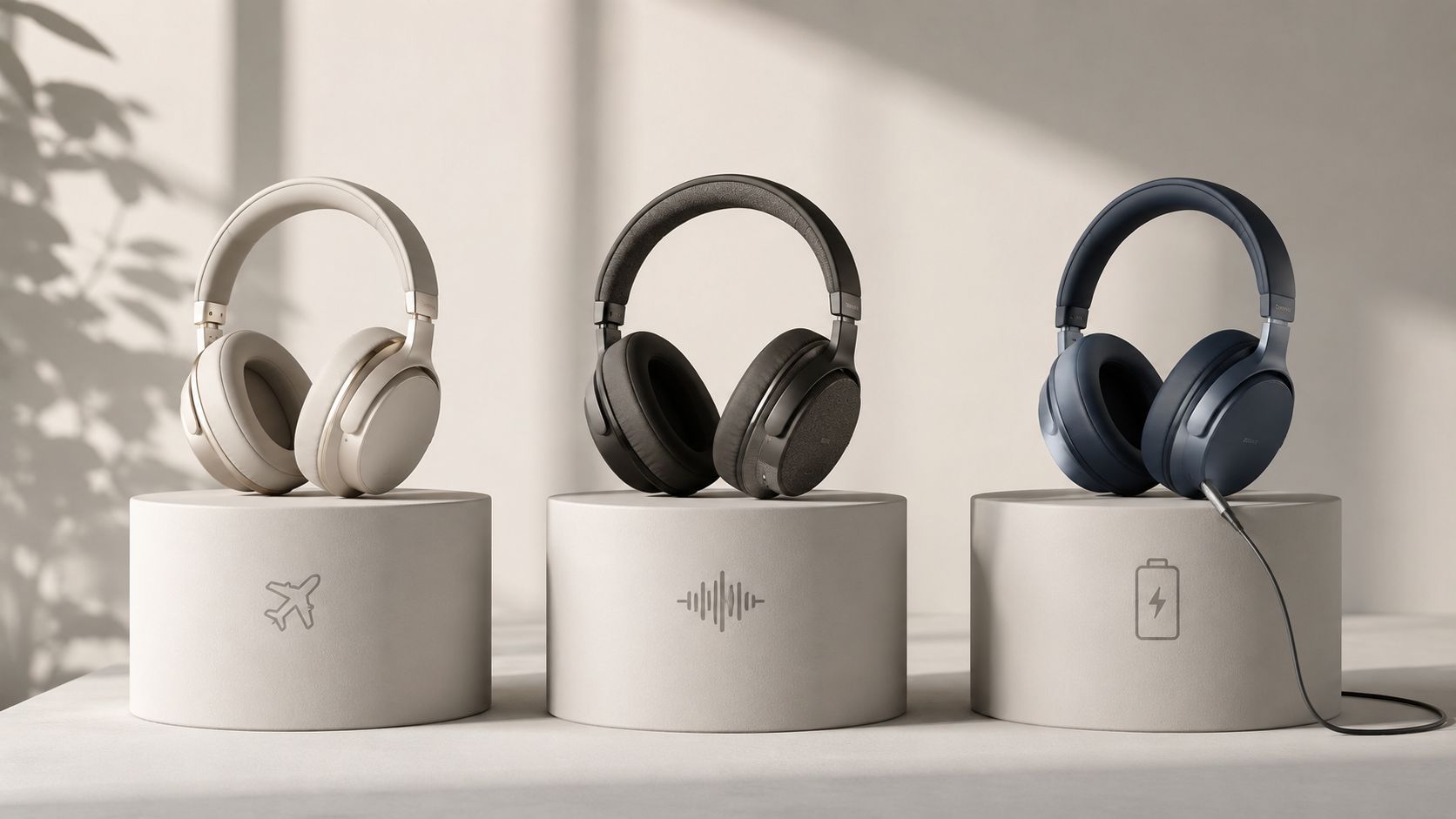
The first camp is the convenience camp, and recent 2026 roundups keep putting the Sony WH-1000XM4 and the Bose QuietComfort line near the top for ANC-first buyers. One test report claimed the WH-1000XM4 produced a 40 dB reduction in mid-frequency noise, which is the sort of number that explains why these headphones still show up in commuter conversations Progressive Radio Network. The second camp is the audio camp, where the Sennheiser HD 600 keeps returning as the reference pick for listeners who care more about neutral sound than wireless convenience Progressive Radio Network.
Practical rule: If you use headphones on trains, in cafes, or around office noise, start with ANC. If you sit still to listen, start with tuning. If you hate charging, start with battery life.
The battery story matters because it proves how different these buys really are. One 2026 guide listed the Bose QuietComfort with a 24-hour battery, the Marshall Monitor III A.N.C. with 100 hours, and Soundcore models at 55 to 98 hours depending on tier Progressive Radio Network. That spread is not a footnote. It's the category telling you that “best” means different things to different ears.
| Category | What It Optimizes For | What It Sacrifices | Example Picks |
|---|---|---|---|
| ANC-first wireless | Quiet, commuting, easy daily use | Absolute neutrality, open-room realism | Sony WH-1000XM4, Bose QuietComfort |
| Audiophile wired | Neutrality, texture, honest tone | Wireless convenience, isolation, portability | Sennheiser HD 600 |
| Battery-heavy wireless | Long sessions, low charging anxiety | Some size, sometimes refinement | Marshall Monitor III A.N.C., Soundcore models |
The floor is crowded. The choice is about priorities, not rankings.
The Wireless ANC Heavyweights and Where They Win
Wireless ANC headphones own the convenience side of the sub-$300 market because they solve one problem fast. Put them on, and the room shrinks. That matters on aircraft, subways, in open offices, and in coffee shops that treat espresso machines like percussion. I do not care how tidy a frequency response graph looks if the mid-band noise still leaks through.
Sony WH-1000XM4 For People Who Need The Noise Gone
The Sony WH-1000XM4 earns its reputation because it attacks the ugly part of everyday noise, not just the obvious stuff. One report cited 40 dB mid-frequency reduction, which lines up with why this model keeps coming up for travelers and commuters Progressive Radio Network. Mid-frequency rumble is where voices, engines, and general human mess live. Kill that and the headphone starts feeling more expensive than it is.
To my ears, that is the XM4's real trick. It does not need romance. It needs to stop the train from punching holes in your playlist. The presentation stays practical, not lush, and that is the right move for a headphone whose main job is subtraction.
Bose QuietComfort For Comfort That Disappears On Your Head
The Bose QuietComfort line stays relevant because comfort is a feature, not decoration. If a headphone clamps too hard or heats up too fast, you start noticing the hardware instead of the music. Bose gets that and keeps the fit centered on long wear rather than showroom theatrics. The result is the kind of headphone you forget you are wearing, which is exactly what you want during a long workday.
One 2026 roundup cited the QuietComfort's 24-hour battery, and that gives you the right frame for the model Progressive Radio Network. It is not a marathon number, but it does not need to be if the fit is right and the ANC handles the background noise. This is the pick for buyers who want the least friction, not the most bragging rights.
Marshall Monitor III A.N.C. For The Battery Hoarder
The Marshall Monitor III A.N.C. belongs in the conversation because 100 hours changes behavior Progressive Radio Network. That number does more than look good on a spec card. It removes the little anxiety that sits in the back of your head every time you throw wireless headphones in a bag for a trip, a work week, or a weekend away.
Short version: Long battery life is not a luxury feature. It changes how often you think about the headphone at all.
Soundwise, stamina-heavy models often trade a little polish for endurance, and that is fine if battery anxiety is your real enemy. The Marshall does not exist to be the cleanest sounding thing in the room. It exists to stay alive while the rest of your gear asks for a wall socket. In the ANC camp, the question is not which one is best, it is which silence you can live inside.
For buyers who want a broader check on fit, tuning, and feature trade-offs before settling on a wireless model, this entry-level audiophile headphone guide is a useful next read.
Audiophile Picks That Make Wireless Feel Like a Compromise
Once you care about the recording itself, wireless ANC starts looking like a different product category wearing the same outer shell. Useful? Sure. Complete? Not even close. The whole point of a serious wired headphone is that it lets the source, the mix, and the mastering breathe without constantly dragging in radio systems, batteries, and DSP compromises.
The HD 600 Still Sets The Tone
The Sennheiser HD 600 is the center of this conversation because it keeps showing up as a reference headphone for neutral, accurate reproduction Progressive Radio Network. One 2026 guide priced it at $299, another at $230, which tells you two things at once. The street price drifts. The reputation doesn't Progressive Radio Network. That kind of staying power is rare, and it's why the HD 600 still makes newer headphones sound a little self-conscious.
To my ears, the HD 600 doesn't fake drama. It pulls a vocal forward in space without painting it neon. Treble stays civilized, bass stays honest, and the middle of the mix has enough shape to expose bad mastering without turning everything into a lab report. Neutral is not boring. It just refuses to flatter garbage.
Where The HD 660S2 And Planar Options Fit
The HD 660S2 belongs here as the more forgiving sibling. It gives listeners a slightly different path if they want the Sennheiser reference family but prefer a touch more ease in the presentation. That makes it the pick for people who want serious tone without feeling like the headphone is policing every track in the library.
Planar options in the under-$300 band deserve a mention too, because they often bring a bigger, flatter stage feel that can make the room seem to open up. That sense of space is the appeal. Instruments separate with less blur, and percussion can feel more physically etched into the air. The trade-off is that planars can sound less immediate in the middle if you want vocal intimacy first.
A good audiophile headphone doesn't shout. It reveals.
If you want a deeper map of this side of the market, I've already laid out the entry-level route in my guide to entry-level audiophile headphones. The short version is simple. If you sit down to listen, the HD 600 still gives you the least nonsense and the most truth for the money.
Pairing, Amplification, and Why Your Source Matters More Than You Think
Under $300, the headphone is the floor, not the ceiling. The source feeding it can choke the signal, and you hear that before you can name it. Weak outputs make dynamics feel smaller, blur low-level detail, and flatten the space a good headphone is trying to build. People blame the headphone for a problem coming from the laptop, phone, or dock.
Start With The Output You Already Have
If you're using a phone or laptop with a weak output stage, you're asking a serious headphone to squeeze through a narrow doorway. A better dongle DAC gives the signal a cleaner exit point. A small desktop amp helps when the headphone needs more authority, but the larger point is simple. Bad source gear makes good headphones look worse than they are.
The wireless side of the market keeps raising the bar on what buyers expect for the money, and that matters because it changes the baseline for value. Modern closed-backs now arrive with long battery life, hybrid ANC, and aggressive pricing, so wired models have to earn their place by sounding better, not by leaning on nostalgia. That is why source quality matters so much. The same headphone can sound plain or convincing depending on what it is plugged into, and the gap is obvious once you swap gear.
Do These Headphones Need A Big Amp
Mostly no, not in the way old planars or stubborn vintage gear do. The HD 600 family is reasonable to drive with the right source chain, but that does not mean every jack is equal. Some outputs will get you volume. Others will get you grip, weight, and better dynamics. That difference is easy to hear.
Practical rule: If a headphone sounds thin or closed-in, test the source before you blame the driver.
If you want to sort out the source side properly, start with my guide to the best DAC for headphones. The headphone is the room, but the source is the door.
Matching Headphones to How You Live
A headphone recommendation only matters when it survives the rough part of your day. The interrupted session. The noisy room. The headset you keep on for hours because work, travel, and listening all run together.
The Commuter
If you ride trains or buses and want the outside world pushed back, the Sony WH-1000XM4 is the obvious starting point. It handles the kind of mid-band clutter that turns daily travel into fatigue, and it does that job with real authority. If comfort matters more than forceful cancellation, the Bose QuietComfort is the safer choice. It sits easier on the head and asks less of you over a long ride.
The Home Listener
If your priority is hearing what the recording gives you, the Sennheiser HD 600 is the clean answer. It tells the truth without softening the edges or adding extra gloss. If you want something in the same serious lane but a little less stark, the HD 660S2 is the better backup.
For anyone still sorting out whether an open design fits their room and routine, start with this guide to open-back vs closed-back headphones. Open backs give you a wider, freer presentation, but they demand a quiet space and give up isolation.
The Hybrid Worker
If your day jumps between calls, playlists, and desk noise, the Bose QuietComfort is the cleanest compromise. It is easy to live with, easy to keep on, and it does not fight you when headphones spend most of the day nearby. If battery anxiety keeps bothering you, the Marshall Monitor III A.N.C. is the better backup because it lets you stop thinking about the charger.
The Bedroom Producer
If you are tracking or mixing in a quiet room, the HD 600 is the right call. It will not flatter weak balance, harsh highs, or vocals that sit too far forward. It shows the mix as it is, which is what you want before decisions get baked in. If you want a second pair with more speed and a different texture, a planar option in this price range makes sense as the backup.

I do not care about the reviewer's best moment. I care about your worst one. That is the moment that decides the buy.
The Case for Buying the Old Reference Instead of the New Toy
The Sennheiser HD 600 keeps winning because it answers a different question than the wireless crowd. Not “what does this do for me everywhere?” but “what does the recording sound like?” That's why it remains the stronger pick when sound quality beats convenience, and why another 2026 expert roundup named it the best audiophile headphone under $300 Progressive Radio Network.
Why The Old Standard Still Matters
The industry loves shiny launches because shiny launches sell. I get it. I run a site that has to rank, and nobody pretends otherwise. But the HD 600 still being used as a reference more than two decades after release says something uncomfortable about the market. A lot of newer headphones are clever. Fewer are more truthful.
Its open-back design is part of the deal. You need a quiet room, and you give up isolation, ANC, and battery life. Those are not hidden catches. They're the actual trade-offs you're paying for. If you want silence on the subway, the HD 600 is the wrong tool. If you want a stable tonal floor that lets you judge a mix or enjoy a record with precision, it's still hard to beat.
Why It Beats The New Toy Mentality
New wireless headphones often win by adding features. The HD 600 wins by removing excuses. That sounds harsh until you listen long enough to hear how many modern headphones shape the music around the product instead of the product around the music. The HD 600 doesn't play that game.
It's not nostalgia. It's the floor that makes everything else audibly compromised.
The Under-300 Buying Checklist and Final Verdict
Spend the money only after you answer six questions with no self-deception. First, do you need open-back or closed-back? Open-back gives you space and realism, closed-back gives you privacy and isolation. Second, do you want wireless or wired? Wireless buys convenience, wired buys fewer compromises.
Third, do you need ANC or transparency? If you spend time in transit or noisy shared spaces, ANC earns its keep. Fourth, how much battery life in real use do you need? Ignore the headline figure if you keep reaching for the charger. Fifth, what does your source quality look like? A weak output can waste a strong headphone. Sixth, do you have a quiet room? If not, an open-back reference is the wrong move no matter how good it sounds.
My verdict is blunt. For the commuter, buy the Sony WH-1000XM4 or the Bose QuietComfort if comfort matters more than max suppression. For the audiophile, buy the Sennheiser HD 600. For the hybrid worker, buy the Bose QuietComfort or the Marshall Monitor III A.N.C. if battery matters more. For the creator, buy the HD 600 and stop pretending a wireless ANC headphone is a monitoring tool.
This market splits by use case, not by a single winner. The commuter wants quiet and comfort. The listener who cares about tone wants the HD 600. The person who splits time between calls, travel, and desk work needs a different compromise than either of them, and the best under-300 choice changes with that reality. Most sites pretend otherwise because a neat ranking sells better than a hard trade-off.
The best headphone under 300 is the one whose compromises you can live with, not the one that wins the most roundups. If you want more sharp, opinionated headphone buying guidance, keep an eye on Supermarket Sound and use the same question I use before every recommendation, what problem are you trying to solve?

