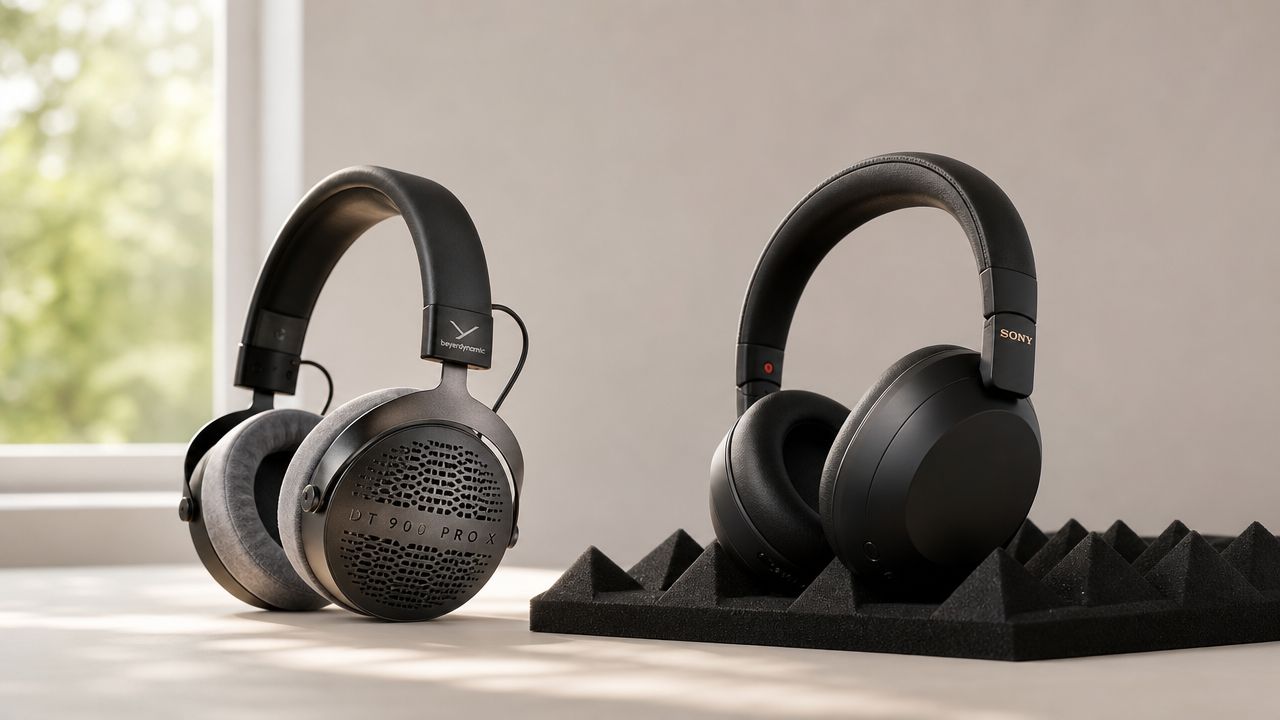
Many users select unsuitable headphones because they're answering the wrong question. The fundamental split isn't open back versus closed back. It's whether you want your headphones to work with your environment or fight it.
That sounds abstract until you hit the part where physics humiliates preference. Open-back headphones can leak 58–64 dB at 1 meter when you're listening at 70 dB SPL, which is roughly the level of a quiet conversation, according to IEC-style acoustic measurements summarized here. So no, your open pair isn't a “stealth audiophile” move in an office. It's a tiny speaker strapped to your head. Meanwhile, closed-backs aren't “less pure.” They're the practical choice when the room, the train, the mic, or the person next to you matters more than airy stage width.
My take is simple. Open back vs closed back headphones isn't a quality ranking. It's a compromise audit. Your room, your noise floor, your tolerance for heat, your need for privacy, and your willingness to trade bass weight for spaciousness decide this long before brand or price does.
| Use Case | Open-Back | Closed-Back | My Recommendation |
|---|---|---|---|
| Quiet home listening | Wide, natural, breathable | More intimate, more contained | Open-back |
| Commuting and travel | Terrible fit due to leakage and no isolation | Blocks outside noise, keeps music private | Closed-back |
| Recording vocals | Poor fit because sound can bleed | Standard choice for tracking | Closed-back |
| Mixing and mastering | Strong choice for honest stereo image | Can feel pressurized and less open | Open-back |
| Shared office | Leaks too much sound | Far safer around other people | Closed-back |
| Bass-heavy listening | Leaner low-end unless compensated | Stronger bass impact | Closed-back |
| Long quiet sessions | Cooler, less pressure | Can get warm and clampy | Open-back |
Table of Contents
- The Debate You're Having Is Wrong
- How They Breathe The Physical Divide
- Space vs Silence The Great Trade-Off
- The Shape of Bass and Other Tonal Truths
- Your Arena Matching Headphones to Your Life
- Myths DACs and The Bedroom Studio Paradox
- The Final Checklist So Just Tell Me What to Buy
The Debate You're Having Is Wrong
People talk about this choice like they're comparing two grades of the same thing. They aren't. They're choosing between two listening philosophies.
Open-backs embrace the room. Closed-backs erase the room. That's the load-bearing truth. Everything else, bass punch, heat, stage, leakage, comfort over time, comes downstream from that one design decision.
I've spent enough hours with both to stop pretending there's a universal winner. There isn't. There's only the pair that lies to you in the least damaging way for your actual life. If you listen alone in a quiet room and care about space, image, and that feeling of music breathing around your ears, open-backs usually make more sense. If you ride trains, work near other humans, record anything with a microphone, or just want your music to stay yours, closed-backs win by being useful.
The wrong question: Which one sounds better?
The right question: Which compromise can you live with every day?
That's why so much headphone advice feels useless. It treats your environment like background detail when it's the floor everything stands on. A closed-back in a loud apartment can be the honest choice. An open-back in a dead-quiet room can be the revelatory one. Reverse those settings and the recommendation collapses.
This isn't a spec-sheet fight. It's lifestyle acoustics.
How They Breathe The Physical Divide
The sound difference starts with airflow, not marketing poetry. Open-back headphones are built to breathe. Closed-backs are built to seal.
Open Backs Are Built To Vent
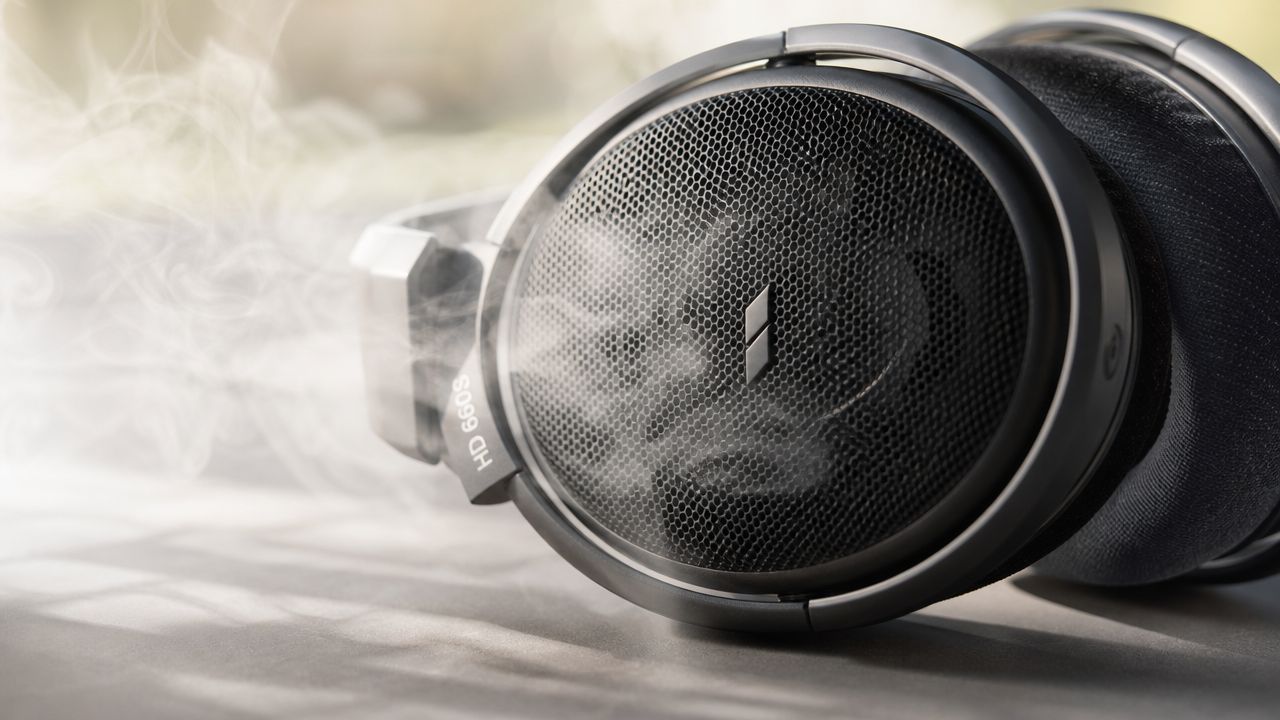
Open-back headphones use perforated or ventilated ear cups. Air moves through. Sound moves through. The rear wave from the driver isn't trapped inside a little plastic bunker behind your ear. That matters because, as MusicRadar's explanation of open-back design puts it, the ventilated cups let air and sound pass through, prevent the pressure buildup closed designs suffer from, allow the driver to move more freely, and reduce low-frequency buildup for a more accurate presentation.
To my ears, that's why good open-backs tend to sound less congested. Notes don't feel packed into a sealed cavity. Vocals have more air around them. Reverb tails don't die at the cup wall. Stereo information gets room to stretch.
They're not “better engineered.” They're just solving a different problem.
Closed Backs Build A Chamber On Purpose
Closed-backs take the opposite route. They create a sealed chamber around the ear. That chamber keeps your music in and the room out. It also changes how the driver behaves, because the air behind it now has resistance. That pressure is part of the design, not an accident.
Consider this:
- Open-back is an open window. Sound can move freely, but so can everything else.
- Closed-back is a shut room. You get privacy and control, but the room itself starts shaping what you hear.
- Neither approach is neutral in life. Each one trades one kind of truth for another.
Closed-backs often sound denser and more immediate because the presentation is contained. That can be a gift on a noisy street. It can also create that boxed-in sensation some listeners never stop noticing, especially across longer sessions.
A headphone cup isn't just a shell. It's an acoustic decision that everything downstream inherits.
This is why the open back vs closed back headphones debate goes sideways so fast. People compare tuning, detail, and “resolution” while ignoring the structural choice underneath. But the cup architecture is the floor. You're hearing the floor.
Space vs Silence The Great Trade-Off
Your room decides more than the spec sheet does. Open back vs closed back headphones stop being an abstract audiophile argument the second real life enters the frame.

Open Sound Feels Like Air Around The Music
Open-backs earn their reputation the moment you play a spacious recording in a quiet room. Instruments sit farther apart. Ambient cues hang longer. Panning feels mapped, not smeared. If you care about placement, depth, and that out-of-head presentation, this is the appeal.
If you want a clearer breakdown of width, depth, and image placement, read this guide on what soundstage means in headphones.
Here's the catch that changes everything. That spaciousness only pays off if your environment stays out of the way. A quiet bedroom at night can make an open-back sound expansive and effortless. The same headphone near traffic, HVAC hum, roommates, or a loud PC turns into a constant compromise. You lose low-level detail first, then focus, then patience.
That is the bedroom studio paradox. People buy open-backs to hear more of the mix, then use them in rooms noisy enough to erase the benefit.
Closed Sound Gives You Control
Closed-backs win ugly and win often. They cut the room down to size. That matters more than forum mythology about “openness” and “naturalness.”
In a bus seat, shared office, dorm room, or apartment with thin walls, isolation is not a bonus. It is the feature that lets you hear the music you paid for. A closed-back keeps outside noise from stepping on vocals, transients, and quiet arrangement details. It also keeps your listening private, which matters if you live around other human beings.
Use this rule and save yourself time:
- For commuting: buy closed-back.
- For offices, libraries, and shared rooms: buy closed-back.
- For late-night listening near a partner: buy closed-back.
- For a quiet room where you can clearly hear space: buy open-back.
Your tolerance for compromise matters as much as the headphone itself. Some listeners will gladly trade isolation for a bigger, more speaker-like presentation. Others get irritated the second a fan, keyboard, or passing car bleeds into a quiet passage. Know which person you are.
Open-backs reward a controlled room. Closed-backs forgive a messy one.
That is the trade-off. Space sounds glorious when the room allows it. Silence is usually more useful, and for a lot of people, more honest to daily life.
The Shape of Bass and Other Tonal Truths
Open and closed designs don't just change where sound sits. They change the weight, texture, and pressure of it.
Why Closed Backs Hit Harder
Closed-backs usually hit harder in the low end because the chamber holds onto bass energy instead of letting it bleed away. RTINGS' explanation of open versus closed designs notes that closed-back headphones deliver 3–6 dB stronger low-bass output from 20–80 Hz because the sealed chamber prevents low-frequency leakage.
You hear that as punch. You feel it as pressure. Kick drums arrive with more shove. Synth bass has more physical edge. In noisy places, that extra low-end presence matters because the environment tries to eat bass detail first.
That doesn't mean closed-backs are automatically more accurate. It means they're more forceful.
Why Open Backs Sound Less Stuffed
Open-backs tend to sound looser down low, but often cleaner through the mids because they don't build the same internal pressure. Bass notes can feel less like a fist and more like a contour. You get texture over slam. The attack may seem lighter, yet the decay can feel more believable because the cup isn't crowding the note.
Personal taste starts to matter. If you want club energy, sealed designs often deliver the goods faster. If you want to hear bass lines as shape and movement rather than impact alone, open-backs can be more convincing.
Here's how I'd put the tonal trade in plain English:
| Trait | Open-Back Tendency | Closed-Back Tendency |
|---|---|---|
| Bass feel | Airier, lighter, less pressurized | Heavier, punchier, more physical |
| Midrange presentation | Less boxed-in | Can sound denser or more enclosed |
| Treble perception | More spacious | More direct and intimate |
| Overall character | Natural, roomy | Focused, private |
Practical rule: If you keep turning up open-backs because they feel too polite, you probably want closed-backs. If closed-backs make everything feel too packed and too warm, you probably want open-backs.
The mistake is treating either sound as morally superior. They're different flavors of compromise. One gives you air and honesty at the expense of impact. The other gives you body and privacy at the expense of openness. Pick the lie you mind less.
Your Arena Matching Headphones to Your Life
This is the part where most buying guides get shy. I won't. Different listeners need different answers, and some of those answers are obvious.
The Commuter
Buy closed-backs.
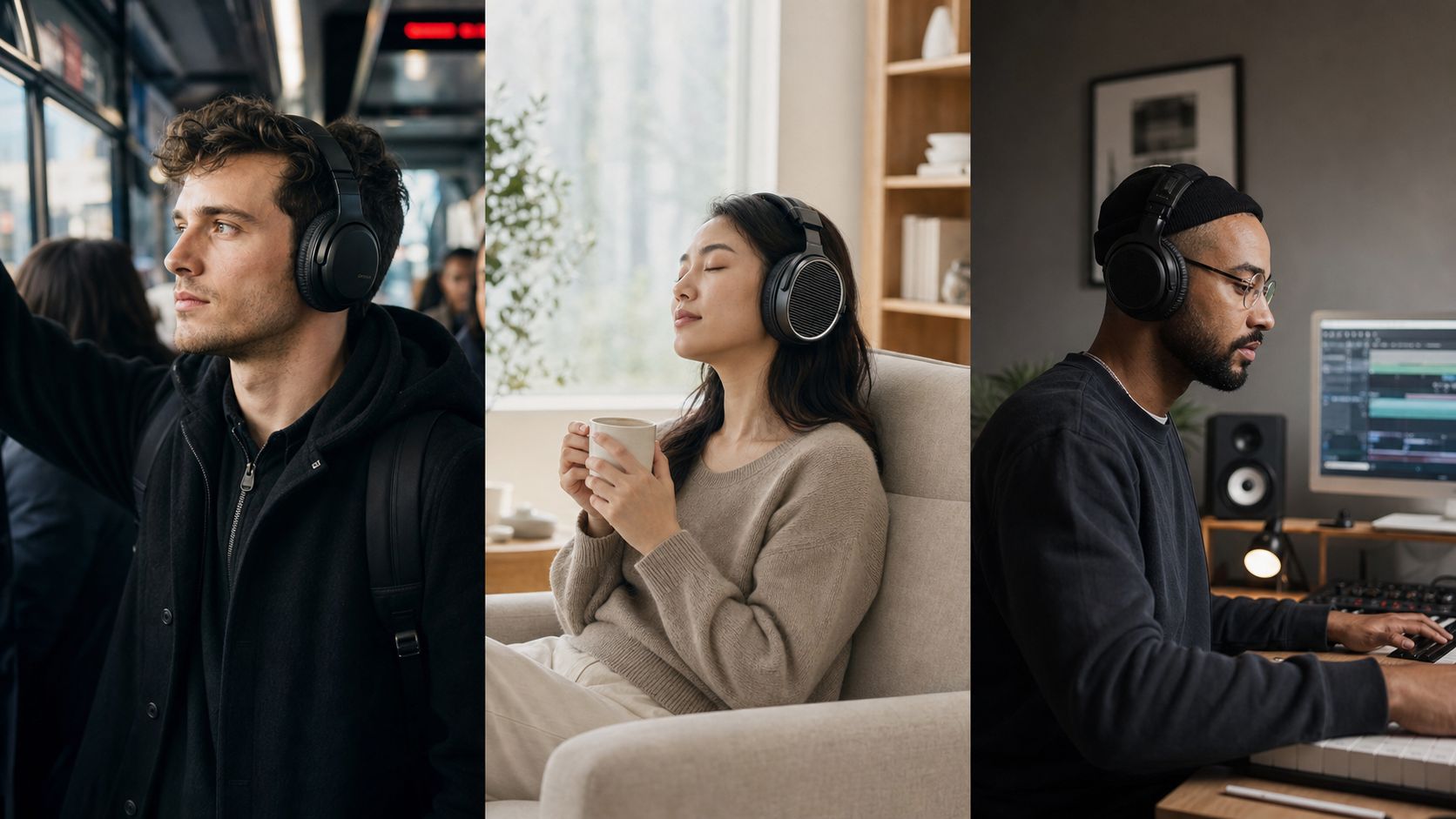
You need isolation. You need privacy. You need your music to survive train noise, engine rumble, gym clatter, and the general punishment of public life. Closed-backs dominate commuting, gym use, and recording scenarios because that sealed design blocks outside noise and keeps sound from spilling out, as summarized in TechRadar's breakdown of where each design fits.
Open-backs on a commute are cosplay. They're pretending your life is quieter than it is.
The Home Audiophile
If you have a quiet room and you listen for pleasure, not just utility, buy open-backs first.
That's especially true if your room stays calm enough that you're not fighting ambient noise all night. In quieter spaces, open-backs reduce the sealed-up sensation and heat buildup that closed designs can create. They feel less like wearing a device and more like sitting near the music. The soundstage gets wider, images breathe, and long sessions usually feel easier on the head.
If your home is noisy, that recommendation collapses fast. This is why environment matters more than category loyalty.
The Bedroom Producer
You probably need both. Annoying answer. Correct answer.
In professional workflows, closed-backs are standard for tracking vocals because they stop headphone sound from bleeding into the microphone. Open-backs are preferred for mixing and mastering because the lack of a pressurized chamber tends to give you a wider stereo image and more reliable mix decisions, as explained in this professional audio workflow discussion.
That split exists for a reason. One pair protects the recording. The other protects the judgment.
Here's the practical version:
- Tracking vocals or acoustic instruments: use closed-back.
- Editing and rough balance work: either can work, depending on your room and fatigue tolerance.
- Mixing decisions about space, EQ, and compression: open-back usually tells you more truth.
A quick visual break helps because this topic gets messy fast.
The Competitive Gamer
This one depends on whether you play in noise or in peace.
If you game in a quiet room and positional cues matter, open-backs usually do a better job making space feel legible. Directional sounds separate more naturally. Distance is easier to parse. The world feels less painted on the inside of your head.
If you game in a loud house, share a room, or want full immersion without household noise leaking into every match, closed-backs make more sense. No romance here. Utility wins.
If your room is loud, buy for control. If your room is quiet, buy for space.
That's the whole thing.
Myths DACs and The Bedroom Studio Paradox
The internet loves fake rules because fake rules are easy to rank. “All open-backs need serious power.” “Closed-backs are always better for home recording.” Clean headlines. Messy reality.
Cup Design Does Not Tell You How Hard A Headphone Is To Drive
Open-back versus closed-back tells you how the cup behaves acoustically. It does not tell you how demanding the headphone is electrically. Some headphones want more amplification. Some don't. That depends on the specific load they present and how efficiently they turn power into volume, not on whether the back of the cup has vents.
So no, don't assume every open-back needs a desktop stack the size of a toaster. And don't assume every closed-back will sing from a weak source. If you're sorting that part out, start with a plain-English primer on budget DAC and amp options that actually make sense.
The amplifier question is separate. Keep it separate.
The Bedroom Studio Paradox Is Real
Here's the contrarian take most guides duck. Blanket advice for home producers often says closed-back for recording, full stop. That's incomplete.
The more honest version is the bedroom studio isolation paradox. Closed-backs are still the right tool for tracking because they prevent bleed. But in untreated rooms, they can also build up a pressurized, resonant low end and contribute to fatigue. Open-backs, by contrast, can reveal what's wrong with the space during mix work, which lets you fix problems downstream instead of hiding them. That tension is laid out well in this discussion of the bedroom studio paradox.
That matters because a closed-back can starve the signal of truth in the exact place your room is already lying to you. You hear a tidy little private bass pocket and mistake it for accuracy. Then the mix leaves the room and falls apart.
Closed-back for tracking isn't wrong. Closed-back for every decision in an untreated room is where people get fooled.
If you make music at home, stop asking which design is “for producers.” Ask which stage of the job you're in, and what lie the room is telling today.
The Final Checklist So Just Tell Me What to Buy
You don't need another soft recap. You need a decision.
Answer These Without Romanticizing Your Setup
- Will anyone else hear your music if your headphones leak? If yes, buy closed-back.
- Do you commute, travel, work in shared spaces, or listen around household noise? Buy closed-back.
- Do you record vocals or instruments in the same room as your microphone? Buy closed-back for tracking.
- Do you sit in a quiet room and care most about space, imaging, and a speaker-like presentation? Buy open-back.
- Do you hate heat, pressure, and that sealed “cup” feeling over long sessions? Lean open-back.
- Do you want heavier bass impact and more physical low-end weight? Lean closed-back.
- Do you mix in a less-than-perfect room and need to hear spatial issues more accurately? Consider open-back for mix work.
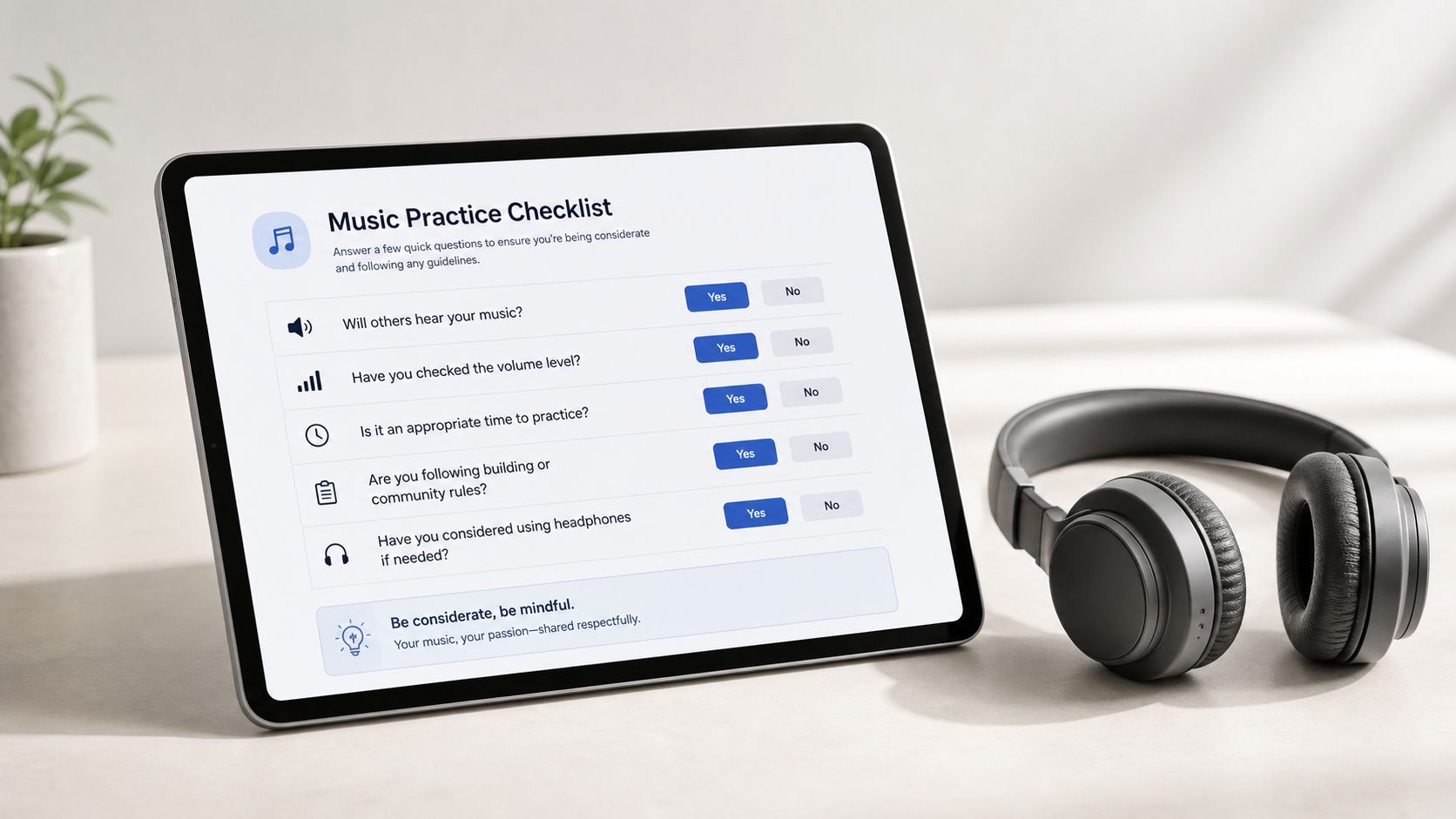
My Blunt Recommendation
If you only own one pair and your life happens outside a silent room, buy closed-back. They're less romantic and more useful.
If you already have the practical pair covered and want the one that makes albums unfold instead of just play, buy open-back. That's where the magic tends to live. If you want a few solid starting points, I've got a roundup of entry-level audiophile headphones worth your time.
Buy for the room you have. Not the one you fantasize about.
Author: Marque Hersh
Publisher: Supermarket Sound
Author profile: Marque Hersh on Steam

