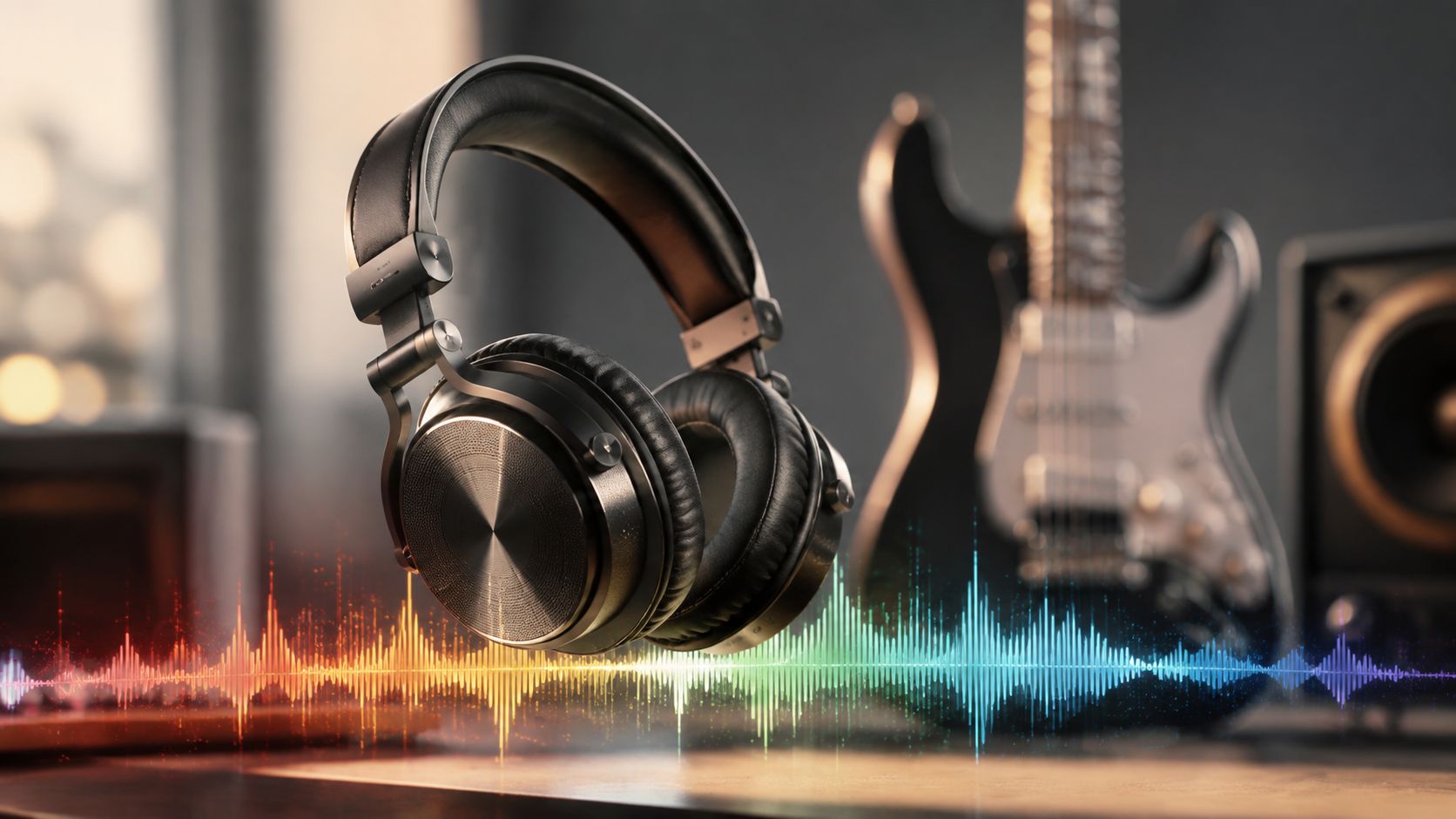
Most “best headphones for rock music” lists are bass-cannon catalogs wearing an audiophile hat. They praise a V-shaped tuning because it sounds dramatic for thirty seconds, then ignore what happens when guitars, snare, vocals, and cymbals all fight for the same piece of the mix.
Rock doesn't need more spectacle. It needs midrange authority, a driver that stays composed when the volume rises, and enough isolation, or enough open space, for the room you're sitting in. I'm Marque Hersh, founder of Supermarket Sound, and my position is simple: buy the headphone that keeps the guitars alive. Everything else comes downstream.
| Model | Type | Impedance | Best For | Needs Amp |
|---|---|---|---|---|
| Audio-Technica ATH-M40x | Closed-back | 35 ohms | Portable rock listening | No |
| Beyerdynamic DT 770 Pro | Closed-back | 80 ohms | Noisy rooms and controlled bass | Sometimes |
| Sennheiser HD 560S | Open-back | 120 ohms | Dedicated home listening | Recommended |
| Grado SR225x | Open-back | 38 ohms | Guitar texture and forward energy | No |
| Beyerdynamic DT 1990 Pro | Open-back | 250 ohms | Critical evaluation of dense mixes | Yes |
Table of Contents
- Rock Music Does Not Need a Bass Cannon
- The Frequency Map That Actually Matters for Rock
- Open-Back Versus Closed-Back for Real Rock Listening
- Why Impedance and Sensitivity Decide Everything Downstream
- Headphone Picks That Survive a Loud Rock Mix
- The Harman Target and Why It Keeps Showing Up
- Your Final Call on the Right Rock Headphone
Rock Music Does Not Need a Bass Cannon
The kick drum carries weight at the bottom, but the record's identity lives higher up. Bass guitar fundamentals occupy roughly 20 Hz to 200 Hz, while the body of guitars, snare bite, and vocal presence sit through the midrange, around 250 Hz to 4 kHz. That's why an inflated low end can make a rock track feel impressive while removing its architecture. The bass swells, the guitars lose their edges, and the singer gets shoved behind the amplifiers.
A headphone with a recessed 1–3 kHz region makes riffs sound hollow and vocals step backward. That isn't a small tonal preference. It changes who appears to be leading the band. A Stratocaster should sound like wood, wire, pick attack, and a slightly unruly amplifier. If the tuning turns it into a smooth electronic slab, the headphone has failed the song.
My rule: If the guitars sound exciting only because the bass is huge, you're hearing the headphone perform, not the band.
Rock also exposes poor treble behavior quickly. Extended treble can preserve cymbal shimmer and the decay around a snare, but an aggressive upper end turns every crash into a sharp object. Loud rock recordings already ask plenty from the listener. The headphone shouldn't add glass to the mix.
The industry's familiar 20 Hz to 20 kHz frequency-response convention remains a useful baseline because it maps closely to the nominal limits of human hearing and gives buyers a common reference for comparing models. The number itself doesn't tell you whether a headphone sounds good. It tells you whether the manufacturer has covered the basic territory. The contour inside that territory matters more.
The best rock headphone isn't the one with the biggest bass claim. It's the one that holds the middle together.
The Frequency Map That Actually Matters for Rock
Frequency response becomes useful when you connect it to instruments instead of treating it like packaging copy. A response range of 20 Hz to 20 kHz covers the full nominal audible band, but a headphone can still sabotage rock if it hollows out the frequencies where the band does its work. This guide to headphone frequency response gives the basic measurement language. Your ears need the musical translation.
Low frequencies give the band its floor
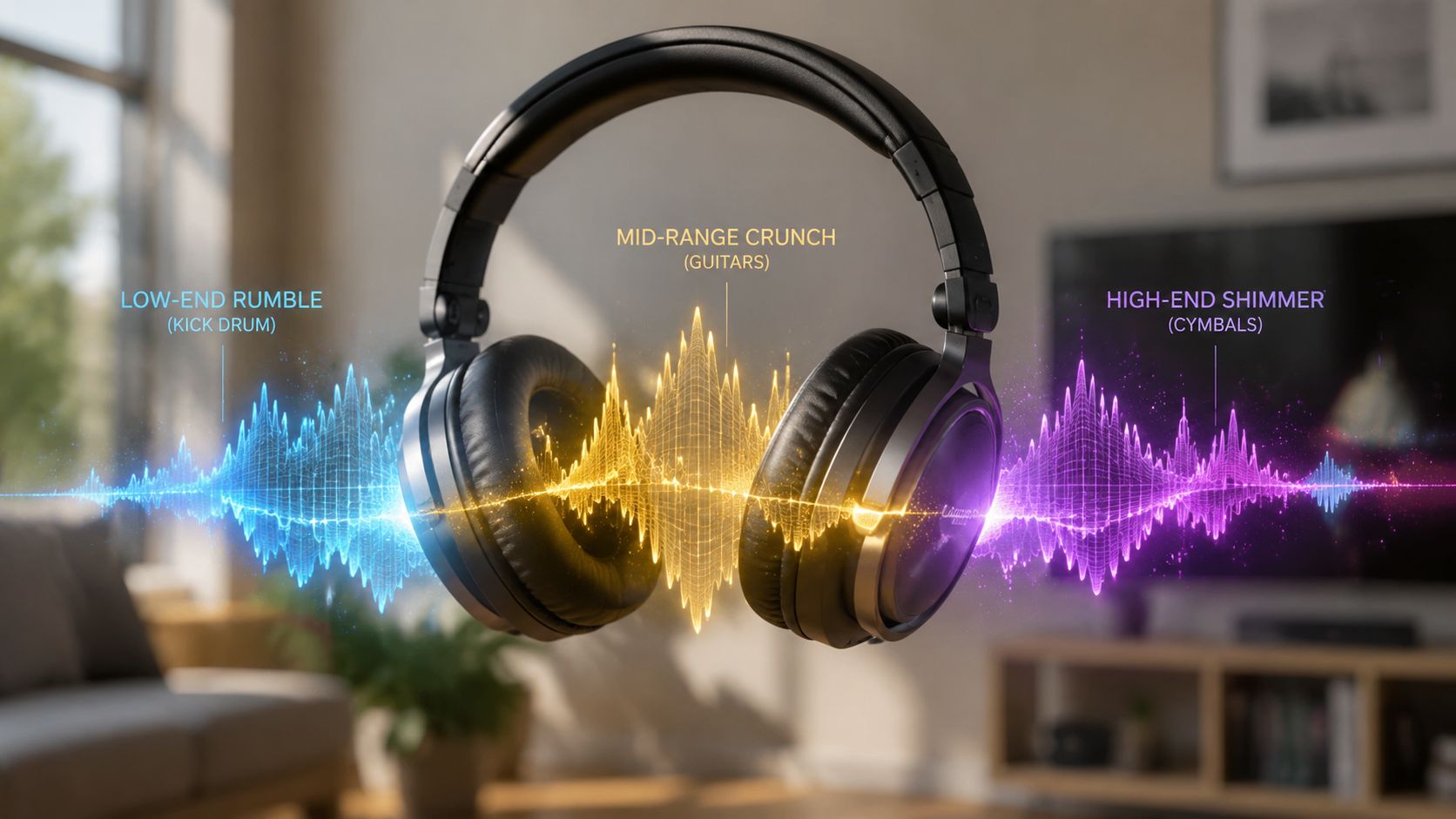
The bottom end around 20–200 Hz carries kick-drum weight and bass-guitar fundamentals. The kick's thump needs enough energy to feel physical, but excess warmth can spill upward and blur the bass guitar's pitch. I listen for separation first. The kick should hit, the bass line should remain traceable, and neither should cover the lower body of the guitars.
The region around 250 Hz to 800 Hz supplies much of the thickness in guitar cabinets, toms, and male vocals. Too much here makes a mix congested. Too little leaves the band skeletal. Rock needs mass, but it needs organized mass.
The middle tells you who is playing
The core guitar crunch generally lives from the upper midrange into the presence region. The broad musical lesson is more important than pretending every instrument occupies a sealed box: guitar texture, snare definition, and vocal intelligibility depend on midrange integrity.
A recessed 1–3 kHz area makes riffs sound distant and polite. A controlled rise through the presence region gives picking, chord changes, and vocal consonants enough shape to stay intelligible when the arrangement thickens. The headphone should reveal the layers without turning every guitar into a paper cut.
Treble should reveal detail, not punish you
Snare bite and pick attack reach into the upper midrange and lower treble, while cymbal shimmer extends above it. Treble that rolls off too early makes a record dull and hides decay. Treble that spikes turns cymbals into what I call dental surgery.
A response graph can show you the broad contour, but it can't replace a serious listen. Use familiar recordings. Listen for whether the guitar remains textured when the drummer opens the hi-hat, and whether the singer stays present when the chorus arrives.
The graph is a map. The midrange is the road.
Open-Back Versus Closed-Back for Real Rock Listening
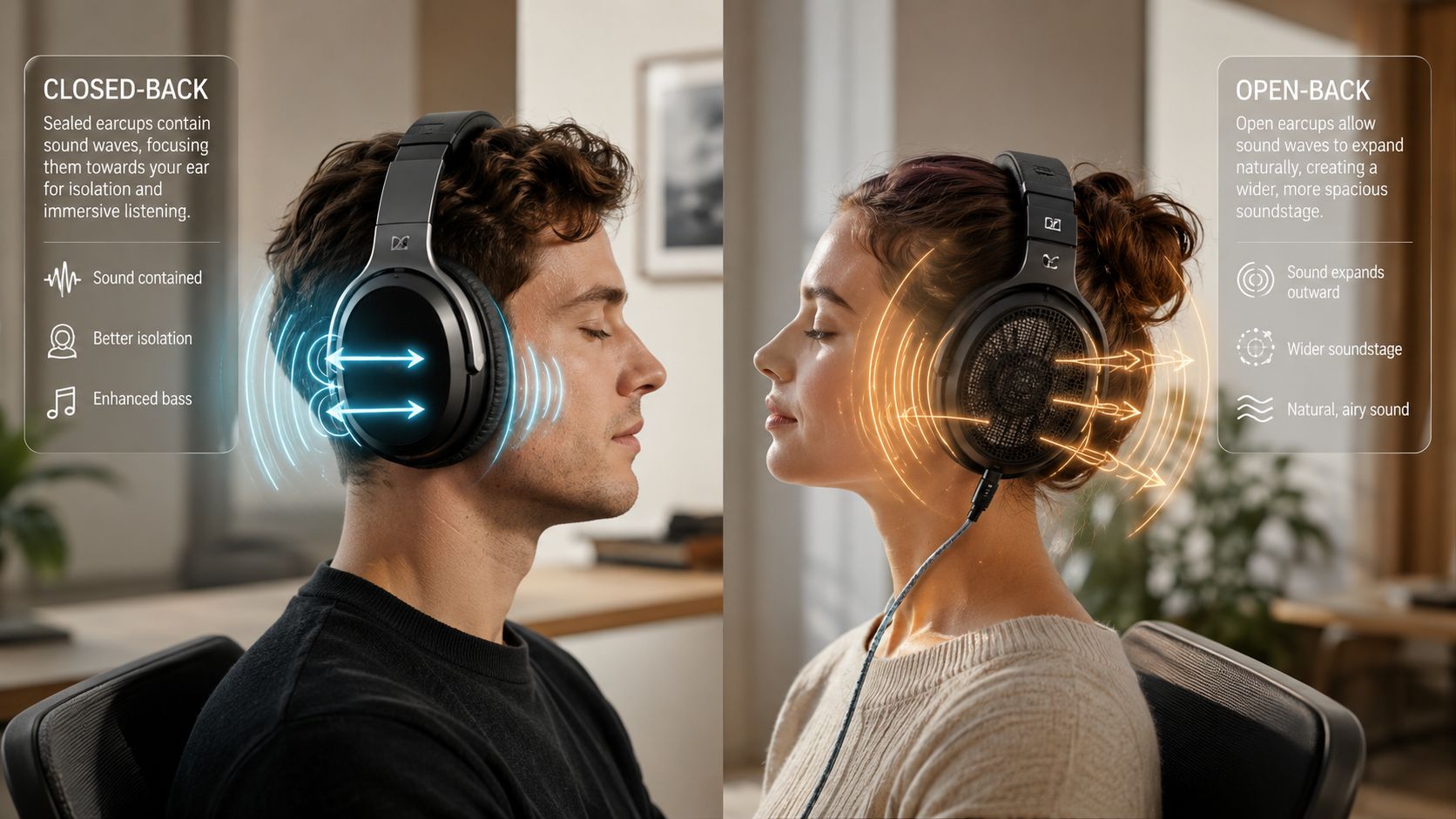
Open-back headphones are not automatically the better rock choice. They are the better choice only when the room allows them to work.
Their perforated or vented construction lets air move more freely around the driver. In a quiet room, that can make cymbal decay, reverb tails, and layered guitars feel less compressed. The benefit is not a fake concert-hall effect. It is cleaner separation when a dense mix loads the midrange with guitars, vocals, and snare energy.
The trade is physical. Open-backs leak sound and offer little practical isolation. Your neighbors can hear the drummer, while outside noise masks low-level details such as cymbal decay and subtle guitar texture. Isolation is attenuation across the audible spectrum, not a simple noise-cancelling yes-or-no label.
Open-back belongs in the quiet chair
Choose open-back for home listening when leakage is acceptable and you want the mix to breathe rather than feel sealed. A well-tuned design can keep guitar layers distinct and avoid excessive bass buildup inside the cups. It will not manufacture a concert hall, despite the sales language. It can keep a crowded recording from collapsing into one flat wall.
Playback level changes the verdict. Rock recordings can range from about 70 dB SPL for acoustic material to 90 dB SPL and above for heavy rock, according to this headphone loudness reference. At higher levels, a treble spike becomes tiring and loose bass makes the driver work harder. That is where driver composure matters more than spacious marketing copy.
Closed-back headphones contain more of the sound and reduce interference from the room. A Shure isolation summary reports reductions from 20 dB to 37 dB, depending on frequency band and fit. The Shure isolation summary supports the practical conclusion: the seal is part of the design, not a minor comfort detail.
Closed-back wins when the floor is noisy
For commuting, shared apartments, late-night sessions, or rooms filled with mechanical noise, closed-back is the honest choice. You give up some air and gain contrast, letting guitars, vocals, and drum attacks remain audible without turning the volume higher. A peer-reviewed abstract on isolating earphones connects better ambient-noise attenuation with lower playback level and sound dose in noisy environments. The hearing-safety logic behind that trade makes the point clearly.
Pick the design that suits the room, then judge whether the driver stays composed when the rock mix gets loud.
Why Impedance and Sensitivity Decide Everything Downstream
A headphone can have the right tuning and still sound anaemic because the source can't feed it properly. Impedance and sensitivity aren't decorative specifications. They describe the electrical load your phone, laptop, interface, or amplifier has to handle.
Sensitivity tells you how efficiently the headphone turns electrical power into sound pressure. Around 97 dB sensitivity and lower sits in the relatively inefficient territory and can require more amplifier power for strong performance, as explained in this headphone recommendation discussion. The exact listening result depends on the source, recording, and level, but the direction is straightforward. A demanding headphone needs a source with authority.
Read the source before buying the headphone
A portable device usually makes the most sense with a lower-impedance design. Headphones around 16–32 ohms are commonly intended for portable sources, while models at 80 ohms and above often benefit from an external amplifier, according to the same reference. A high-impedance model isn't automatically superior. It asks more from the chain.
The failure mode sounds familiar. The kick loses its shape, bass lines become thin, guitars retreat, and dynamics flatten. People then blame the headphone, add an equalizer, or chase a different cable. The amplifier was the weak floor all along.
Match the load to the music
An 80-ohm studio-style headphone can keep bass lines tighter and dense arrangements cleaner when the source has enough voltage headroom. A 250-ohm open-back reference can offer excellent composure for critical listening, but it becomes a poor recommendation for someone plugging directly into a weak portable output.
Use this sequence before you buy:
- Identify the source: Phone and laptop outputs favor efficient headphones. A desktop DAC and amplifier give you more freedom.
- Check sensitivity: Around 97 dB or lower deserves a closer look at amplification.
- Check impedance: 16–32 ohms usually suits portable use. 80 ohms and above deserves proper source matching.
- Listen for composure: If drums flatten when you raise the level, the chain is starving the signal.
Read this plain-language explanation of headphone impedance before treating the number as a badge of quality.
Impedance is the load. Voltage delivery is the answer.
Headphone Picks That Survive a Loud Rock Mix
I'm not handing out a ceremonial winner because rock libraries and listening rooms don't behave alike. The right pick depends on whether you need isolation, whether your amplifier has voltage headroom, and whether you value guitar bite over a luxurious bass cushion.
| Model | Type | Impedance | Best For | Needs Amp |
|---|---|---|---|---|
| Audio-Technica ATH-M40x | Closed-back | 35 ohms | Commuting and practical home use | No |
| Beyerdynamic DT 770 Pro | Closed-back | 80 ohms | Noisy rooms and bass control | Sometimes |
| Sennheiser HD 560S | Open-back | 120 ohms | Quiet-room analysis | Recommended |
| Grado SR225x | Open-back | 38 ohms | Guitar-forward rock | No |
| Beyerdynamic DT 1990 Pro | Open-back | 250 ohms | Critical mixing and reference work | Yes |
Audio-Technica ATH-M40x
This is the sensible entry point when you need a closed-back headphone that doesn't turn every rock record into a nightclub subwoofer demo. Its appeal lies in restraint. Bass has weight, but the midrange remains useful enough for guitars and vocals to keep their position.
The trade is spatial confinement. You won't get the airy separation of a good open-back, and long sessions can feel more enclosed. For a commute, shared room, or first serious upgrade, that compromise makes sense. Skip it if you want the most expansive presentation possible.
Beyerdynamic DT 770 Pro
The 80-ohm version makes sense for listeners who want closed-back isolation and a more controlled low end than typical consumer tuning. It can keep a kick drum firm while preserving the bass guitar's outline, but its treble character deserves a careful listen. On bright or aggressively mastered rock, cymbals can become fatiguing.
Buy it for a noisy environment and a source that can handle the load. Skip it if you're sensitive to treble intensity or want a thick, relaxed presentation.
Sennheiser HD 560S
This is the open-back default I trust for quiet-room rock listening. It presents guitars with useful separation, keeps vocals from disappearing, and gives the drum kit enough space to breathe without turning the recording into a fake cinematic panorama.
Its impedance and open construction make source matching and environment important. It isn't a commuting headphone, and a weak output can leave the presentation less authoritative than it should be. For a desktop listener with a competent source, it gives you the clearest look at what the mix is doing.
Grado SR225x
This is the guitar specialist. The presentation pushes texture, pick attack, and amplifier grit toward the front, which makes classic rock, garage rock, and riff-heavy recordings feel immediate. If you want to hear the fingers and strings rather than admire a distant soundstage, it has a strong argument.
It leaks badly and offers little isolation. The fit also isn't universally comfortable. Choose it for intimate, energetic guitar listening in a quiet room. Skip it for shared spaces or long sessions where comfort needs to disappear from your attention.
Beyerdynamic DT 1990 Pro
This is the critical listener's tool, not the casual recommendation. It brings dense mixes into focus and can expose whether a guitar layer has texture or has been compressed into glare. With adequate amplification, drums retain shape and bass lines stay legible when arrangements get crowded.
That honesty has consequences. Poor recordings remain poor, bright masters remain bright, and the 250-ohm load needs a source built for it. Buy it when you want to evaluate production decisions. Skip it if you want the headphone to flatter everything.
For a wider look at practical choices, including models below this range, see Supermarket Sound's guide to headphones under $300. The useful recommendation is the one that survives your room, source, and record collection.
The Harman Target and Why It Keeps Showing Up
The Harman-style target works because it gives rock a stable floor. It doesn't demand sterile neutrality, and it doesn't reward the cartoon logic of “more bass plus more treble equals more excitement.” It places modest weight below, keeps the central midrange from collapsing, and gives the upper mids enough presence for guitars and snare attack.
A useful over-ear contour described by SoundStage! Solo's measurement guide sits around +5 dB at 20 Hz, +3 dB at 100 Hz, and a 10 dB rise centered around 3.2 kHz, relative to 400 Hz. Those figures aren't a license to shop by isolated numbers. They describe a shape. The shape supports kick weight while preserving the region where rock communicates.
A target is a starting point, not a religion
A headphone that measures near this contour will often give rock a sensible balance. Bass gets enough shelf to prevent the record from sounding thin. The midrange remains load-bearing. The upper-mid rise restores guitar bite and vocal presence without requiring a treble firework display.
Neutral tuning also remains a useful baseline for honest reproduction. This genre-focused headphone guide describes neutral response as a way to reproduce music without emphasizing a particular frequency band. That matters when you want the headphone to reveal the recording rather than rewrite it.
V-shaped tuning can sound thrilling with a sparse arrangement. In dense rock, the boosted bass competes with the guitar body while the boosted treble exaggerates cymbals and pick noise. The middle disappears, and the band loses its center of gravity.
Use the Harman target as a filter. Then listen.
Your Final Call on the Right Rock Headphone
Start with the room, not the brand.
If you listen in a quiet room, choose an open-back with intact mids and controlled upper treble. The HD 560S is the straightforward choice for broad rock libraries, while the Grado SR225x suits listeners who want guitars closer, sharper, and more physical.
If you commute, share walls, or listen beside a noisy appliance, choose closed-back. The ATH-M40x keeps the decision simple and portable. The 80-ohm DT 770 Pro makes more sense when your source can drive it and you want firmer bass control.
Then inspect the source chain. A phone or laptop favors efficient models. A dedicated amplifier gives demanding headphones room to breathe. Don't buy a high-impedance design and hope the downstream equipment will somehow invent voltage.
Finally, judge the library. Spacious classic rock exposes soundstage and decay. Compressed modern metal exposes driver composure, treble discipline, and bass separation. A mixed collection needs balance more than personality.
The best headphones for rock music don't win because the box promises an extreme frequency range. They win because a loud, crowded mix still has a center. Guitars retain texture. Drums keep their shape. Vocals stay in the room.
Buy the headphone that makes the band sound alive, then stop shopping and listen.
If your current headphones turn guitar-heavy records into bass fog or cymbal punishment, choose your room and source first, then use the table to narrow the field. For a quiet home setup, start with the HD 560S. For isolation, start with the ATH-M40x or DT 770 Pro. Put on the record you know best, raise the volume only as far as the mix needs, and buy the model that keeps the guitars standing.

