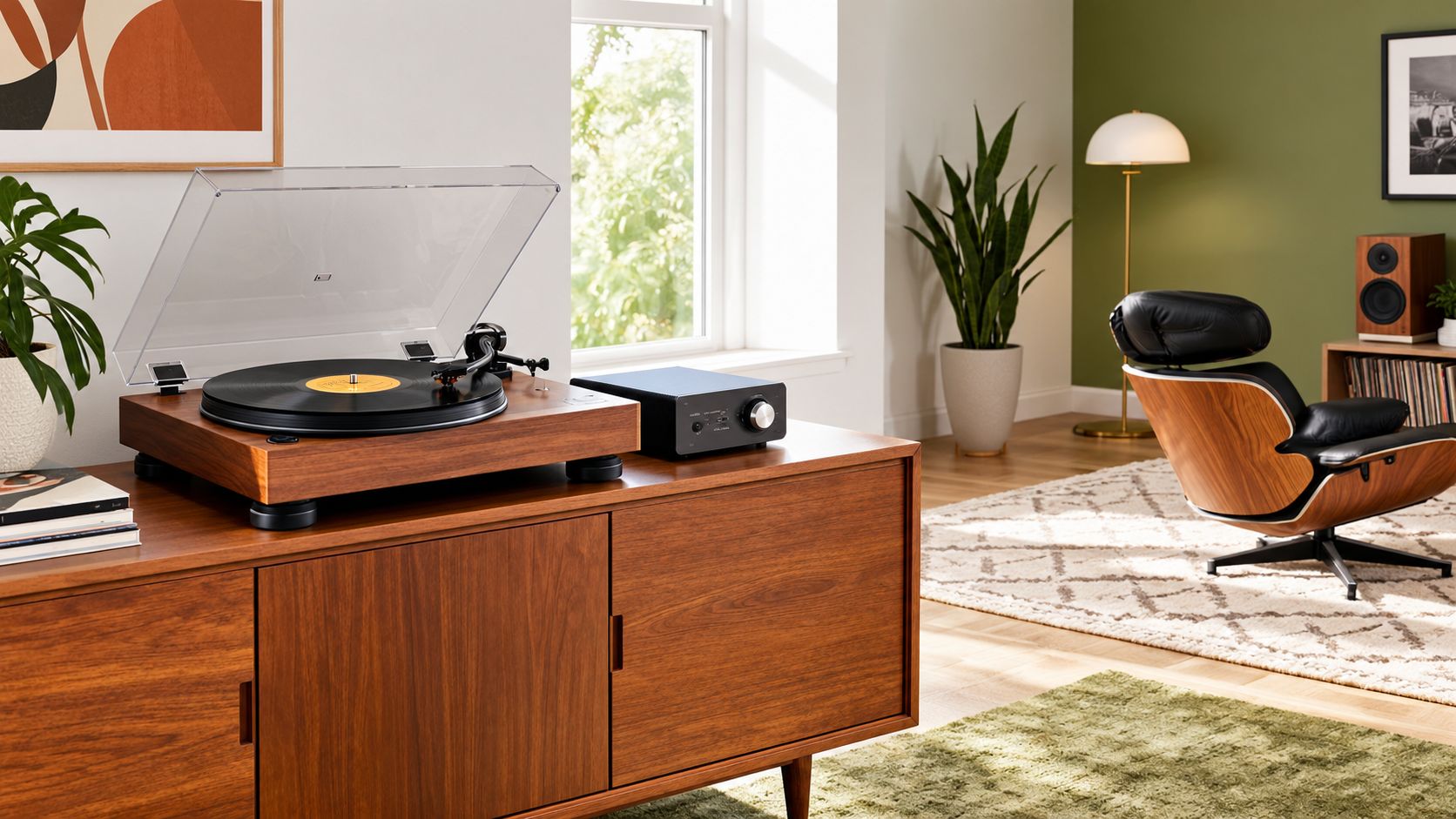
The Fluance RT82 at about $349 is my practical pick for the best turntable under $500, because the money it leaves for a proper external phono preamp matters more than another glossy feature on the deck itself. At this price, the right table isn't the one with the longest specification sheet, but the one that gives the stylus a stable, quiet floor to work from.
That sounds less exciting than Bluetooth buttons and polished product photography. It also happens to be more useful. A turntable is a chain, and the cartridge, tonearm, motor, isolation, and phono stage all have to pass the signal downstream without starving it of texture, timing, or weight.
Table of Contents
- The Turntable Tier Where Manufacturers Stop Pretending
- Why Vinyl Keeps Growing and What That Means for Your Pick
- The Two Sound-Forward Picks to Compare Head to Head
- Setup Moves That Change Sound Before You Spend More
- Which Pick Fits Your Room and What You Want
- How to Verify the Choice Without Buying Twice
The Turntable Tier Where Manufacturers Stop Pretending
The under-$500 turntable tier is where manufacturers have to show their work. The price ceiling leaves room for load-bearing hardware, but not for every convenience feature and every mechanical upgrade at once. Direct-drive motors, switchable phono preamps, USB output, and adjustable tonearms can all appear in this range. The question is which parts receive proper engineering and which are there to strengthen the specification sheet.
Models around $399 show how much usable hardware can fit below the ceiling when the budget goes into the motor, arm, platter, and isolation rather than surface polish. The under-$500 turntable category reflects a market where convenience and serious playback can share the same chassis, though the presence of a feature says little about how well it works.
Count consequences, not buttons. USB output will not quiet a noisy motor. Bluetooth will not correct poor cartridge alignment. A heavy plinth can still pass footfall into the stylus when the feet and shelf provide weak isolation. In a small apartment, those mechanical compromises become easier to hear than another line on the product page.
Find The Floor Before The Finish
Start with three questions. Does the deck keep the stylus steady? Does it separate the record from motor and room noise? Does its cartridge path leave room for adjustment rather than forcing an early replacement?
Direct drive can provide firm timing and useful torque for listeners who care about speed consistency and an immediate response. A well-executed belt drive can make equal practical sense because the belt places distance between motor vibration and platter. Neither layout guarantees better sound. Bearing quality, speed control, arm execution, and isolation decide the result.
An adjustable tonearm matters because cartridge alignment determines how accurately the stylus tracks the groove. It also gives you a usable way to change cartridges or refine setup later. A switchable phono preamp solves a separate problem. It makes a simple first system possible while preserving a route to an external phono stage when the rest of the system can reveal the difference.
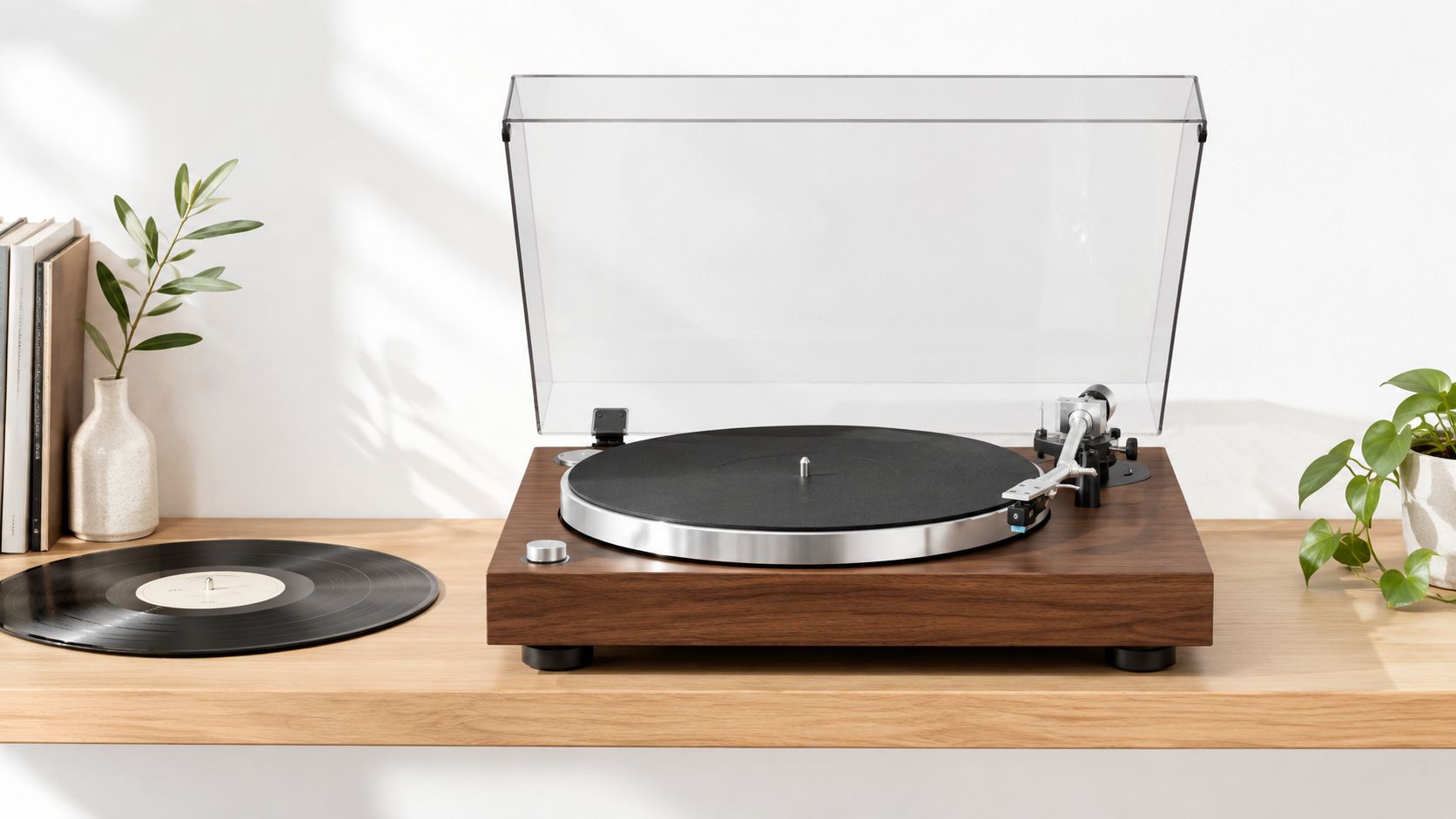
Cut corners here and the rest of the system inherits them. The amplifier raises the noise floor. The speakers expose unstable speed and poor isolation. Your records carry the wear.
For a broader comparison with more ambitious designs, see Supermarket Sound's turntables under $1,000 guide.
The mechanism sets the floor. The finish only tells you what it looks like.
Why Vinyl Keeps Growing and What That Means for Your Pick
Vinyl isn't surviving on nostalgia alone. U.S. vinyl album sales reached 43.2 million units in 2023, with revenue above USD 1.3 billion, and the format had recorded 19 consecutive years of growth in the United States as of 2025. The vinyl market figures and turntable demand point to a format with enough staying power to support serious hardware rather than a temporary novelty aisle.
The same source puts global turntable shipments above 2.4 million units in 2023. One industry estimate says entry-level turntables priced between $100 and $300 accounted for 67% of sales. Those figures don't prove that every affordable deck sounds good. They prove something more useful for buyers: enough people are buying hardware for manufacturers to compete on the parts that determine whether a record feels alive or merely audible.
A Larger Market Raises The Floor
A strong market gives designers room to offer better cartridges, more controlled isolation, and usable speed stability without pushing every serious option into luxury pricing. That's why a turntable around $399 deserves a different standard than a disposable player. You should expect a proper tonearm, a sensible output stage, and a path to improve the system later.
That doesn't mean every new model earns trust. Competition can also produce feature stacking. A manufacturer can add digital output, wireless connectivity, and automatic operation while leaving the platter, feet, or cartridge support underbuilt. The buyer sees a busy feature list. The stylus sees a shaky platform.
The useful question isn't whether vinyl has returned. It clearly has. The useful question is whether your chosen deck belongs to the part of the market that treats playback as a system.
The practical read: a growing vinyl market gives you more credible options, but it doesn't remove the need to inspect the mechanical basics.
The sub-$500 ceiling becomes interesting. It leaves enough room for real engineering, but not enough room for every convenience and every premium component at once. You have to choose what matters downstream.
The market is alive. Spend accordingly.
The Two Sound-Forward Picks to Compare Head to Head
The load-bearing parts decide more than the feature list. Under $500, the Fluance RT82 and Audio-Technica AT-LP120XBT take different routes to good sound, so the right choice depends on your room, system, and willingness to build around the deck.
The Fluance RT82 costs about $349, according to this focused comparison of turntables under $500. Its belt-drive design, adjustable feet, and external phono-stage requirement leave more of the budget focused on the analog foundation. You supply the phono stage separately, then choose one that suits the rest of the system. That adds a box and another cable, but it also gives the signal path somewhere to grow.
The Audio-Technica AT-LP120XBT spends its budget differently. Direct drive, a switchable phono preamp, USB digitizing, an adjustable tonearm, and wireless connectivity make it easier to fit into a mixed modern setup. Those features do not automatically improve the sound. They do solve practical problems, especially when the turntable needs to feed powered speakers, a receiver, or a digital archive without another purchase.
Side-by-Side Sound And Build Comparison
| Feature | Contender A, Fluance RT82 | Contender B, Audio-Technica AT-LP120XBT | Room priority |
|---|---|---|---|
| Motor type | Belt drive | Direct drive | Choose according to isolation needs and handling preference |
| Built-in phono preamp | No | Switchable | External staging favors the RT82, simple connection favors the AT-LP120XBT |
| Plinth isolation | Substantial platform with adjustable feet | Solid DJ-influenced chassis and adjustable setup controls | Matters on shelves, desks, and floors affected by footsteps |
| Cartridge upgrade path | Strong foundation for future cartridge and phono-stage changes | Adjustable arm supports experimentation | More headroom helps if the system will grow |
| Speed handling | Calm, composed presentation when properly set up | Firm, immediate presentation with direct motor control | Match the deck to your listening habits |
| Digital and wireless use | Minimalist analog path | USB and wireless integration | Useful for mixed analog and digital rooms |
The RT82 is the quieter recommendation for a records-first system. Properly set up, it gives instruments room to occupy their own positions, with bass that feels placed rather than pasted across the track. Its appeal is mechanical restraint. There is less built-in convenience, yet fewer compromises in the path you are trying to improve.
The AT-LP120XBT has more immediate physical character. Direct drive gives the presentation a taut feel, while the adjustable arm leaves room to experiment with cartridge choices. In a cramped apartment, that flexibility can matter more than a cleaner specification sheet. Wireless and USB connections also earn their space when the same table must serve both listening and digital tasks.
Choose the RT82 when an external phono chain and long-term upgrade path matter most. Choose the AT-LP120XBT when direct-drive behavior, connection flexibility, and simpler system integration solve real problems in your room.
For the component that physically contacts the record, Supermarket Sound's turntable cartridge guide offers more useful guidance than another list of cosmetic differences.
Buy the architecture, not the accessory count.
Setup Moves That Change Sound Before You Spend More
A modest turntable on a rigid, level shelf can outperform a pricier deck sitting on a resonant cabinet. The stylus responds to vibration and alignment, not the promises on the box. Start with the support under the turntable, because every adjustment afterward depends on a stable platform.
Keep the deck away from a speaker cabinet, especially when the shelf flexes under light hand pressure. Adjust the feet until the platter is level. Check that the dust cover, cables, and nearby objects do not touch the chassis during playback. Isolation has a practical job: it reduces room energy feeding back into the stylus and signal.
Set The Arm Instead Of Trusting The Box
Tonearm setup rewards patience. Mount the cartridge squarely, balance the arm, then set tracking force according to the cartridge maker's guidance. Use anti-skate as a sensible starting adjustment, not as a decorative dial. A crooked cartridge can shift the stereo image, blur cymbals, and pull a vocal toward one speaker.
The cartridge is a small contact point carrying a large share of the system's character. A suitable match can change tonal balance more than a cosmetic platter upgrade. If the system already sounds bright, avoid a cartridge that adds extra edge because its detail seems impressive on the first record.
For a clear sequence covering leveling, cartridge alignment, tracking force, and related adjustments, use this turntable setup guide for beginners.
Speed problems also deserve a careful check before an expensive instrument. Listen to sustained piano, held vocal notes, or long synthesizer tones. Wavering pitch points to an issue worth investigating. Check the belt, platter seating, and surface level before blaming the motor.
Practical rule: fix the shelf, alignment, and tracking force before shopping for a new cartridge.
Phono amplification creates another common setup mistake. Every turntable needs a phono stage somewhere in the chain. If the deck has an internal stage and the amplifier has its own phono input, disable the internal stage rather than sending one phono stage into another. This explanation of phono amplification and bypassing an internal stage explains the signal-path logic.
Here's a visual guide to the physical adjustments that matter during setup.
Use one phono stage at a time. The RT82's external-stage design suits an amplifier with a competent phono input, while the AT-LP120XBT's switchable stage helps when the system needs a direct line-level connection. Keep the unused path disabled.
Careful setup carries a modest deck farther than a glossy one left to float.
Which Pick Fits Your Room and What You Want
The room makes the decision before the spec sheet does. A turntable on a rigid, well-supported rack has a better chance of sounding controlled than the same deck on a hollow console. Flexible furniture can pass footfall and speaker energy into the stylus, while a nearby desk, wall, or subwoofer can add low-frequency trouble. The load-bearing parts of the setup, including the shelf, feet, and chassis, shape the result as much as the feature list.
Choose the Fluance RT82 for an analog-first system you expect to improve over time. It suits a listener who already has an amplifier with a phono input or plans to add an external phono stage. That choice leaves less circuitry inside the turntable and gives you control over the part of the chain that prepares the cartridge signal for the amplifier.
The RT82 makes the strongest case in a settled listening room. You sit down for full albums, value space around instruments, and do not need wireless or USB connections. Its restrained design avoids paying for functions that may never enter your routine. The trade-off is clear: you need a suitable phono input or an external stage, and the deck is less convenient for a mixed digital and analog setup.
For that listener, the RT82 is the pair I would buy. It gives the budget a useful direction rather than spreading it across features that do not improve every system.
When Direct Drive Makes More Sense
Choose the Audio-Technica AT-LP120XBT when one turntable must cover several jobs. Its direct-drive motor provides a firm, immediate response to speed changes, while the switchable phono preamp lets it connect to equipment without a dedicated phono input. USB and wireless functions add practical value when you want to digitize records or play them through a modern room.
That flexibility suits a small apartment. The deck might sit on a desk near a computer, feed powered speakers, and later move to a traditional amplifier. The AT-LP120XBT handles that changing brief more gracefully than a minimalist table that expects every connection to come from the rest of the system.
The trade-off is a busier signal path and more features to manage. If your system already has a good external phono stage and you listen from one chair, the RT82's simpler approach makes more sense. If convenience, placement, and future connections matter more, choose the direct-drive alternative.
A vibrating shelf can undermine either choice. Stabilize the furniture first, then judge which table behaves more calmly in that location. Supermarket Sound offers buying guidance on turntables and related hi-fi equipment, but your room, records, and upgrade habits should make the final decision.
How to Verify the Choice Without Buying Twice
Don't verify a turntable by counting its buttons. Verify the three parts that determine whether the system stays useful after the first month: speed under stylus load, phono-stage behavior, and cartridge headroom.
Check Speed With Music That Exposes Trouble
Start with a record containing sustained notes. Piano, organ, strings, and held vocals reveal pitch movement more readily than dense, heavily compressed material. Listen for a note that seems to breathe unnaturally or for a sustained tone that wanders as the platter turns.
Check the basics before treating that behavior as a design flaw. Confirm that the platter sits correctly, the belt has seated properly where relevant, and the table stands level. On a direct-drive design, give the motor time to settle and listen again. Your goal isn't to produce a laboratory verdict in the living room. It's to identify whether the pitch remains stable enough that the music stops drawing attention to the machine.
Trace The Phono Signal
Follow the cables from the turntable to the amplifier. If the turntable's output switch offers phono and line settings, make sure the setting matches the input. A line-level output belongs in a line input. A raw phono output needs a phono stage. Feeding a line-level signal into another phono stage will produce the wrong gain and equalization, while sending a raw signal into a line input will leave the music thin and quiet.
A table with a switchable internal stage gives you two useful routes, not permission to use both at once. Test the internal stage, then test the external or amplifier stage separately if available. Listen for bass control, vocal solidity, and whether cymbals turn brittle. The stronger route is the one that makes the recording feel more stable, not the one with the louder first impression.
Inspect The Cartridge Path
Look at how the cartridge attaches to the arm. Can you replace the stylus? Can you align a different cartridge without fighting a fixed arm or proprietary mounting system? Can the tracking force and anti-skate be adjusted with enough control to support a future change?
A cartridge upgrade path doesn't require immediate spending. It gives the original purchase somewhere to go. The table should remain useful after your taste sharpens, your speakers change, or you discover that your favorite records need a different tonal balance.
Use this short checklist before placing the order:
- Speed: Play sustained notes and listen for pitch movement after the stylus settles.
- Phono stage: Confirm whether the deck is outputting phono or line level, then use only one phono stage in the chain.
- Isolation: Press lightly on the shelf and listen for transmitted thumps with the volume low.
- Arm setup: Verify tracking force, anti-skate, cartridge alignment, and level.
- Upgrade room: Confirm that the stylus or cartridge can be changed without replacing the entire deck.
Trust your ears, but give them a fair mechanical setup first.
The Fluance RT82 is the safest sound-forward choice for a system that can accept an external phono stage. The Audio-Technica AT-LP120XBT is the more practical choice when direct drive, wireless use, USB digitizing, or a built-in stage solves a real problem.
Pick the deck that leaves your signal a future.
If you're ready to buy, choose the Fluance RT82 when your priority is the strongest upgrade path, and reserve part of the budget for a proper external phono stage. Choose the Audio-Technica AT-LP120XBT when your room needs direct-drive handling and flexible connections, then set it up on a level, isolated surface before judging the sound. Don't buy the longest feature list. Buy the turntable your system can support.

