The most expensive IEM in the room isn't automatically the right one. Price buys resolution, engineering, and sometimes a heroic amount of marketing copy. It doesn't buy a comfortable seal, a tuning you can live with, or a sound that makes you want to hear the next track.
My iem ranking starts with the job, then the listening experience. I care about tuning, physical fit, comfort, isolation, source demands, and what happens after an hour in your ears. The list moves from wired reference designs and specialist flagships through musical mid-tier options, wireless convenience, and a deliberately neutral studio tool.
Rankings help Supermarket Sound survive. I know that. But affiliate theater doesn't tell you why an IEM works on a train and fails in a studio, or why a technically brilliant set can leave your ears begging for mercy. Honest trade-offs matter more.
Table of Contents
- 1. Sennheiser IE 900 Finds the Music Inside the Detail
- 2. 64 Audio Tia Fourte Rewards a Revealing System
- 3. Moondrop Blessing3 Makes Sensible Sound
- 4. FitEar Air 2S Treats Coherence as the Whole Point
- 5. Campfire Audio Andromeda 2020 Puts Performance on Stage
- 6. Thieaudio Hype 4 Gives the Wallet a Fighting Chance
- 7. Sony WF-1000XM5 Makes Silence the Main Feature
- 8. Etymotic ER2SE Shows What Neutrality Costs
- Top 8 IEMs: Head-to-Head Comparison
- Choose the Job Before You Choose the IEM
1. Sennheiser IE 900 Finds the Music Inside the Detail
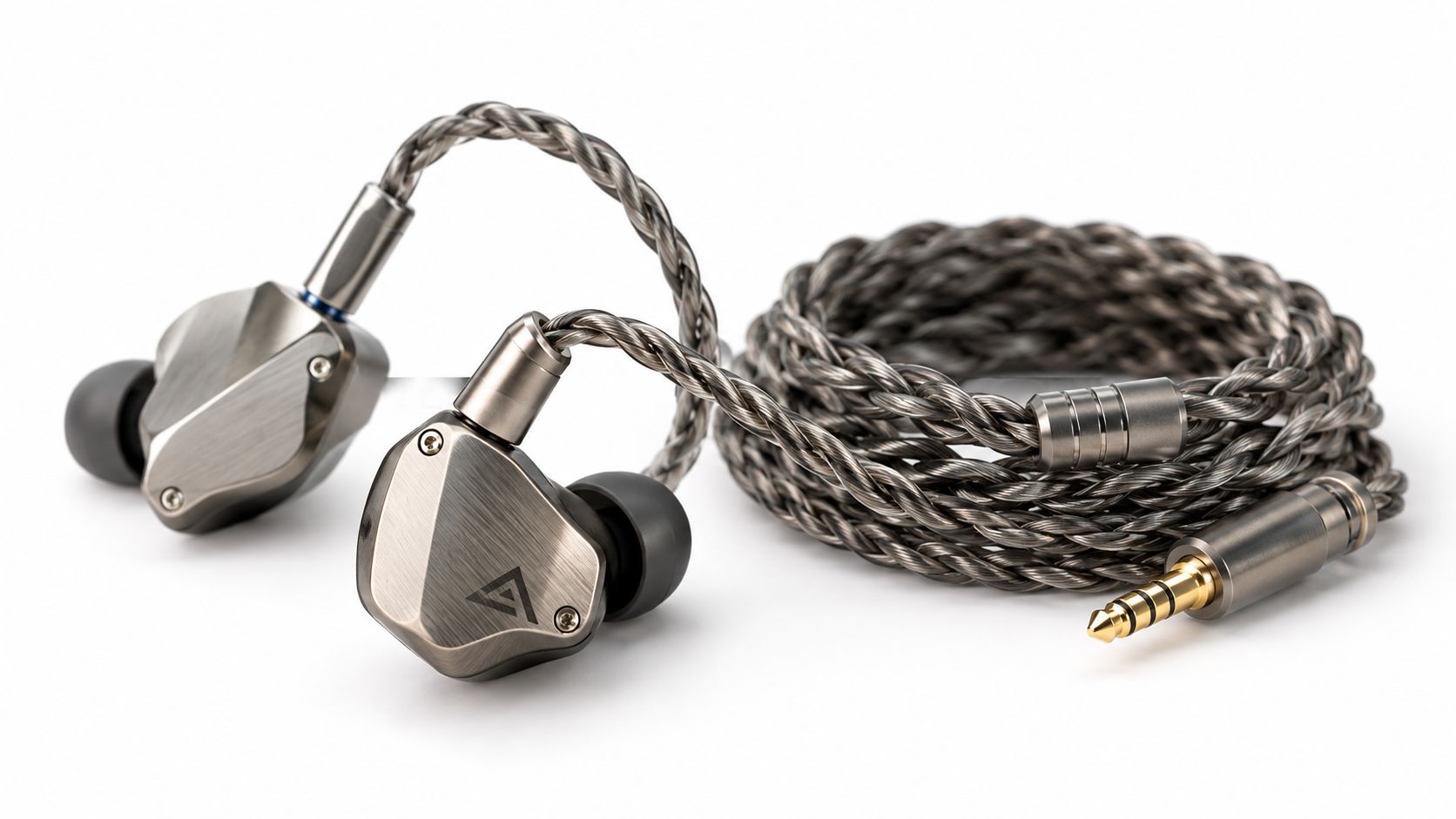
The Sennheiser IE 900 earns the top spot because it sounds like music, not a measurement exercise wearing a tiny shell. Its neutral-leaning balance keeps vocals and instruments present, while the low end carries enough body to stop acoustic recordings from turning papery. Bass has control and texture. It does not announce itself without cause.
I hear the load-bearing quality in the driver implementation. The dual dynamic drivers handle bass while balanced armatures cover the rest, and the crossover keeps the handoff from shouting about itself. You get a coherent presentation, clean edges, and a sense that the recording matters more than the hardware.
The IE 900 also behaves like a tool I can wear. Its titanium composite shells feel solid, the cable feels properly made, and the isolation works well once the fit settles. I've worn them through long listening sessions without the usual treble fatigue. That matters more than another impressive spec-sheet flourish.
Make the fit do the work
Spend time positioning these. Small changes to insertion and tip choice can shift the bass, image, and comfort more than a cable swap ever will. I start with the standard-bore final-fit tips because they give me the least colored presentation.
A clean source helps. The IE 900 exposes grain upstream, so a decent headphone amp and DAC combination makes more sense than feeding it from a noisy output and blaming the earphone.
- Mix reference: Use it to check balance without draining the life from a track.
- Travel: Strong isolation and low fatigue make it practical on long journeys.
- Bass-heavy listening: It doesn't behave like a bass cannon, but it may permanently spoil cheaper low-end.
The IE 900 is a flagship that refuses to sound clinical.
2. 64 Audio Tia Fourte Rewards a Revealing System
The 64 Audio Tia Fourte makes resolution useful. Its layered stage gives instruments depth instead of merely stretching them across the stereo field. I can follow a guitar behind a vocal, hear the room around a drum kit, and track the mix breathing without losing the musical thread.
Treble brings articulation without turning brittle. Bass is controlled and relatively restrained, arriving when the recording calls for it rather than coating every track in the same low-end emphasis. With a strong recording, the Fourte opens the presentation and makes small production choices easier to hear.
That clarity also exposes weak links. Harsh mastering, a noisy source, or a lossy file can make the earphone feel severe. The downstream system carries more responsibility, so this is a poor choice for anyone hoping an expensive IEM will repair an ordinary library.
Practical rule: Buy the Tia Fourte when your source and recordings can withstand scrutiny. Do not buy it to rescue mediocre material.
The universal shell sits securely for me, although its fit still depends on getting the seal right. Custom options are available for listeners who need a more personal fit. Comfort is convincing during focused sessions, but the Fourte's revealing character makes it better suited to deliberate listening than casual background use.
Match the Fourte to the work
Studio monitors can use it for A/B checks, while mastering work benefits from the separation between instruments. It also makes sense for an audiophile with a serious source chain who wants the earphone to reveal what that chain is doing.
Start with the stock tuning. Give your ears time to understand its balance before reaching for 64 Audio's app and applying EQ. Flattening its character immediately removes part of what you paid to hear.
- Quiet source: Hiss is easy to notice, so choose a source with a low noise floor.
- Lossless library: Compression artifacts can move forward at this level of resolution.
- Critical listening: Use the Fourte to inspect a mix, not to create effortless background comfort.
The Fourte reveals the chain. That is its job.
3. Moondrop Blessing3 Makes Sensible Sound
The Moondrop Blessing3 earns its place by doing the everyday work well. Its hybrid design uses dual dynamic drivers for bass and balanced armatures for mids and treble, but the useful result is its tuning, not the parts list.
A neutral-warm balance keeps vocals clear without pushing sibilance forward. Bass has texture and physical presence, though it avoids turning every track into a bass showcase. Acoustic recordings stay natural, pop remains lively, and home-production sessions benefit from its orderly presentation at moderate levels.
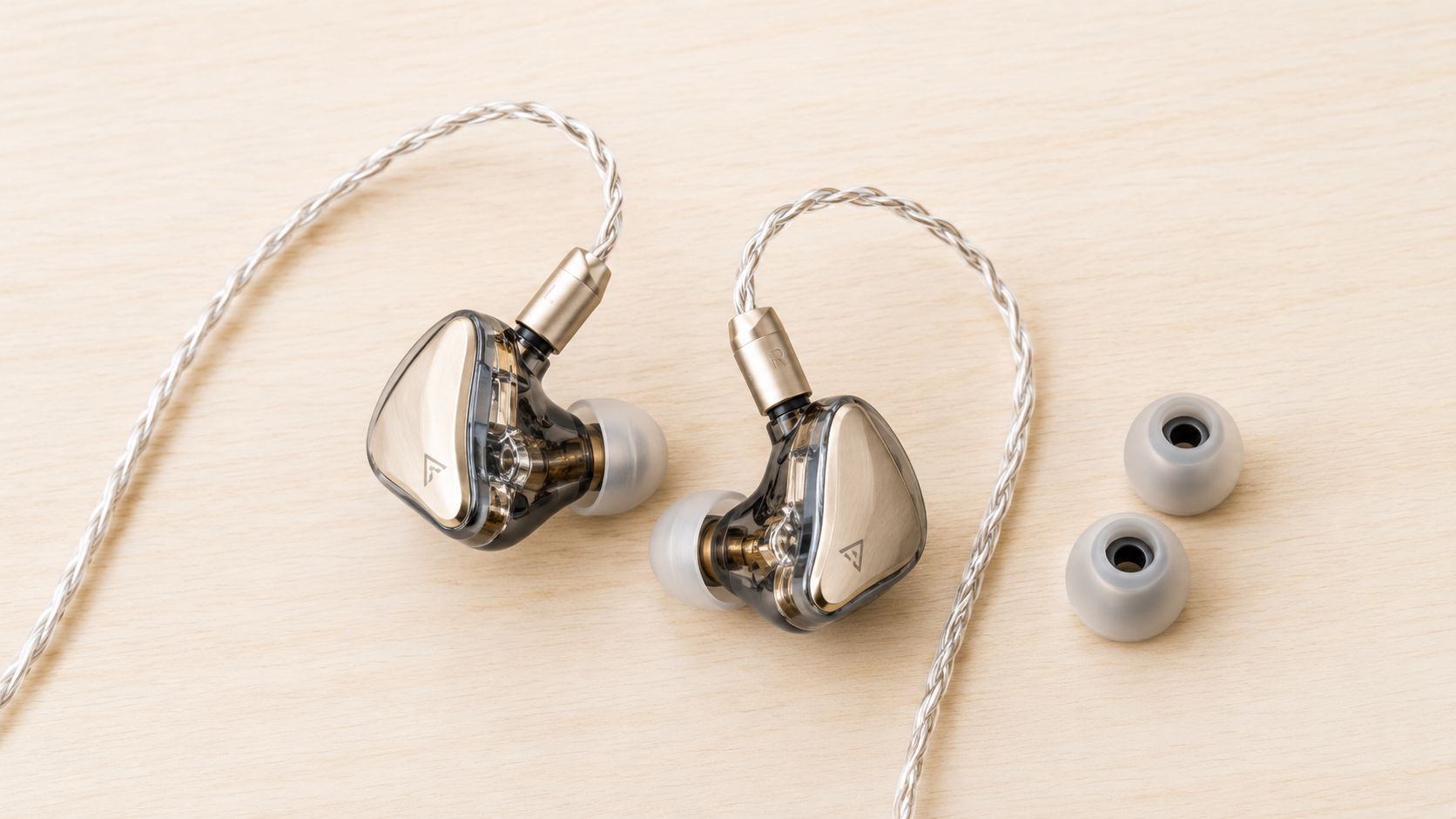
Fit is one of its practical strengths. The broad ear-canal design gives me fewer fights with tip placement than more ambitious shells, and the supplied tips provide a reasonable starting point. Isolation is adequate, not exceptional, so the Blessing3 suits a desk, bedroom, or quiet commute better than a loud street.
The upgrade makes sense when the listener wants balance rather than spectacle. Musicians, producers, and casual listeners coming from ordinary earphones will hear clearer vocals, better bass definition, and a more settled presentation. The change is easy to recognize because it improves the whole mix instead of exaggerating one frequency range.
A better source can bring out more refinement, but the Blessing3 does not require an exotic chain. That keeps ownership straightforward and makes it useful across phones, dongles, and home setups. For a plain explanation of its driver types, Supermarket Sound's guide to dynamic drivers and balanced armatures covers the distinction without reducing the listening experience to a parts catalogue.
Set the seal before touching EQ. In a home studio, use the Blessing3 as a musical mix reference, not a final mastering authority. Check the unit carefully as well, since inconsistent batches can weaken its value.
The Blessing3 is a sensible choice because it stays useful after the novelty fades.
4. FitEar Air 2S Treats Coherence as the Whole Point
The FitEar Air 2S earns its place through one demanding idea: coherence. Its frequencies sound like parts of one recording, not separate driver departments competing for attention. That makes the listening experience unusually settled, especially when arrangements become dense.
Its presentation is disciplined and highly resolved. The stage has three-dimensional shape without chasing exaggerated width, while imaging remains stable around layered instruments and vocals. Neutrality governs the result. Warm recordings retain their warmth, but thin recordings receive no artificial softness.
That honesty makes the Air 2S a strong tool for mastering work, familiar brand enthusiasts, and listeners who already own a more colorful flagship. It asks for attention rather than instant romance. With a lightweight or emotionally flat source, the result can feel clinical.
The practical question is fit. Limited distribution makes a purchase harder in some regions, and custom-shell versions require accurate impressions. A hearing-care professional is the safer route, since a poor mould can create pressure points and let bass escape.
A close custom fit also changes maintenance. Earwax needs regular attention because the fine acoustic path can block easily. Once that passage is obstructed, the carefully tuned balance becomes dull and uneven.
Use the Air 2S for critical work when consistent imaging matters more than spectacle. Feed it clean recordings, since heavy compression is easy to hear. Skip assumptions about burn-in and listen to the actual unit first. Expectations can distract from the more important variables, fit, source quality, and recording condition.
The Air 2S is precise by conviction, and its restraint is the point.
5. Campfire Audio Andromeda 2020 Puts Performance on Stage
The Campfire Audio Andromeda 2020 ranks highly for one reason: it makes music feel performed rather than filed away. This isn't a neutral reference set, and it doesn't pretend to be one. Its treble has presence, the mids carry weight, and the bass gives notes a physical edge.
That colored balance works across rock, jazz, and orchestral music because the Andromeda doesn't need a different personality for every genre. It has enough energy to make a guitar bite and enough body to keep a saxophone from sounding skeletal. The stage stays intimate, which I prefer to exaggerated width that makes every band look like it's playing in a warehouse.
Campfire's metal shells and premium hardware reinforce the sense that this is a finished object, not a collection of parts. The fit still deserves attention, because bass depends on seal. Final-fit tips bring the presentation closer to balance, while a poor seal can make the entire earphone sound anaemic.
Musical excess has limits
I wouldn't use the Andromeda 2020 for mixing or critical mastering. Its tuning is a listener's choice, and that distinction keeps the recommendation honest. It works brilliantly for someone who owns one high-end IEM and wants to enjoy a record rather than interrogate it.
A warm-leaning source can complement the sound, but a cold source may push the upper mids harder than some listeners want. Lossless files and good vinyl rips reward it. Bad compression becomes easier to notice because the Andromeda keeps the music lively enough to expose rough edges.
A colored IEM isn't a compromise when the color is the reason you keep listening.
Use it between gigs, on the sofa, or whenever “neutral” starts feeling like another word for emotionally absent.
6. Thieaudio Hype 4 Gives the Wallet a Fighting Chance
The Thieaudio Hype 4 answers the question many audiophiles ask after hearing a flagship: do I really need to spend that much? Its three-driver hybrid design uses a dynamic driver for bass and balanced armatures for the mids and treble, but the important result is a bass-forward tuning that keeps its head.
The Hype 4 has a V-shaped profile, though not the crude version that hollows out vocals and calls it excitement. The lower midrange steps back, but voices retain enough substance to avoid disappearing. The dynamic driver gives bass texture and speed, so kick drums land as separate events instead of becoming one continuous blur.
Its stage feels broad and layered. That helps electronic music, modern rock, and gaming, though the fit can decide whether the presentation works at all. Ear shape changes the seal, and the seal changes the bass more than an expensive cable will.
Save the cable money
Build quality is good, not untouchable. Isolation works adequately, but the Hype 4 won't replace a dedicated noise-cancelling system in a loud commute. Those are fair trade-offs for a design that puts serious driver performance within reach of a much wider audience.
- Tip bore: Try different bore sizes before judging the treble or bass.
- Source: A cleaner output helps, but the Hype 4 doesn't demand a specialist chain.
- Cable upgrades: Spend on fit or music first. A new cable mostly changes cosmetics.
The Hype 4 makes price hierarchy look silly.
7. Sony WF-1000XM5 Makes Silence the Main Feature
The Sony WF-1000XM5 isn't a traditional audiophile IEM. It's a wireless noise-cancelling earbud system, and its ranking depends on accepting that the job matters more than the category label.
Active noise cancellation carries the design. A good seal blocks sound passively, while ANC attacks the remaining ambient pressure, transforming subway rides, flights, and loud offices. That changes how you listen. You don't need to turn the music into a wall just to hear a vocal line.
The tuning stays warm-neutral, with midrange presence and controlled bass. It isn't an analytical reference, but it plays across genres without making every track wear the same tonal costume. Sony also gives compatible sources broad codec support, including LDAC, AAC, and SBC, so wireless convenience doesn't automatically mean surrendering the entire listening experience.
Convenience creates its own compromises
Wireless introduces latency. Music rarely cares. Gaming can. ANC also needs battery power, and a dead system doesn't offer the same fallback as a passive wired monitor. Those limitations don't erase the value. They define it.
The WF-1000XM5 suits commuters, frequent flyers, and professionals taking calls in uncontrolled rooms. Enable LDAC only after confirming that the source supports it. ANC performs best against steady traffic and aircraft noise, not unpredictable speech. Spatial audio has a narrower use case, though compatible television and immersive music content can make it worthwhile.
- Daily charging: A wireless charging pad removes one small but repeated friction point.
- Calls: Use it where room control isn't realistic.
- Neutrality: Choose a wired reference instead if flat balance outranks convenience.
For travel, silence is the specification that matters.
8. Etymotic ER2SE Shows What Neutrality Costs
The Etymotic ER2SE earns its place by refusing to flatter the recording. Its single dynamic driver and restrained acoustic design prioritise accuracy over added warmth, bass weight, or artificial width. You hear the choices in the mix, including decisions that may be uncomfortable.
Sibilance becomes easy to identify. Recording artefacts move forward, while mastering choices cannot hide behind a larger stage or heavier low end. The presentation remains intimate because Etymotic does not manufacture spaciousness for a more impressive first listen.
That focus makes the ER2SE useful for studio reference checks. It can reveal a tonal imbalance before it reaches a client, and it gives newer listeners a direct lesson in practical neutrality. Poor recordings sound poor. The monitor is doing its assigned job.
Deep insertion is the deal
The fit divides listeners. Deep insertion provides strong passive isolation, but the physical sensation requires acclimation. Start with short sessions instead of forcing a full evening immediately. Getting a reliable seal with deep-insertion designs depends on proper iem fit and tip selection. A correct seal should come before EQ, because the tips change both comfort and perceived balance.
The ER2SE has a 27Ω impedance, so a weak source may leave the signal sounding constrained, especially when its output lacks sufficient drive. Pair it with a capable source and use recordings worth examining. Lossy compression remains easy to hear.
- Studio checking: Keep it available for balance and artefact checks.
- Neutrality training: Use it to learn what “flat” sounds like in practice.
- Casual listening: Choose it only when honesty matters more than softness.
The ER2SE tells the truth plainly. It does not sweeten it.
Top 8 IEMs: Head-to-Head Comparison
| Item | Implementation complexity | Resource requirements | Expected outcomes | Ideal use cases | Key advantages |
|---|---|---|---|---|---|
| Sennheiser IE 900: The Benchmark That Doesn't Apologize | High, hybrid (dual dynamic + quad BA) with refined crossover | Premium build and cable; source-agnostic (16Ω) but benefits from clean sources | Musical, neutral-leaning presentation; low listening fatigue; controlled bass and clear mids | Reference listening, long sessions, traveling professionals | Natural tuning across genres; exceptional build and comfort |
| 64 Audio Tia Fourte: Esoteric Design That Pays Off | Very high, proprietary Tia drivers, complex acoustic tuning | Demands high-quality DAC/DAP and quiet noise floor | Highly resolving, dimensional soundstage; articulate treble without brittleness | Detail-focused audiophiles, mastering, A/B session references | Extreme resolution and staging; scales with better gear |
| Moondrop Blessing3: The Rational Choice | Moderate, hybrid dual dynamic + dual BA | Mid-range sources acceptable; some QC variance across units | Neutral-warm, forgiving sound with clear vocals and textured bass | Home studios, musicians, upgraders seeking value | Outstanding price-to-performance; approachable, musical neutrality |
| FitEar Air 2S: Micro-Tuning as Philosophy | High, single high-grade BA with custom acoustic chambers | Custom impressions, limited availability, higher cost | Exceptionally coherent, phase-aligned neutrality with detailed imaging | Mastering engineers, precision listeners, custom-fit users | Outstanding coherence and longevity; very pure neutrality |
| Campfire Audio Andromeda 2020: Balanced Excess (the Right Kind) | High, multi-BA (5 per ear) with tuned acoustic chambers | Works well with consumer sources; premium hardware | Engaging, musical tuning with intimate three-dimensional presentation | Casual audiophiles, travelers, listeners prioritizing enjoyment | Musicality with premium build; excellent bass texture |
| Thieaudio Hype 4: Performance Without the Gatekeeping | Moderate, 3-driver hybrid with 3-way crossover | Low-to-moderate source demands; budget-friendly | V-shaped but balanced; textured bass and wide soundstage | Budget-conscious audiophiles, upgraders, pragmatic listeners | Exceptional price-to-performance; fast, detailed bass |
| Sony WF-1000XM5: Active Noise Cancellation as Load-Bearing Feature | High, wireless system with advanced ANC and codecs | Requires Bluetooth source (LDAC recommended) and charging; battery management | Industry-leading ANC, warm-neutral tuning, long battery life and convenience | Commuters, frequent flyers, professionals needing ANC and calls | Best-in-class ANC combined with strong wireless sound and LDAC |
| Etymotic ER2SE: The Minimalist Reference Standard | Low, single-driver, minimal acoustic coloration | Requires adequate amplification (27Ω); deep-insertion fit | True flat, reference-grade accuracy with surgical detail and deep passive isolation | Studio engineers, mastering, critical reference checks | Uncompromising neutrality and passive isolation; durable and honest |
Choose the Job Before You Choose the IEM
Start with the situation, not the ranking position. The Sennheiser IE 900 is the wired flagship for someone who wants a broad range of music, low fatigue, solid construction, and a presentation that stays musical without becoming vague. It handles reference listening and ordinary enjoyment without asking you to change personality every time the genre changes.
Choose the 64 Audio Tia Fourte or FitEar Air 2S when revealing reference work comes first. The Fourte gives you dimensional separation and treble articulation, while the Air 2S focuses on coherence and neutrality. Both punish weak sources and indifferent recordings. Neither exists to make a bad mix feel better.
The Moondrop Blessing3 and Thieaudio Hype 4 make more sensible value choices. The Blessing3 offers a controlled, neutral-warm balance with vocal clarity and manageable source demands. The Hype 4 pushes harder toward bass and width, giving listeners a more energetic presentation without collapsing the midrange. Pick the Blessing3 for balance. Pick the Hype 4 for impact.
The Campfire Audio Andromeda 2020 is the colored musical option. It brings presence, weight, and performance energy to rock, jazz, and orchestral recordings. Don't use it as a mastering truth machine. Use it when the point is to enjoy the record.
The Sony WF-1000XM5 belongs to commuters, flyers, call-heavy professionals, and anyone who needs active cancellation more than a wired signal path. The Etymotic ER2SE belongs to engineers and listeners who want uncompromising neutrality, deep passive isolation, and an intimate presentation.
Fit and seal remain load-bearing variables across every category. A universal-fit model can sound thin with a poor seal, while a comfortable custom can become unusable if the impression is wrong. Custom-fit IEMs also require maintenance, and wireless models require a source and charging routine that match your daily habits.
Source compatibility matters too. Check output noise, available drive, codecs, and latency before blaming the earphone. A revealing flagship downstream inherits every weakness upstream.
The broader market already shows why one master list fails. IEMRanking.com currently places the Subtonic STORM at #1 with a 9.7 score, followed by the Brise Audio Fugaku at 9.5 and the Elysian Annihilator 2023 at 9.4. Its separate Favorites and User Score views place Xenns Top Pro first in Favorites at 26 and Canpur CP622B first in User Score at 9.5. Those are different answers because they measure different preferences.
That split is the useful lesson. A ranking can guide you, but it can't fit the shell to your ear or decide whether you want neutrality on a train. Choose the job first. Then choose the IEM that disappears into the music, even when it doesn't rank first on paper.

