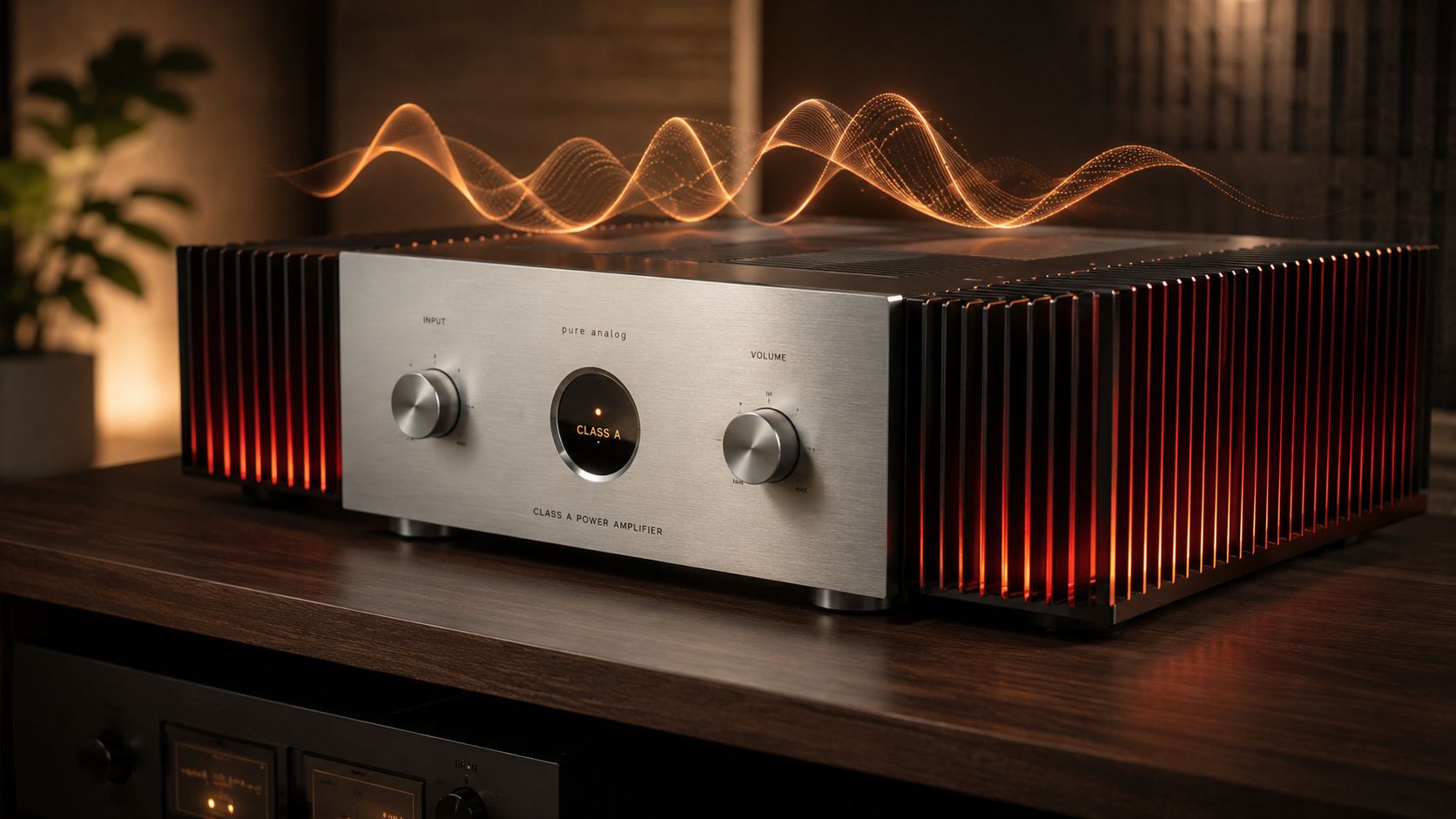
Most amplifiers cheat a little, and the cheat is electrical. They split the waveform, hand pieces of it back and forth, and hope you don't notice the seam. A Class A amplifier doesn't hide the seam. It removes the handoff entirely, then sends you the electric bill.
That's the whole romance and the whole problem with Class A audio amplifiers. The same always-on behavior that makes them run hot, wasteful, and occasionally absurd is also what gives them that unforced texture people keep trying to describe with words like liquid, dimensional, and human. Not neutral in the sterile sense. Honest in the load-bearing sense.
Table of Contents
- Your Amp Is Lying to You This One Is Not
- The Always-On Philosophy of Class A Amplifiers
- Notes From the Listening Room The Sound of Inefficiency
- The Load-Bearing Trade-Offs Power Heat and Your Bill
- Matching Speakers to a Class A Amp The First Watt Rules
- Is a Class A Amp Right for Your System
- The Final Word on Class A Honesty
Your Amp Is Lying to You This One Is Not
Most amplifier marketing is built on a lie of omission. Not a fake spec sheet, usually. Something subtler. It tells you output, features, convenience, control app, room correction, maybe a nice front panel, then skips over how the signal gets handled when the circuit is trying to save power.
Class A doesn't save power. That's why people still talk about it with a kind of irrational affection.
The appeal isn't nostalgia for glowing heat sinks or some macho fantasy about heavy metal boxes. It's that the topology itself refuses the usual compromise. The output stage stays awake all the time. No nap between musical events. No little relay race inside the waveform. That choice costs plenty. It also changes the sound in a way that experienced listeners usually recognize fast.
Class A is not efficient engineering pretending to be musical. It's inefficient engineering chosen because of how it sounds.
That distinction matters. A lot of people approach Class A as if it's an elite badge, some higher rung on the audiophile ladder. I don't hear it that way. I hear it as a deliberately narrow answer to a specific question: how much practicality are you willing to trade for continuity, texture, and ease?
If your system is built around huge rooms, difficult speakers, or party levels, Class A can be the wrong religion. If your priorities are tonal density, stable imaging, and that eerie feeling that music isn't being pushed through a circuit so much as allowed through, then the inefficiency stops looking like a defect and starts looking like the mechanism.
That's the point people miss. The weakness isn't adjacent to the magic. It is the magic.
The Always-On Philosophy of Class A Amplifiers
The defining fact about Class A is brutally simple. The output devices stay on for the full signal cycle. According to Reverb's explanation of Class A operation, Class A amplifiers operate with output devices conducting at 100 percent of the waveform cycle, meaning the transistors never fully shut off. This continuous conduction, achieved through a hot bias, eliminates crossover distortion entirely.
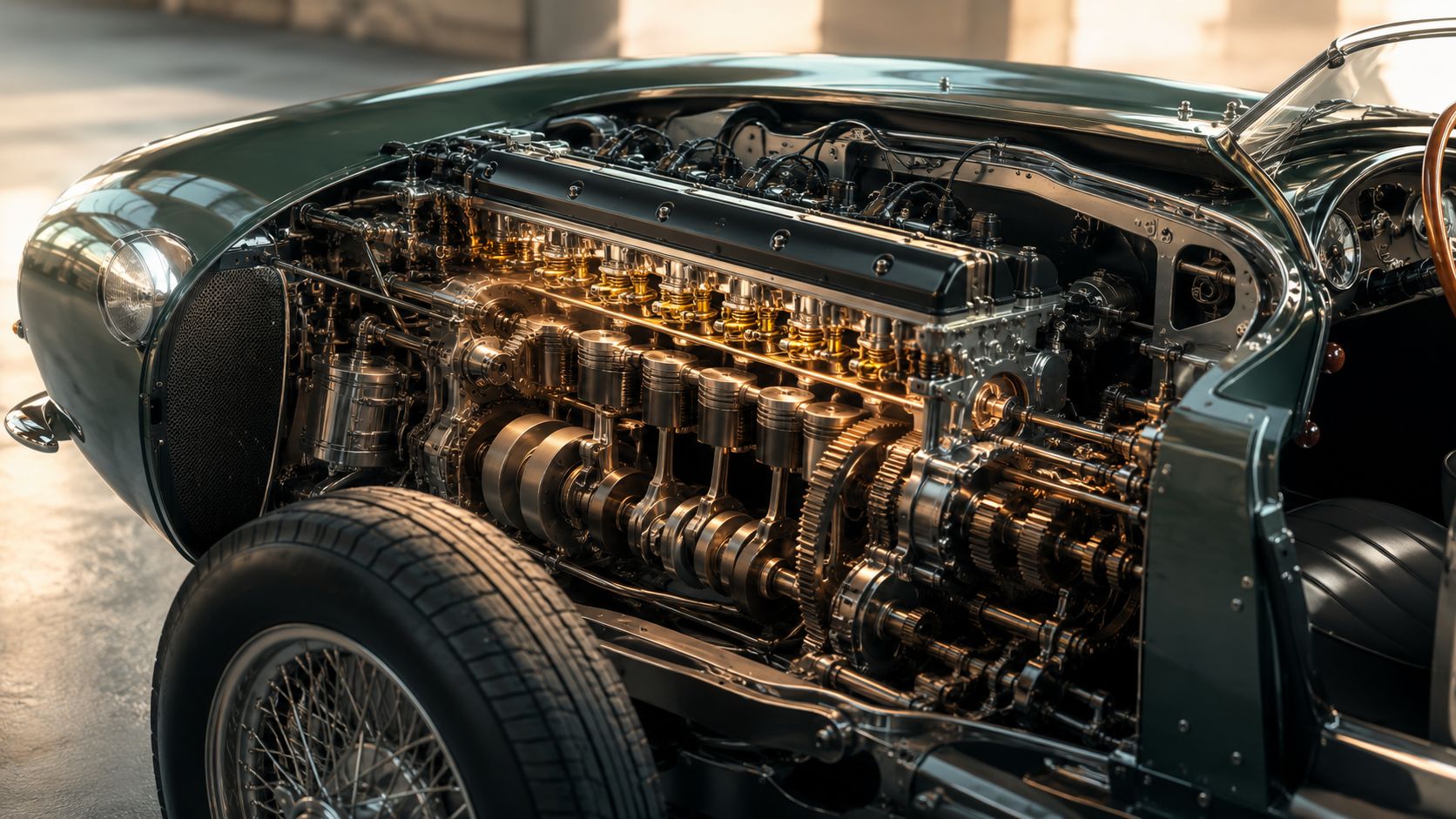
What 100 Percent Conduction Actually Means
Imagine a performance engine held near redline, always ready, always burning fuel, always prepared to respond instantly. That's a terrible commuter strategy and a great way to understand Class A. The circuit doesn't wait for the note to arrive before it wakes up. It lives there.
Other amplifier classes handle the positive and negative halves of the waveform with devices that alternate more aggressively. That arrangement is practical. It also creates a transition point. Every handoff is a place where the signal can get pinched, blurred, or hardened if the design isn't immaculate.
With Class A, there is no handoff in the same way. The active device remains in its linear region continuously, and that becomes the floor the rest of the sound stands on.
- No switching seam: The signal isn't being stitched together at the crossover point because the devices don't shut off.
- Constant readiness: Small dynamic shifts arrive without the circuit changing personality mid-note.
- Simplicity with consequences: The path is more direct, but the cost is current draw and heat from the start.
Why The Handoff Matters So Much
Now, the technical story becomes audible. Crossover distortion isn't always dramatic. It can be subtle, even slight enough that casual listening misses it. But the ear is annoyingly good at noticing strain, glare, or a kind of low-level impatience in the upper midrange.
A well-built non-Class-A amplifier can still sound excellent. I'm not interested in fake holy wars. But the thing Class A gets right at the foundation is continuity. Instruments don't feel chopped into leading edge and decay. They feel of a piece.
Practical rule: If the output stage has to keep deciding when to wake up, the downstream sound inherits that indecision.
That's why Class A has such a stubborn fan base. Not because it's universally better, but because it's doing one load-bearing thing extremely well.
Notes From the Listening Room The Sound of Inefficiency
You don't buy Class A to admire the schematic. You buy it because, when it's right, recorded music stops sounding assembled.

Texture Before Spectacle
The first thing I notice with Class A isn't warmth. That's the lazy cliché. Good Class A can be warm, cool, rich, lean, solid-state clean, or tube-saturated depending on the design. What keeps showing up is texture. The grain drops away.
On a sparse vocal recording, the singer's mouth sounds less like a spotlighted detail and more like part of a body standing in air. On brushed cymbals, the metallic sheen decays without turning papery. Piano has weight in the left hand and less chalk in the upper register. None of that is fireworks. It's structural.
That's the part people either fall for immediately or never care about at all.
At a specific test condition, high-quality Class-A implementations can reach distortion levels as low as -76 dB at 5 watts into 8 ohms at 20,000 Hz, as described in this discussion of Class A linearity. I don't quote numbers to cosplay as a bench tester. I quote that one because it helps explain why the presentation can feel so composed when music gets dense.
What I Hear On Real Recordings
On small jazz ensembles, horns are where Class A wins me over fastest. A saxophone's reedy edge comes through without that whitish glare that makes you turn the volume down even when the level isn't high. Trumpet still bites, but it bites like brass under pressure, not like a stressed circuit.
Rock is a different test. People assume low-power Class A means soft, polite, and cardigan-wearing. Wrong. A well-matched Class A amp can hit hard. Kick drum doesn't always feel bigger, but it feels more carved. The leading edge lands, then the body of the note follows with shape instead of thump for its own sake.
A few listening traits come up again and again for me:
- Vocals hold together: Singers sound corporeal, not spotlighted into a cardboard cutout at center stage.
- Space stays organized: Busy mixes don't collapse into a bright knot between the speakers.
- Treble carries less hash: Cymbals and strings keep their energy without spraying grit.
- Low-level detail feels relaxed: You hear more because the amp sounds less busy, not because it shouts information at you.
Some amplifiers impress by underlining details. Class A tends to impress by removing the underline.
That doesn't mean every Class A amp is magical. I've heard Class A gear that sounded sleepy, syrupy, and self-satisfied. Bias alone doesn't create beauty. But when the design is sorted and the speaker match is sensible, the always-on behavior translates into a kind of ease that is hard to unhear. Not bigger hi-fi. Better tissue.
The Load-Bearing Trade-Offs Power Heat and Your Bill
The romance ends the moment you put your hand near the chassis. It is then that Class A stops being an idea and starts becoming climate.
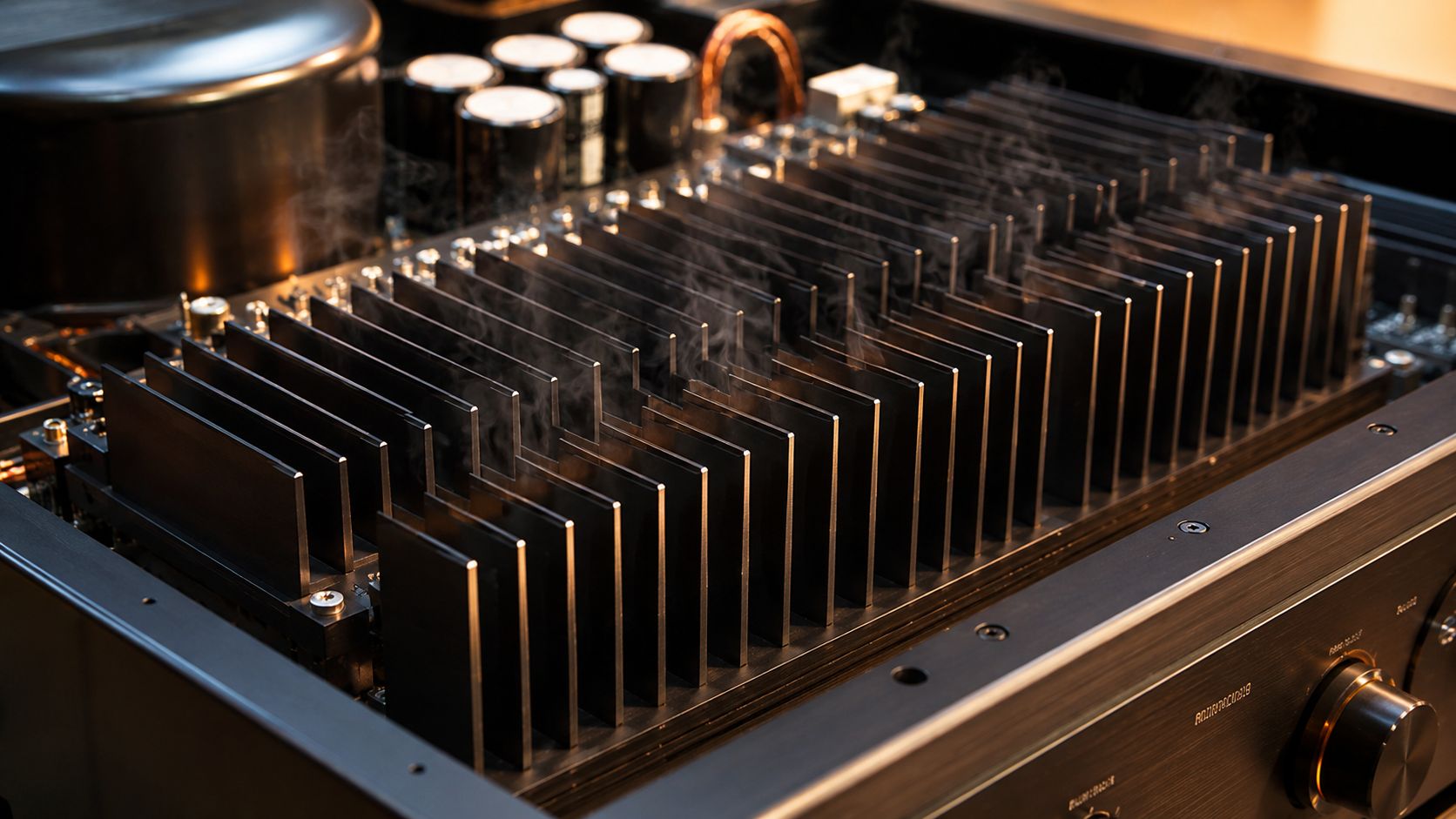
Heat Is Not A Side Effect
The cleanest way to understand Class A ownership is to treat heat as part of the signal path. Not physically, but philosophically. The circuit's sonic behavior depends on that always-on bias. And that always-on bias burns electricity whether music is playing or not.
The practical warning is unusually blunt in this buying guide's note on Class A thermal debt: a 50W Class A amp can draw 200W+ constantly, even at idle, and that energy use can turn a $1,200 unit into a $400/year heater in major markets. Crude? Yes. Also useful.
If you want a cleaner comparison of amplifier classes before making peace with that reality, I covered the basics in this breakdown of Class A, B, and C amplifier behavior.
What That Means In A Real Room
In practice, a Class A amp changes how you use a system.
You think about rack ventilation. You think about summer. You think about whether the amp sits in a cabinet, and the answer should usually be no. You think about whether you're the kind of person who leaves gear idling all day, and with Class A, that habit gets expensive and warm fast.
A few realities tend to surprise first-time buyers:
- Idle isn't harmless: The amp can run hot before the first note.
- Placement becomes load-bearing: Tight shelves and sealed furniture starve the amp of airflow.
- Room comfort changes: In a small listening room, the amp's heat is not theoretical.
- Ownership includes utility cost: Not sexy, but real.
Here's a useful visual on the subject before you bring one home.
Buy Class A because you love what it does to music, not because you plan to argue with physics.
I don't hate this trade-off. I resent it sometimes. Then I sit down at night, cue up something intimate, and the resentment gets complicated.
Matching Speakers to a Class A Amp The First Watt Rules
Speaker matching is where Class A fantasies either become music or become a lesson. The amp can be gorgeous on its own terms and still fail in your room if the speakers ask for more current and control than it can comfortably give.
Power Limits Force Better Decisions
Practical Class-A power is bounded by heat, not ambition. This Class A design reference notes examples such as 12.5W into 8Ω before clipping for the Sugden Masterpower and 24W/ch into 8Ω for high-end Pass Labs designs. That's enough for real listening in the right setup. It's also a reminder that Class A doesn't usually solve brute-force speaker problems.
This is why sensitive speakers make so much sense here. They let the amp live where it sounds most alive instead of dragging it into strain. If you're trying to build around low-power Class A, start with speaker behavior, not amp mythology.
If you're still sorting speaker options, my guide to the best speakers under 1000 is a useful place to narrow the field by listening priorities rather than marketing copy.
How To Pair Without Starving The System
I like to think about Class A pairing in terms of the first watt. Most of your listening happens there or near it, not at the edge of catastrophe. If that first watt has body, grip, and coherence, the whole system feels more convincing. If it sounds thin or stressed, more watts rarely fix the character.
A good pairing process usually looks like this:
- Start with room size. Smaller and medium rooms are easier terrain for Class A to dominate.
- Be honest about volume. If your normal listening drifts toward concert levels, don't ask a low-power amp to cosplay as a PA.
- Prioritize speaker ease. Friendly impedance behavior and higher sensitivity make life easier, sonically and electrically.
- Listen for composure, not loudness. The right match sounds settled before it sounds impressive.
The first watt isn't a slogan. It's where the personality of the amp lives.
The wrong speaker can make Class A sound underfed. The right one makes those modest watt numbers stop mattering so much. Not because power doesn't matter. Because context does.
Is a Class A Amp Right for Your System
Class A is a commitment, not an upgrade path checkbox. Before you buy one, you should know whether you're chasing the thing it does best or just admiring the mythology around it.
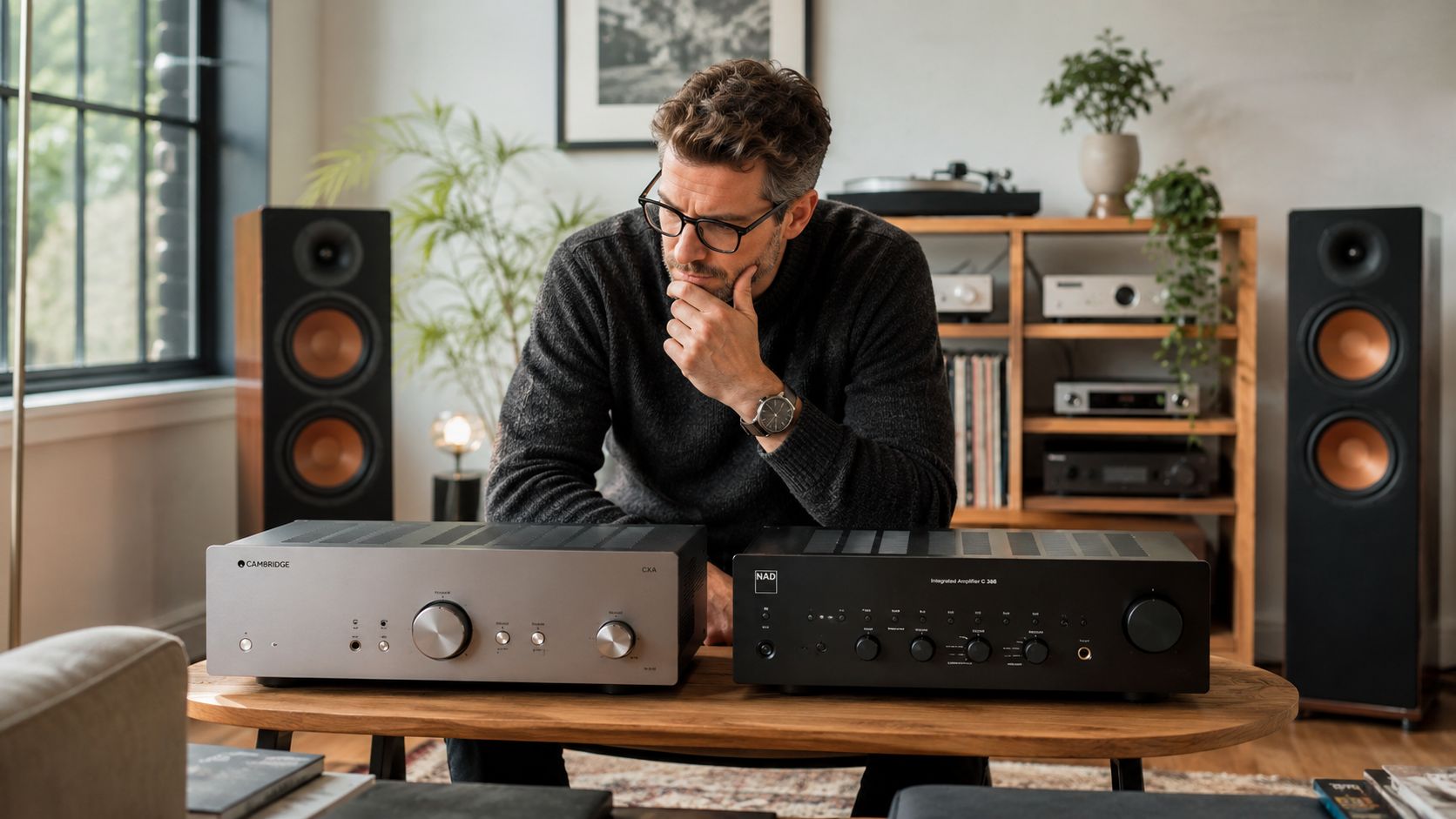
Who Should Buy One
The core user is usually easy to spot. This person values texture over spectacle, listens in a dedicated seat more than while doing dishes, and wants the amplifier to disappear as a mechanism. They're often running a two-channel setup built around sensible speakers and care more about the shape of a voice than about stadium output.
The operating reality supports that narrow use. According to Wikipedia's overview of power amplifier classes, the theoretical maximum efficiency is 50% for transformer-coupled designs, while standard implementations often hover around 20-25%, which limits practical output. That's not a footnote. That's the buying filter.
A good fit often looks like this:
- Listening priority: Tone, image stability, and low-level nuance matter more than sheer slam.
- System context: Two-channel music systems and headphone setups make more sense than all-purpose everything rigs.
- Room reality: You have space for ventilation and you're not trying to fill a cavern.
- Temperament: You're willing to own a machine that behaves like a small heater because you like what it does to the music.
If you're still getting the basics straight, start with this beginner's guide to amplifiers before chasing topologies.
Who Should Walk Away
If you need one amp to do movies, parties, difficult speakers, and background duty all day, Class A is probably not your answer. If your room runs hot already, you'll notice. If your speakers only wake up when fed hard, you'll notice that too.
And if your taste leans toward massive bass pressure and endless headroom, there are more practical ways to get there. Better ways, really.
A Class A amp is for people who hear strain before they hear volume.
That isn't snobbery. It's just preference with consequences.
The Final Word on Class A Honesty
Class A asks a blunt question. Do you want efficiency, or do you want a circuit that stays fully present for the whole musical event?
I love Class A because it doesn't pretend to be sensible. It takes the expensive, hot, electrically impolite route in pursuit of continuity and linearity, and to my ears that choice leaves fingerprints all over the sound. Voices feel less processed. Instruments occupy space more naturally. The system relaxes.
I also hate Class A for exactly the same reason. It wastes power. It heats the room. It limits your speaker choices and demands that you build around it instead of treating it like a universal solution.
That's why the people who love Class A really love it. Not because it's perfect. Because it's specific.
If you want one box to do everything, keep shopping. If you want an amplifier that treats the signal with almost unreasonable consistency, Class A audio amplifiers still make a case no efficient design can fully talk away.
Honest gear is rarely convenient.
That includes this.
Author: Marque Hersh
Publisher: Supermarket Sound
Author profile / sameAs: Marque Hersh on Steam

