

People love saying all DACs under two hundred bucks sound the same because it saves them the trouble of listening. That advice is neat, scalable, SEO-friendly, and dead wrong.
When seeking the best DAC under 200, you're not choosing between identical little metal boxes with different logos. You're choosing a philosophy. Clean versus color. Glass versus grain. A signal that behaves like lab equipment versus one that behaves like music. I've lived with enough of these things in a real setup to tell you the spec sheet war is mostly camouflage.
Here's the quick version before I get opinionated.
| DAC | General Sound | Best For | Watch Out For |
|---|---|---|---|
| Schiit Modi+ | Warm, textured, midrange-first | Bright systems, vintage rigs, long listening | Not for bench-racing obsessives |
| SMSL DL200 | Clean, sharp, highly revealing | Warm headphones, tube amps, detail addicts | Can get cold in an already lean chain |
| SMSL D-6s | Silent, precise, low-noise | Systems that need a clean foundation | More tool than mood |
| Schiit Modi 3 | Full, forgiving, slightly sweet | Mixed genres, vocal-heavy listening, fatigue-prone ears | Less “etched” than measurement-first gear |
| iFi ZEN DAC 3 | Smooth with useful feature set | Headphones, casual desktop listening, people who want flexibility | Less purist, more flavored |
| Qudelix 5K | Tuneable and practical | IEM users who want PEQ control | Not the answer for every desktop system |
| SMSL C200 Pro DAC+amp | Strong output with DAC+amp convenience | Harder-to-drive headphones on a budget | Buy it for power, not romance |
Your Digital Audio Is Lying to You
The cheap-DAC consensus usually goes like this. Modern chips are good. Measurements are good enough. Therefore everything sounds the same. That's not analysis. That's surrender.
The lie starts with the idea that conversion is only about decoding bits correctly. It isn't. The DAC sets the floor of the whole chain. Everything downstream inherits it. If the thing feeding your amp is dry, gray, and emotionally vacant, your amp doesn't rescue it. It amplifies the vacancy.
Specs Aren't the Sound
I'm not anti-measurement. I'm anti-confusing measurement with listening. Those are not the same act. One is forensic. The other is musical.
A budget DAC can sound lean and floodlit, or dense and human. It can push vocals forward like they're stepping out of the speaker cloth, or flatten them into a neat little cutout. It can make cymbals feel like metal in air, or just a tidy splash of high-frequency information. That difference matters more than another round of internet chest-thumping over decimal points.
Most “best DAC under 200” roundups are really “best DAC under 200 for people who read charts before they play records.”
That's why I don't buy the all-DACs-are-equal line. Not in this price range. Not in a chain where one box is starved by noisy USB power and another has a more grounded presentation. Not when one unit is tuned like a microscope and another like an instrument.
You're Choosing a Voice
The useful split is simple:
- Measurement-first DACs chase transparency, speed, and edge definition.
- Character DACs chase body, ease, and tonal weight.
- Hybrid feature-first units try to give you tools so you can shape the result yourself.
None of those is automatically “correct.” But pretending they're all interchangeable is how people end up with systems they admire more than enjoy.
I know this keyword has to rank. Fine. “Best DAC under 200” gets typed into search bars by people who want one answer. The real answer is messier and better. The right DAC is the one that makes your system exhale. Not the one that wins a bench contest.
That's the point.
The Load-Bearing Pillars of a Budget DAC
Most budget DAC marketing is decorative trim. The load-bearing stuff is simpler.
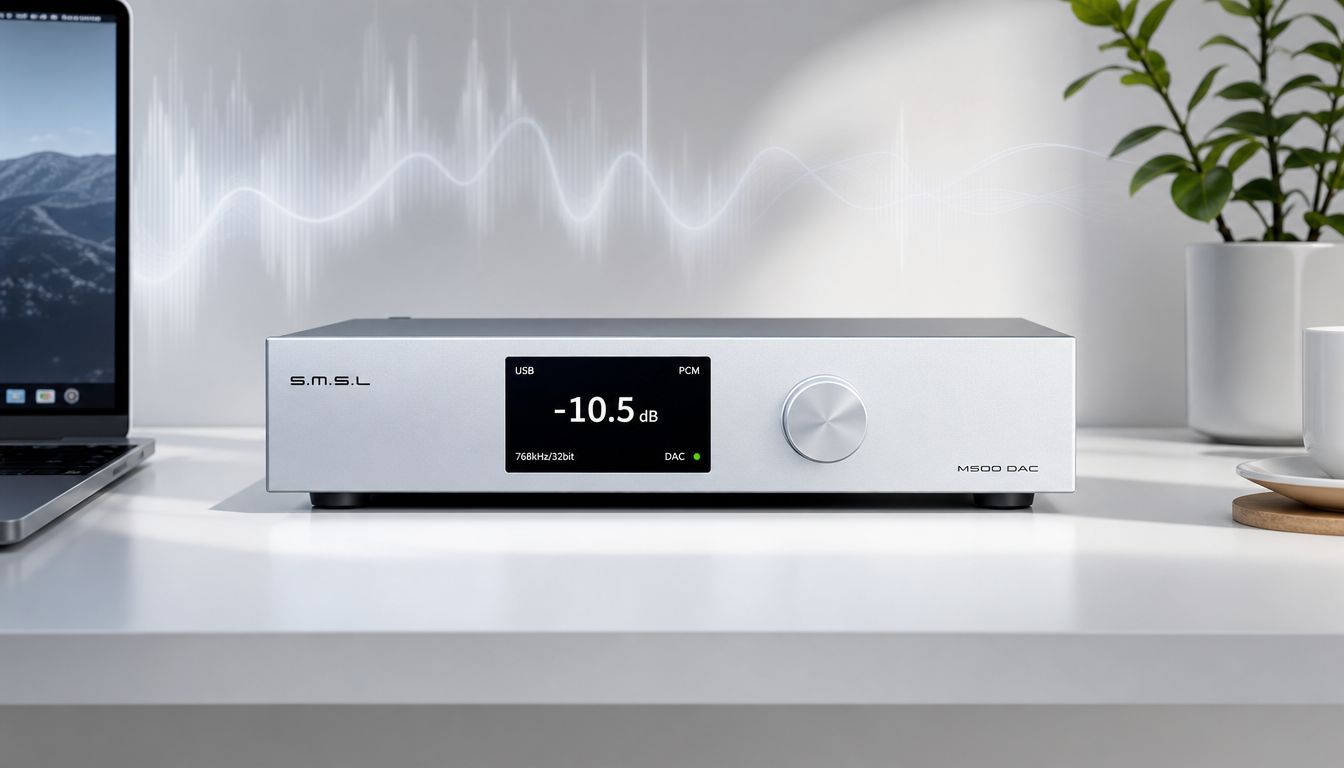
The Chip Sets the Floor, Not the Finish
People shop DACs by chip name because it feels concrete. ESS. AKM. Cirrus. Done. Except that's just the starting point.
The cleanest way to say it comes straight from the numbers: the choice of decoder chip sets a baseline for performance. For example, the Cirrus Logic CS43131 audio decoder chip can achieve 0.00013% distortion (-117dB), which is a real benchmark in this category, as discussed in Audio Science Review's sub-$200 DAC discussion. But that's just the floor. The final sound is built on top of it.
Implementation matters more. Output stage. Power filtering. Clocking. The part after the part.
If you want the stripped-down version of how these pieces fit together, I laid it out in this simple DAC explainer. The short version is that a fancy chip inside a careless design is still a careless design.
Power Matters More Than People Admit
USB-powered convenience is nice until your source starts polluting the chain. A DAC fed by noisy computer power starts the race with a limp. The signal gets starved at the entrance, and downstream gear inherits the weakness.
That doesn't mean every AC-powered desktop unit is automatically superior. It means the power architecture deserves more attention than the product page usually gives it. You can hear that foundation as blacker background, cleaner decay, and less irritation over long sessions.
Practical rule: If your system sounds tense, brittle, or oddly flat, don't start by blaming the headphones. Start at the DAC and its power.
Features Are Only Worth It If You'll Use Them
Balanced outputs can matter. Sometimes they're just expensive decoration. The same goes for onboard amp sections, app control, and a menu full of digital filters nobody sticks with for more than a weekend.
Buy the feature if it solves a real problem in your chain. Ignore it if it only flatters your shopping brain.
Here's a solid primer on the difference between feature obsession and signal quality in practice.
Sonic Intent Is the Real Purchase
This is the one nobody wants to say out loud because it messes up the clean hierarchy. Some DACs are voiced. Deliberately. Even in this price bracket.
That voicing is not fake. It's not cheating. It's taste.
So when I say the best DAC under 200 depends less on bit-depth chest hair and more on what kind of presentation you want to live with, I'm not dodging the question. I'm answering it.
Pick the floor carefully. The whole room stands on it.
The Case for Clean The SMSL and Topping Approach
The clean-school DAC is not musical in the romantic sense. It's architectural. It strips the signal to studs and drywall and says, here, this is what's on the file.
That approach can be thrilling.
The Appeal of the Cold Window
The sharpest example here is the SMSL DL200. At $189, it uses the ES9039Q2M Saber DAC chip found in units costing over $800, and it supports MQA-CD plus 24-bit/384kHz audio with a 132dB dynamic range. That's brute-force engineering purity. In the broader verified data around the unit, that same platform is framed as a direct assault on the sub-$200 bracket.
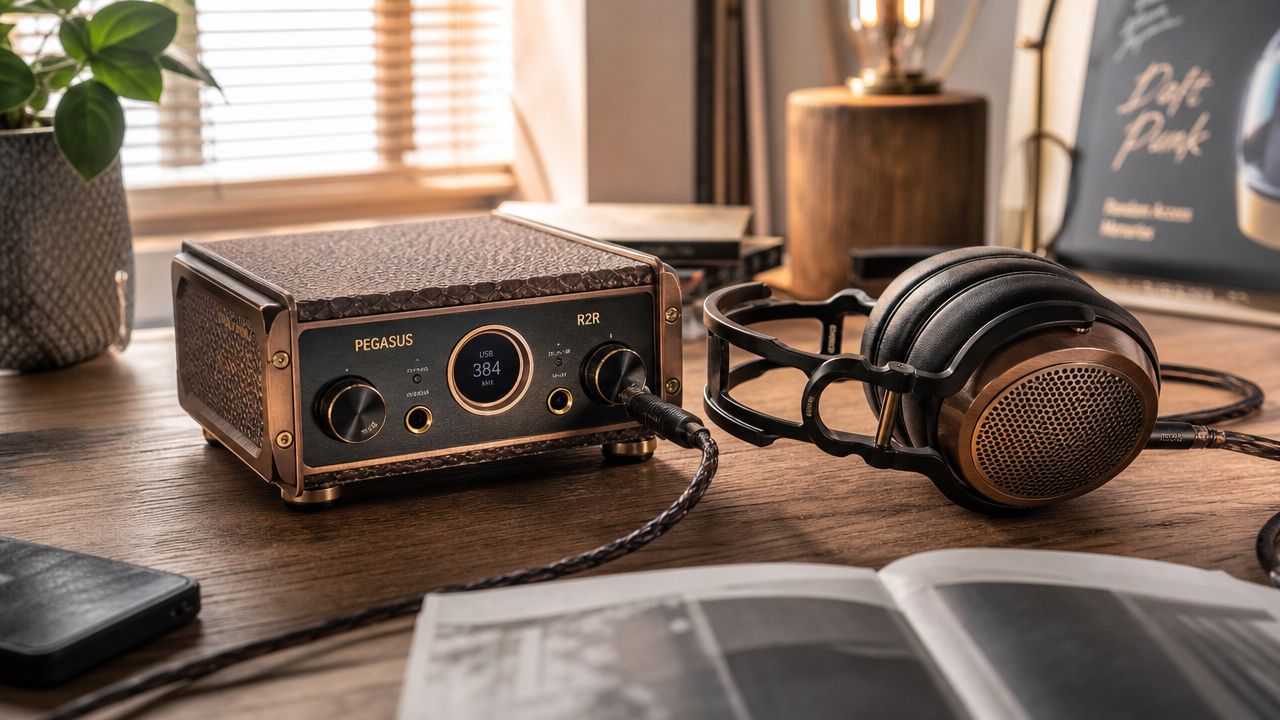
To my ears, gear like this doesn't sound “better” in some universal sense. It sounds cleaner. Faster on transients. Harder-edged around outlines. It lights up the center image and shaves away softness. If your chain is warm or blurry, that's medicine.
If your chain is already cool-toned, it can turn into fluorescent office lighting.
Silence Has a Sound
The SMSL D-6s makes its case by delivering a SINAD of 120.8 dB, a dynamic range exceeding 120 dB, and THD+N below 0.00007% at 1kHz, according to the measurement-focused discussion in this video reference. The useful translation is simple. The DAC floor gets effectively silent. Downstream gear inherits a cleaner signal.
That sort of cleanliness has a sonic fingerprint. Backgrounds feel emptied out. Reverb tails emerge from darker space. Small placement cues become easier to notice. Good recordings sound organized and expensive. Bad recordings lose their mercy.
A clean DAC doesn't add personality. It removes excuses.
That's the whole pitch.
Who This Sound Is Actually For
If your headphones are dark, warm, or a little sleepy, the clean-school approach can wake them up. Same if you use an amp that rounds edges or thickens the lower mids. Then the DAC becomes a corrective lens.
It's less charming with already-bright headphones or hard-sounding solid-state amplification. In those chains, a very clean DAC can stop sounding honest and start sounding joyless.
So no, I don't buy the lazy idea that this school is “neutral” in a vacuum. It's a flavor. A specific one. Stainless steel. Ice water. Studio glass.
If that's the gap in your system, buy it with confidence.
If you want bloom, don't.
The Case for Color Schiit and iFi
The color-school DAC is for people who listen past the snare transient. That's my bias. I'll own it.
A little shape in the mids. A little flesh on vocals. A little mercy up top. Those things matter. They matter more than internet people admit because they're harder to screenshot than a test bench.
The Schiit Way Is Taste, Not Compliance
The Schiit Modi+ became a standard in this range by refusing to act like a spreadsheet. The verified data around it is unusually clear on the point: it became a category reference by prioritizing sound over specs, and reviews consistently describe it as “warm and laden with mid-range texture” rather than sterile, thanks to a proprietary architecture that isn't chasing SINAD trophies.
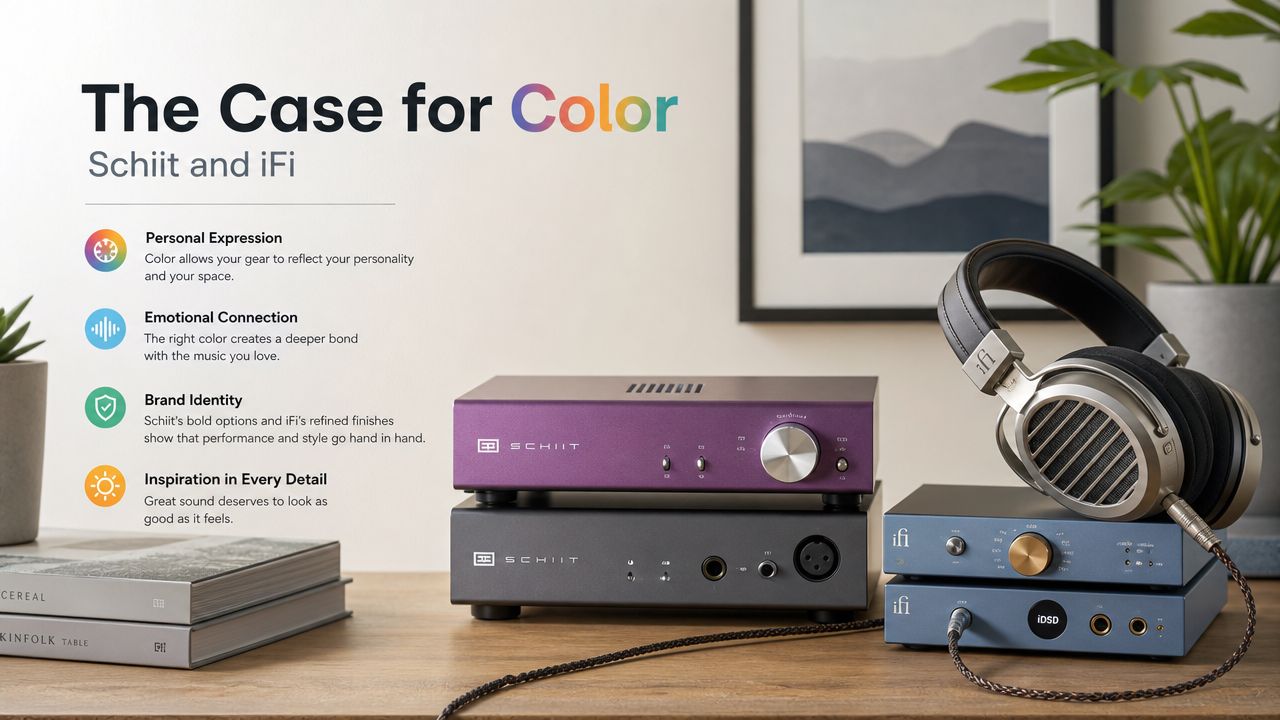
That tracks with what makes these boxes appealing in a room. Voices gain chest and breath. Guitars have bark instead of outline. The center image feels less laser-cut and more inhabited. Not blurry. Not soft. Just less antiseptic.
The Modi 3 sits in a similar lane. The verified measurements put it at 118 dB SINAD with -0.0003% THD+N, tied to a custom-modified ESS9026Q2F approach and a warmer, more forgiving presentation, according to the discussion linked from this Reddit thread. The useful part isn't the number. It's the intent. This thing was tuned to keep long sessions easy.
iFi Understands That Fun Counts
Then there's the iFi ZEN DAC 3. The verified specs are practical and relevant: it supports native 32-bit/384kHz PCM and DSD256 via USB, includes a 4.0V balanced output, and uses a discrete headphone amp stage that remains competitive with pricier DACs, as summarized by Crutchfield's under-$200 DAC coverage.
What I like about iFi's house attitude is that it isn't trying to impress the lab coat crowd first. It's trying to make a desktop rig enjoyable. That matters if your library includes rough recordings, hot masters, or anything less than audiophile wallpaper jazz.
Here's how I'd split the difference:
- Choose Schiit if you want tone, body, and a more tactile midrange.
- Choose iFi if you want flexibility, a useful headphone-friendly feature set, and a smoother desktop experience.
- Skip both if your system already sounds thick and sleepy.
Some DACs are clean windows. These are stained glass. The light changes on the way through.
That isn't a flaw. It's why people keep them.
Downstream Inherits Everything
There is no universal winner because no DAC plays alone. It feeds a chain. That chain has its own temperament. Get the match wrong and you'll spend months blaming the wrong component.
The phrase people use for this is “pairing.” Fine. I'll use blunter language. Downstream inherits everything. The DAC hands the next stage a version of reality, and the rest of your system can only work with what it gets.
DAC Pairing Quick Guide
| If Your System Is… | Consider This DAC Philosophy | Recommended Models |
|---|---|---|
| Bright, sharp, or fatigue-prone | Color and tonal weight | Schiit Modi+, Schiit Modi 3, iFi ZEN DAC 3 |
| Warm, dark, or a little sleepy | Clean and revealing | SMSL DL200, SMSL D-6s |
| IEM-heavy and tuning-focused | Control over fixed voicing | Qudelix 5K |
| Vintage amp and analog-leaning setup | Smoother, more forgiving presentation | Schiit Modi+, iFi ZEN DAC 3 |
| Need one compact DAC+amp with real power | Utility and drive | SMSL C200 Pro DAC+amp |
Bright Systems Need Mercy
If your rig already leans hot in the treble, don't stack surgical gear on top of it and then act surprised when every cymbal turns into a dentist drill. Here, the Schiit-style approach earns its keep. A warmer source can restore weight to the middle of the spectrum and make harder recordings tolerable again.
That's especially true for long headphone sessions. If you're building around entry-level audiophile cans and still sorting out your tonal preferences, it helps to understand the personalities of common headphone tunings before locking in your source. I've got a useful starting point in this guide to entry-level audiophile headphones.
Warm Systems Need Edges
On the other hand, some systems need a shove. If your headphones or amp are soft around the outline, a cleaner DAC can tighten the image and pull detail out of the lower mids where it was getting smothered.
The DL200 makes sense, as do the D-6s if what you want is a quiet, low-noise foundation that doesn't editorialize much. Think of these as corrective tools for systems that risk becoming syrup.
Vintage Rigs Don't Want Portable Thinking
One of the dumbest habits in DAC coverage is pretending every buyer is building a laptop-first setup. That leaves vintage listeners stranded. The need for a better match is obvious in forum conversations. Users with older systems often ask whether an R2R option like the FiiO K11 offers better warmth for those chains, a nuance that portable-first reviews usually miss, as you can see in this Reddit discussion about DACs for vintage setups.
That matters because vintage rigs usually aren't begging for more glare. They want tone, timing, and a source that doesn't make the rest of the chain sound like a museum exhibit under LED lighting.
If You Use IEMs, the Tuner Might Beat the Purist
The Qudelix 5K belongs in this conversation because fixed voicing isn't always the smartest answer. The verified data points to growing interest in app-driven PEQ DACs, especially for IEM users who want the DAC to function as a tuning partner rather than a static source. If you care more about shaping an in-ear response than pledging allegiance to one house sound, that approach makes a lot of sense.
That's not the same thing as saying it replaces every desktop DAC. It doesn't. It solves a different problem.
If You Need Power, Buy Power
The SMSL C200 Pro DAC+amp is one of the rare under-$200 options that pushes real output. The verified spec is concrete: it delivers up to three watts per channel at 16 ohms, with 2.5 volts single-ended and 5 volts balanced output, according to the referenced video coverage here. That's not romance. That's usefulness.
If your problem is that your headphones sound underfed, this kind of unit earns attention fast.
The point is simple. Don't ask for the best DAC under 200 in isolation. Ask what your system is missing. Then fill that gap.
So Which One Do I Actually Buy?
If you want me to pretend there's one winner so the keyword lands harder, I won't do it.
Buy the SMSL route if you want the truth with the lights turned all the way up. Buy Schiit or iFi if you want the truth with some blood still in its face. Buy the Qudelix if tuning matters more than house sound. Buy the C200 Pro if power is the missing load-bearing piece.
My Blunt Recommendations
Here's the version I'd tell a friend over coffee:
- For most bright or thin systems: get the Schiit Modi+.
- For warm systems that need clarity: get the SMSL DL200.
- For a dead-clean signal foundation: get the SMSL D-6s.
- For all-day ease and mixed-genre listening: get the Schiit Modi 3.
- For flexible desktop use with headphones: get the iFi ZEN DAC 3.
- For IEM tinkerers: get the Qudelix 5K.
- For budget power plus conversion in one box: get the SMSL C200 Pro DAC+amp.
What I'd Choose
In my own setup, I lean toward the character pieces. I'll trade a little forensic bragging rights for tone, ease, and that feeling that a voice is standing in the room instead of being projected onto a white wall. I don't need every recording filleted into its component parts. I need a system that makes me keep listening.
If you're still weighing DAC and amp combinations as a single purchase, I also broke down some smart places to start in this guide to the best budget DAC and amp.
The best DAC under 200 isn't the one with the loudest fan club. It's the one that fixes your chain without starving the music.
Trust your ears.
They're the only measurement that has to live in your room.
Author: Marque Hersh
Publisher: Supermarket Sound
Author profile: Marque Hersh on Steam

