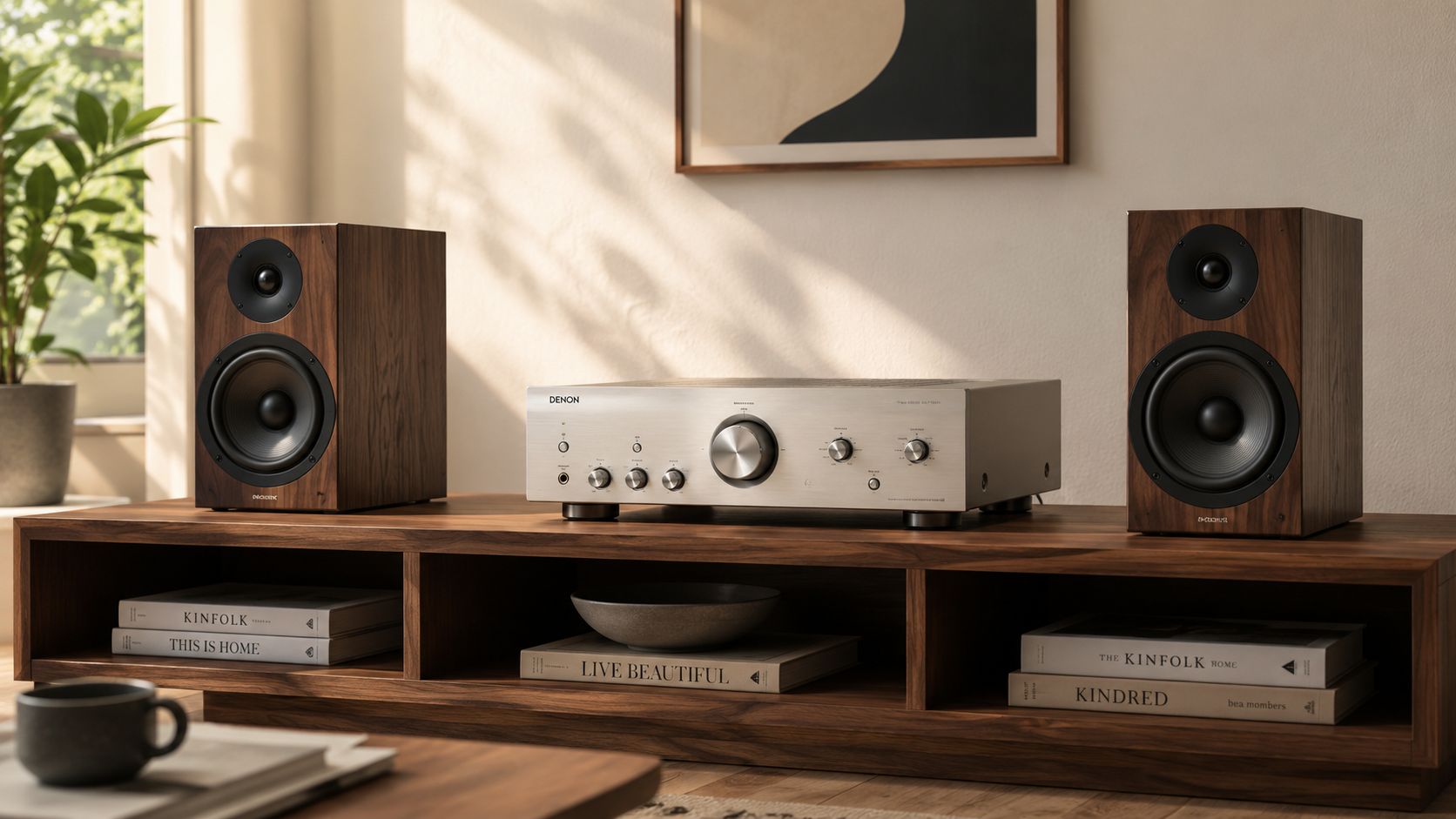
More watts won't save a bad match, and that's the first lie the amp market likes to sell you. The best amp for bookshelf speakers is the one that stays composed when the speaker asks for current, the room asks for control, and the recording peaks harder than your patience. Headline power matters, but only after the amp can cooperate with the load in front of it.
I write that as someone who has watched decent speakers sound bloated on the wrong amp and unexpectedly alive on a modest one that just knew its job. The search shouldn't start with bragging rights. It should start with impedance, sensitivity, headroom, and room size, because that's where the sound either locks in or falls apart.
Table of Contents
- Why Spec Sheets Lie About the Best Amp for Bookshelf Speakers
- The Four Matching Rules That Actually Matter
- Sizing The Amp To Your Room, Not Your Ego
- Three Amp Tiers and What Each One Is Actually For
- What These Pairings Actually Sound Like in a Room
- Setup Habits That Decide Whether Your Match Sounds Mediocre
- The One Decision To Make Before You Buy Anything
Why Spec Sheets Lie About the Best Amp for Bookshelf Speakers
Wattage gets most of the attention, but it is only part of the story. A 50 W continuous pair of bookshelf speakers is often happiest with an amp in the 75 to 100 W per channel zone, because a practical starting point is an amplifier rated at about 1.5 to 2 times the speaker's continuous power rating, which gives roughly 3 dB of headroom and cuts clipping risk when peaks hit hard (Audio University Online). That is not a badge for the biggest chassis on the shelf. It is enough clean muscle to keep transients intact and stop loud passages from turning gritty.
Power Is Not The Same As Control
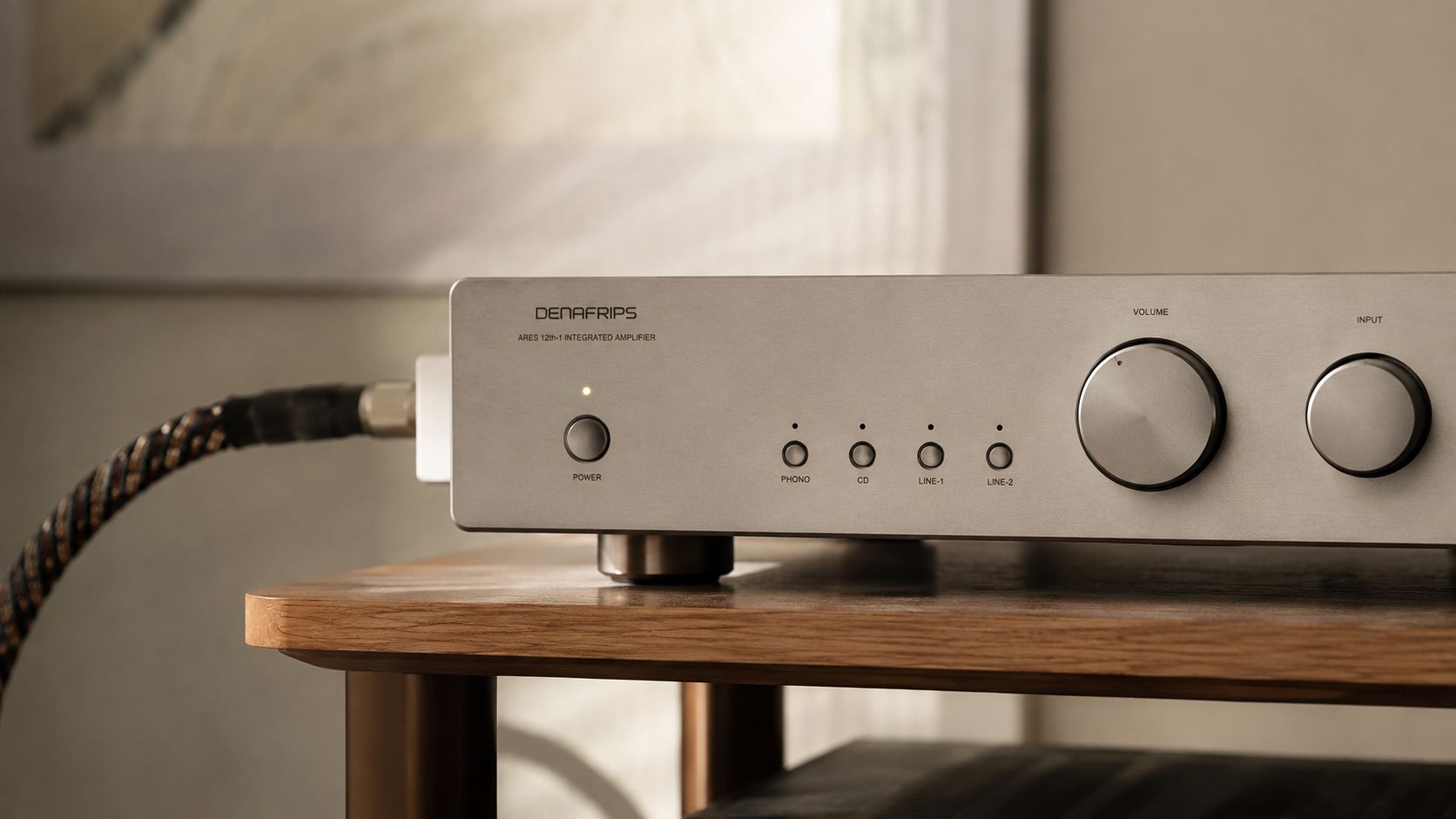
A clipped amplifier can sound harsh long before the volume knob looks guilty. Keep headroom in reserve, keep distortion down, and let the speakers do their job instead of starving them of current. The amp that sounds “bigger” on paper often just runs out of composure sooner with actual music.
That is why the wattage race misses the point. A bookshelf system lives or dies on whether the amp stays clean when the room, the recording, and your bad decisions all ask for more. The floor matters.
The Four Matching Rules That Actually Matter
Start With The Speaker's Load, Not The Sticker On The Amp
Bookshelf-speaker matching begins with impedance, because the amplifier has to be rated to operate at the speaker's nominal load, which is commonly 4, 8, or 16 ohms. If the speaker impedance is lower than the amp's rating, overheating risk rises. If the load is higher than expected, sound quality and overall performance can suffer (YouTube).
That's the hard constraint budget amps love to ignore. A speaker that dips below nominal during a bass line can make a cheap amp sound strained or thin even when the wattage number looks generous. Clean delivery matters more than bragging rights.
Match Sensitivity To How Loud You Actually Listen
Sensitivity changes how hard the amp has to work. A more efficient bookshelf speaker needs less power for the same room level, which is why a modest amp can sound effortless in a small space while a less sensitive speaker starts sounding pinched. A lot of buyers get fooled by a shiny watt number that never translates into real ease.
Practical rule: if the amp sounds like it is sweating at ordinary listening levels, it's not a mismatch you can fix with optimism.
Use Headroom As Insurance, Not As A Fetish
That earlier 1.5 to 2 times rule is about staying out of clipping, not about turning your desk into a nightclub. The point is control, not raw loudness (Audio University Online). In a sane bookshelf setup, the amp should feel like it has reserve, not like it's auditioning for a demolition job.
Tonal Character Matters, But Only After The Load Fits
Once the electrical match is right, then you can care about tonal character. Some amps sound slightly lean and fast, others sound a bit thicker through the mids, and some sit right in the middle with a steadier hand. But no tonal flavor rescues a bad impedance match.
A clean amp on the right speaker sounds like music. A powerful amp on the wrong speaker sounds like a compromise.
Sizing The Amp To Your Room, Not Your Ego
The room is the part spec sheets skip because it can't be printed on a box. For nearfield bookshelf speakers in small rooms, advice often splits between 15 to 50 W per channel and the broader 50 to 100 W RMS range, which is exactly why the question is not “how many watts?” but “how much clean power do I need?” (YouTube; NerdTechy).
Desk, Apartment, Or Proper Living Room
A desk or a tight apartment room cares more about low-distortion behavior at modest levels than brute-force output. A sensitive speaker can sound rich and composed on a smaller amp because the setup never asks for heroic output in the first place. That is the trick, and it is why a lot of oversized gear ends up sounding more stressed than useful.
In a small living room, the middle of the power window starts to make more sense, especially if the speaker is not especially efficient. That is where a clean 50 to 100 W RMS amp often lands in the comfort zone for compact hi-fi setups. If you want a cleaner explanation of amplifier classes and why they behave differently under load, this breakdown of Class A, B, and C is the useful one to read.
A small room forgives a lot, but it does not forgive a strained amp.
Think In Terms Of Waste, Not Fantasy
People get this backwards. They buy for power they will never use, then wonder why the system feels overbuilt, touchy, or underwhelming at real volumes. I would rather hear a modest amp working comfortably than a larger one loafing into a mismatch and calling itself premium.
Use this filter. Nearfield and small-room setups reward clean power at lower output. Bigger rooms, tougher loads, and less efficient speakers push you toward the middle or upper end of the sane range. That is the floor, not the ceiling.
Three Amp Tiers and What Each One Is Actually For
The right amp tier depends on whether you want an honest starter, a real long-term piece, or something that anchors a more serious setup. That's also where the SEO circus gets annoying, because everyone wants a single winner. There isn't one. There's just the tier that matches your room and your speakers.
| Tier | Price Band | Typical Power | Best-Fit Speaker Sensitivity | Room Size |
|---|---|---|---|---|
| Entry | Under $300 | Modest, clean output | More efficient bookshelf speakers | Desk, nearfield, small room |
| Sweet Spot | $300 to $800 | Comfortable midrange output | Most compact hi-fi bookshelf speakers | Small to medium room |
| Statement | $800 and up | Strong, controlled output | Less efficient or more demanding speakers | Medium room and beyond |
Under $300, Buy Honesty
In this tier, I want a compact integrated amp or Class-D unit that stays clean and doesn't pretend to be a power monster. This is for the newcomer, the desk listener, or the person pairing a friendly bookshelf speaker with a sane room. If the speaker is efficient and the room is small, this tier can sound far better than its price suggests.
$300 To $800, This Is The Real Sweet Spot
The market becomes useful at this level. Integrated amps and DAC-amp combinations offer enough reserve to prevent a pinched sound when music gets busy, while remaining well-behaved on a shelf. For many listeners, this is the tier that finally makes bookshelf speakers feel properly driven instead of merely powered.
$800 And Up, Buy Control And Longevity
At this level, you're usually paying for an amp that treats difficult loads with more grace and gives you a cleaner long-term anchor. That matters if your speakers are less efficient, your room is larger, or you don't want to revisit the decision soon. The point isn't to chase spectacle. The point is to keep the downstream chain from getting nervous.
For the bigger-picture context on amplifier class behavior, I keep a separate note on Class A, B, and C basics, because the class label tells you something about the character of the thing, even if it doesn't settle the whole buying decision.
What These Pairings Actually Sound Like in a Room
A good budget match has a certain plainspoken charm. Bass is tighter than you expect, not huge, but focused enough that kick drum and bass guitar stop stepping on each other. Vocals sit forward without sounding pasted on, and a snare has enough snap to feel alive instead of papery.
The Cheap Match Sounds Better Than The Box Suggests
When the pairing works, you hear order. The stereo image stops wandering, and small details stop smearing into the mids. That's not magic, just an amp that isn't choking the speaker at ordinary levels. You don't hear the machinery trying to win.
The Mid-Tier Integrated Starts To Breathe
A better integrated amp gives music a little more space around the edges. Cymbals open up instead of hissing, piano notes hang longer, and vocals gain body without getting cloudy. In a real room, that extra composure matters more than any spec-sheet flex, because the whole presentation feels less forced.
If you want a separate rabbit hole for speaker voicing and music-first pairings, I've got a companion note on bookshelf speakers for music, and the logic carries over cleanly here.
The Serious Amp Feels Like It Has Calm In Reserve
With a stronger amp, the sound doesn't get louder so much as steadier. Bass weight lands with more authority, vocals stay centered when the mix gets dense, and the room feels less like a container and more like a stage. I care less about raw slam than about whether the amp keeps its shape when the music turns rude. Control becomes audible.
Setup Habits That Decide Whether Your Match Sounds Mediocre
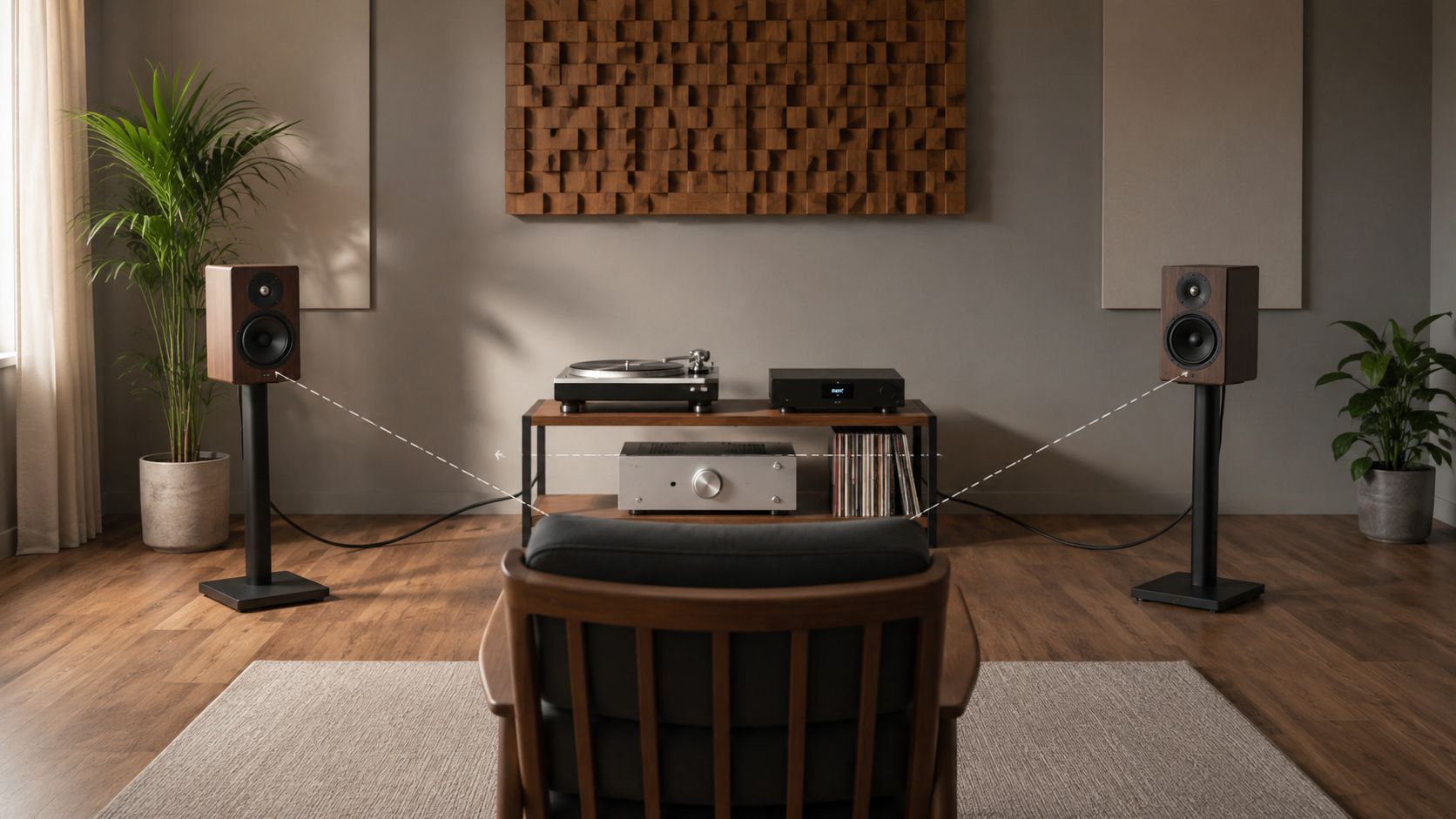
The amp can be right and the result can still be mediocre if you place the speakers badly. Stuffing bookshelf speakers into a tight shelf kills breathing room, blurs the bass, and makes the whole system sound trapped. Give them space from the wall, respect the listening angle, and stop expecting furniture to behave like acoustic treatment.
Feed The Amp A Decent Source
A good amp can't fully undo a lousy source. If the upstream signal is muddy, compressed, or noisy, the downstream chain inherits it. That's why a clean source matters even in a budget setup, and why expensive cables are usually a distraction when the actual problem is placement or source quality.
The other myth is break-in as a miracle. Parts may settle, but no amount of waiting transforms a bad match into a good one. The system either breathes or it doesn't.
Don't Ask Cables To Do A Room's Job
I've seen people chase wire upgrades while their speakers sat jammed into corners. That's backwards. Fix the placement, feed the amp properly, then judge the sound. The room is load-bearing, and the cable aisle is not.
The One Decision To Make Before You Buy Anything
Check two things first, your speaker's sensitivity and minimum impedance, then check your room size. If those numbers point toward a modest amp, buy the modest amp and keep the system honest. If they point toward a tougher load or a bigger room, move up the tier instead of gambling on a tiny box and hoping physics gets distracted.
That single test beats the entire spec-sheet arms race. It tells you whether you need clean power, more reserve, or just better matching. It also keeps you from paying for muscle you'll never use, which is the audio hobby's favorite way to waste cash while calling it research.
If your system also has a turntable in the chain, the same logic still applies, just from the source side. I've laid that out in my guide to the best amp for turntable setups, because the room never stops being the room and the load never stops being the load.
Buy the amp that fits the speaker, the room, and the way you listen. Everything else is showroom noise.
If you want more blunt, room-first guidance like this, keep reading Supermarket Sound and use the same no-BS filter on your next upgrade. Marque Hersh, Supermarket Sound.

