The most popular advice about the best DAC amp is backwards. Buyers start with a ranking, stare at SINAD, then bolt an expensive box onto headphones that were already limited by fit, sensitivity, or tuning. The right DAC amp isn't the one with the grandest spec sheet. It's the one that removes the failure you can hear.
I'm Marque Hersh, founder of Supermarket Sound, and yes, I know this needs to rank for “best DAC amp.” SEO keeps the lights on. But a leaderboard would be dishonest. A useful recommendation begins with three questions: what headphone or IEM sits downstream, where do you listen, and what source feeds the converter?
The market has grown into a serious category. One estimate places the broader headphone amplifier market at USD 662.78 million in 2025, with a projection of USD 1,057.34 million by 2032 at a 6.90% CAGR (historical DAC milestone and market context). Another report estimates the DAC headphone amplifier market at USD 1.27 billion in 2025, projecting USD 2.48 billion by 2034 at a 7.8% CAGR, with portable units holding 58.3% of the market in 2025 (DAC headphone amplifier market forecast). More boxes are selling. That doesn't mean every listener needs a bigger one.
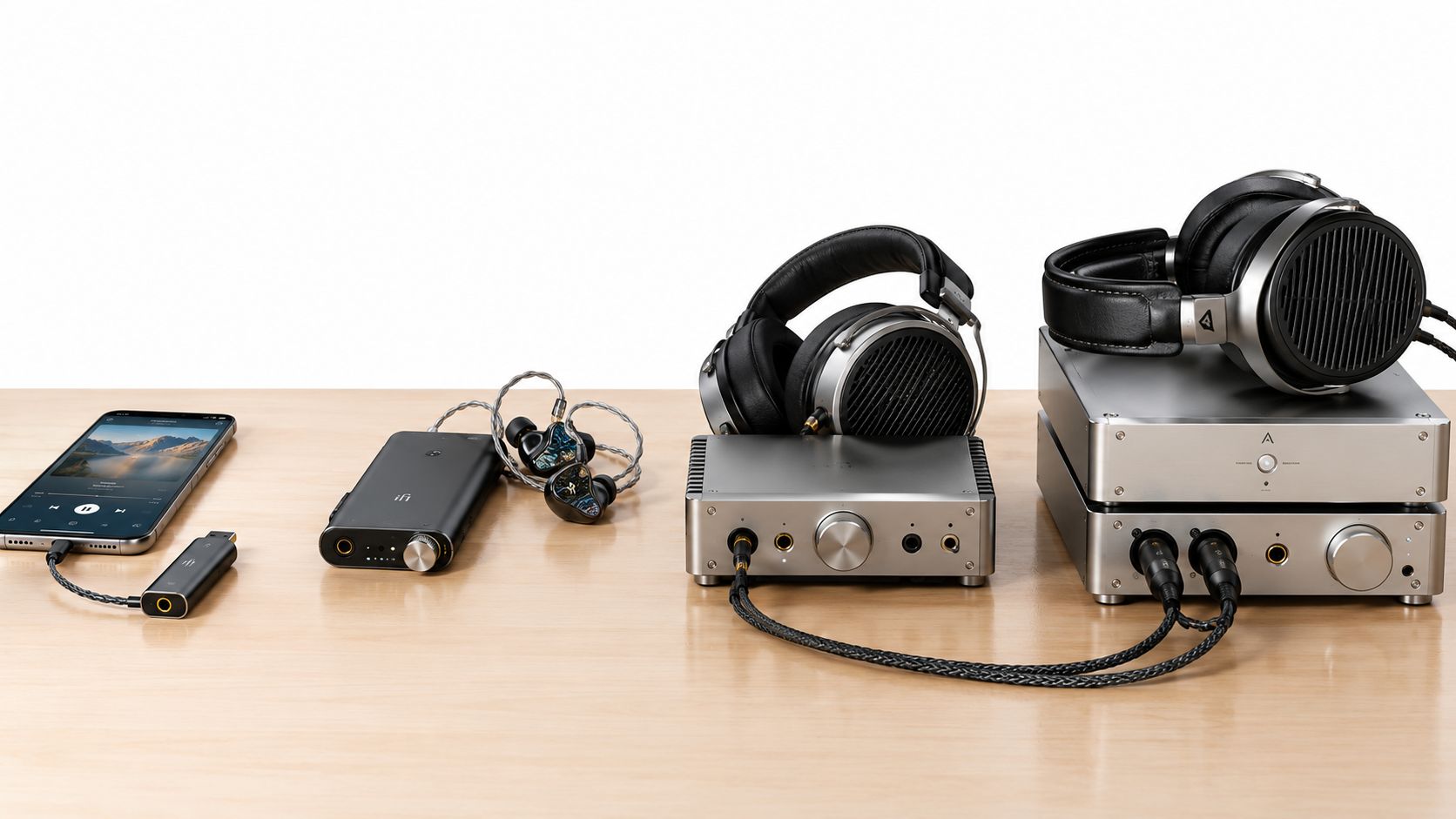
| DAC Amp Form Factor | Power Source | Typical Outputs | Drive Class | Best Use Case |
|---|---|---|---|---|
| USB-C dongle | Phone, tablet, or computer | 3.5 mm, sometimes balanced | Easy IEMs and efficient headphones | Commuting and simple laptop listening |
| Battery portable | Internal battery, USB charging | 3.5 mm and 4.4 mm balanced | IEMs through moderately demanding headphones | Phone listening with extra flexibility |
| Compact desktop | AC mains | 6.35 mm, 4.4 mm, RCA, XLR or TRS | Most dynamic headphones and many planars | A permanent desk system |
| Full-size desktop stack | Separate AC-powered units | Dedicated balanced and line outputs | High-headroom, demanding headphones | Reference listening and system integration |
Table of Contents
- Stop Asking Which DAC Amp Is Best
- What A DAC Amp Actually Does In The Signal Chain
- The Four Form Factors Everyone Collapses Into One Ranking
- Best DAC Amp Picks By Budget Tier
- Pairing DAC Amps With Headphones And IEMs
- When Desktop Power Beats Portable Convenience
- How To Pick Without Spiraling Into Spec Sheets
- Honest Questions Buyers Still Ask
Stop Asking Which DAC Amp Is Best
There is no single best DAC amp. There are only boxes that solve particular problems, and boxes that decorate a problem you haven't diagnosed.
A cheap dongle can be completely transparent with easy-to-drive IEMs. Put that beside a costly desktop stack and you may hear no meaningful difference at safe listening levels. Spend the same attention on a difficult, high-impedance headphone with inadequate voltage, and suddenly the amplifier becomes load-bearing. Bass loses authority, transients arrive politely, and the whole presentation feels smaller than the headphone deserves.
That split is why flat rankings fail. They treat the converter as if it were always the weakest link upstream. For most listeners below the headphone's performance ceiling, it isn't.
Find The Failure Before The Upgrade
Start with the transducer. Impedance and sensitivity determine the electrical demand, and sensitivity may be listed as dB SPL per mW or dB SPL per V. Those aren't interchangeable labels. One describes loudness from power, the other from voltage, and converting between them changes the output requirement materially (headphone impedance and sensitivity explained).
Then look at the listening environment. A battery device belongs in a pocket, not permanently behind a monitor. A desktop unit belongs where you can use its volume control, gain options, outputs, and EQ without turning your phone into a hostage.
Finally, inspect the source. USB transport limits can matter more than a fashionable DAC chip. Under full-speed USB operation, USB Audio Class constraints limit sample rate to 48 kHz when both input and output are active, and 96 kHz when only one direction is used. The same specification limits both paths to two channels (USB Audio Class constraints).
Your DAC amp is probably not your problem.
What A DAC Amp Actually Does In The Signal Chain
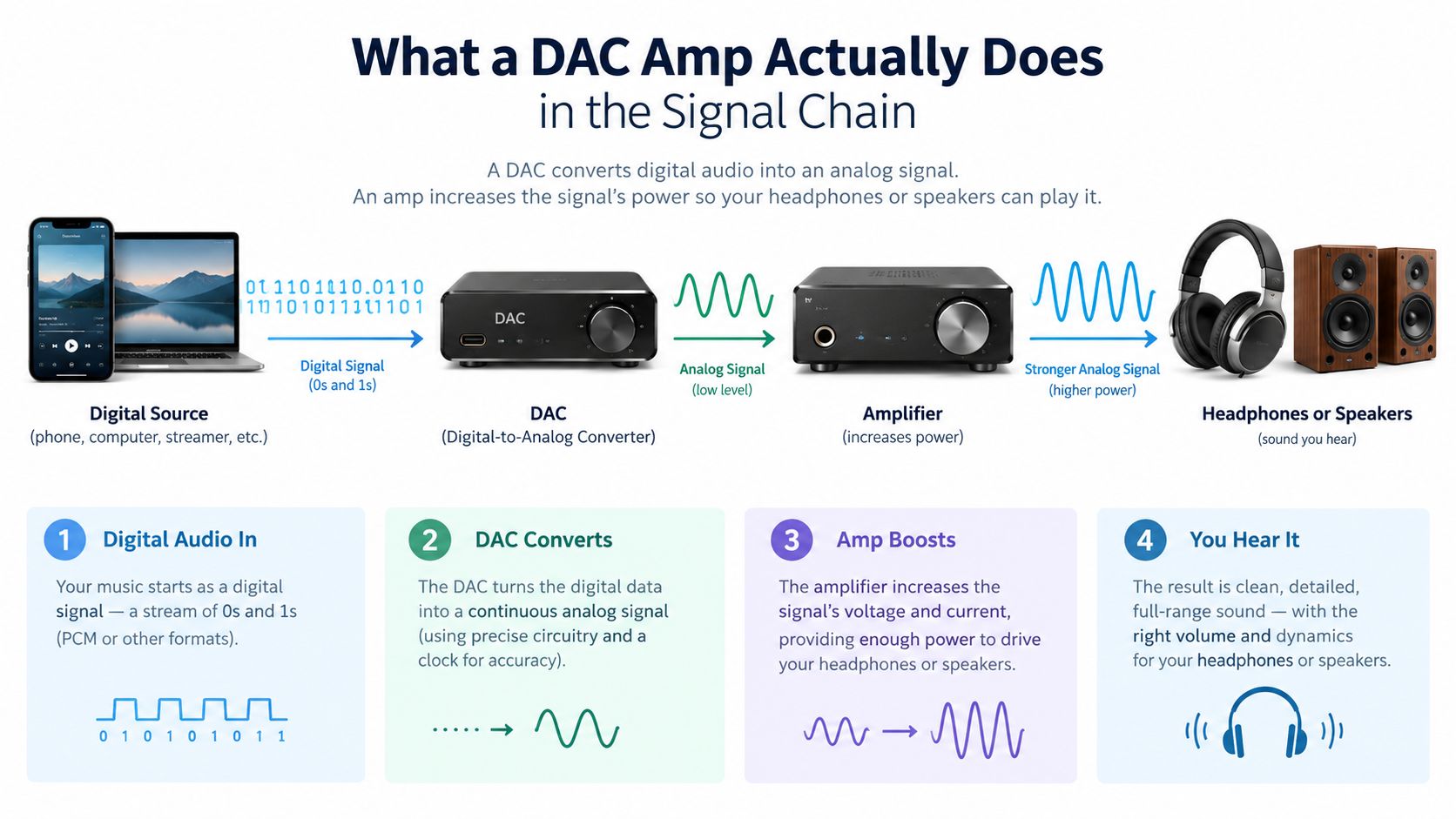
Digital audio starts as data. The DAC, or digital-to-analog converter, reconstructs that stream as a continuously varying analog signal. The headphone amplifier then raises that signal to the voltage and current the driver needs to move.
Those jobs sit in the same box, but they aren't the same job. A converter can produce a clean line-level signal while an undersized output stage struggles to control a demanding headphone. Conversely, a powerful amplifier can expose hiss from an insensitive or poorly implemented source.
For a plain-language tour of the conversion stage, see Supermarket Sound's guide to the digital-to-analog audio converter.
The Transparency Floor Is A Filter
A practical transparent DAC/amp benchmark sits around 113 to 114 dB SINAD and 131 dB SNR or dynamic range. The Tanchjim Space Pro measures 113.7 dB SINAD, 131 dB SNR, 131 dB dynamic range, and approximately 0.000206% THD+N, while producing 505 mW at 32 ohms from its balanced output and 4 Vrms balanced, 2 Vrms single-ended line levels (Tanchjim Space Pro measurements).
Those figures don't guarantee a headphone will sound good. They establish that the DAC/amp isn't the bottleneck in a transparent setup. Once a unit clears that floor, the headphone's impedance curve, sensitivity, fit, and tuning take over the conversation.
The amplifier stage still has real work to do. A Texas Instruments headphone amplifier reference shows THD+N around -100 dB to -106.7 dB at 1 kHz and 10 mW into 32 ohms, with unclipped output around 50 to 55 mW, depending on configuration (Texas Instruments headphone amplifier reference). Low distortion at moderate power is easy. Clean voltage and current into a real headphone load is harder.
The DAC handles conversion. The amplifier handles the load.
The Four Form Factors Everyone Collapses Into One Ranking
A dongle, a battery portable, a compact desktop unit, and a full-size stack don't make the same engineering bargain. Ranking them together is like comparing a pocket knife with a workshop vise because both contain metal.
Dongles Choose Simplicity
USB-C dongles win when the listener wants a short path from phone or laptop to IEM. They draw power from the source, occupy almost no space, and keep the setup cheap and tidy. Their limitations are just as clear. Bus power constrains headroom, battery-powered phones resent sustained drain, and many dongles center their useful output around a 3.5 mm single-ended connection.
That isn't a criticism. Easy IEMs don't need theater.
Portables Add Headroom And Bulk
Battery units add isolation from phone power, physical controls, gain stages, Bluetooth, and often a balanced output. They suit someone who moves between a desk, a train, and a hotel room, but the chassis now bulges from the pocket and needs charging. Balanced output can provide about twice the power of unbalanced output in a correctly designed circuit because it doubles voltage swing, while power scales with voltage squared.
Desktops Stop Apologizing For Current
Compact desktop units use external or integrated AC power, proper volume controls, and more generous output stages. Full-size stacks separate DAC and amplifier duties across two chassis, which can improve integration, allow upgrades, and provide more drive options. They also demand desk space, cables, and a listening posture that stays put.
The carry case decides.
Best DAC Amp Picks By Budget Tier
A budget tier should describe the problem you need to solve, not create a prestige ladder. The right question is simple: what failure does this tier fix, and what will remain the bottleneck?
| Budget Tier | Recommended Category | Best Paired With | Who Should Skip It |
|---|---|---|---|
| Under $100 | Generic entry-level USB-C dongles | Easy IEMs and efficient headphones | Owners of demanding planar headphones |
| $100 to $300 | Mid-tier battery portables and compact desktop units | Portable systems and moderately demanding headphones | Listeners who need full desktop control |
| $300 to $700 | Upper-tier units with EQ and higher headroom | Demanding headphones and EQ-focused systems | Buyers whose current setup already sounds clean and powerful |
| Above $700 | High-end desktop units with extensive control and headroom | Serious desktop systems | Anyone shopping for audible value alone |
Under $100
Generic entry-level USB-C dongles are the sensible choice for easy IEMs and casual listening. They replace a weak laptop or phone output, provide a cleaner volume path, and fit easily into a pocket. Buy this tier for convenience and basic competence. Do not expect it to transform a power-hungry planar headphone. If the headphone is the bottleneck, a cheaper DAC amp will not change that.
$100 To $300
Choose this range when portability, battery operation, wireless flexibility, or stronger output matters. Mid-tier battery portables suit listeners moving between a phone, desk, and travel bag. Compact desktop units make more sense when the system stays in one place and you want easier controls with a moderately demanding headphone.
This tier often delivers the most practical improvement. It addresses weak source output and limited headroom without forcing a full reference setup. The budget DAC and amp guide covers these tradeoffs in practical terms.
$300 To $700
Spend here for control features, useful EQ, cleaner voltage delivery, and enough headroom for demanding headphones. These units earn their cost only when the rest of the system can reveal the benefit. If your current setup already plays cleanly, reaches a comfortable level, and has no noise or control problem, this purchase is unlikely to fix anything you hear.
Above $700, the purchase is mainly about system features, build, aesthetics, control, and generous headroom. High-end desktop units can anchor a serious listening system, but expensive hardware does not create better music by itself. The headphone, recording, room, or listener may still be the limiting factor.
Pairing DAC Amps With Headphones And IEMs
The same DAC amp can feel invisible with one headphone and plainly wrong with another. Output stage, noise floor, output impedance, and available voltage meet the load, then the listener hears the result as weight, glare, restraint, or ease.
Sensitive IEMs expose noise first. A noisy output adds hiss between tracks, and poor channel matching can make low-volume listening feel skewed. With a sensitive multi-driver IEM, I want a black background and a volume control that stays usable at whisper levels.
Dynamic Headphones Need Control, Not Drama
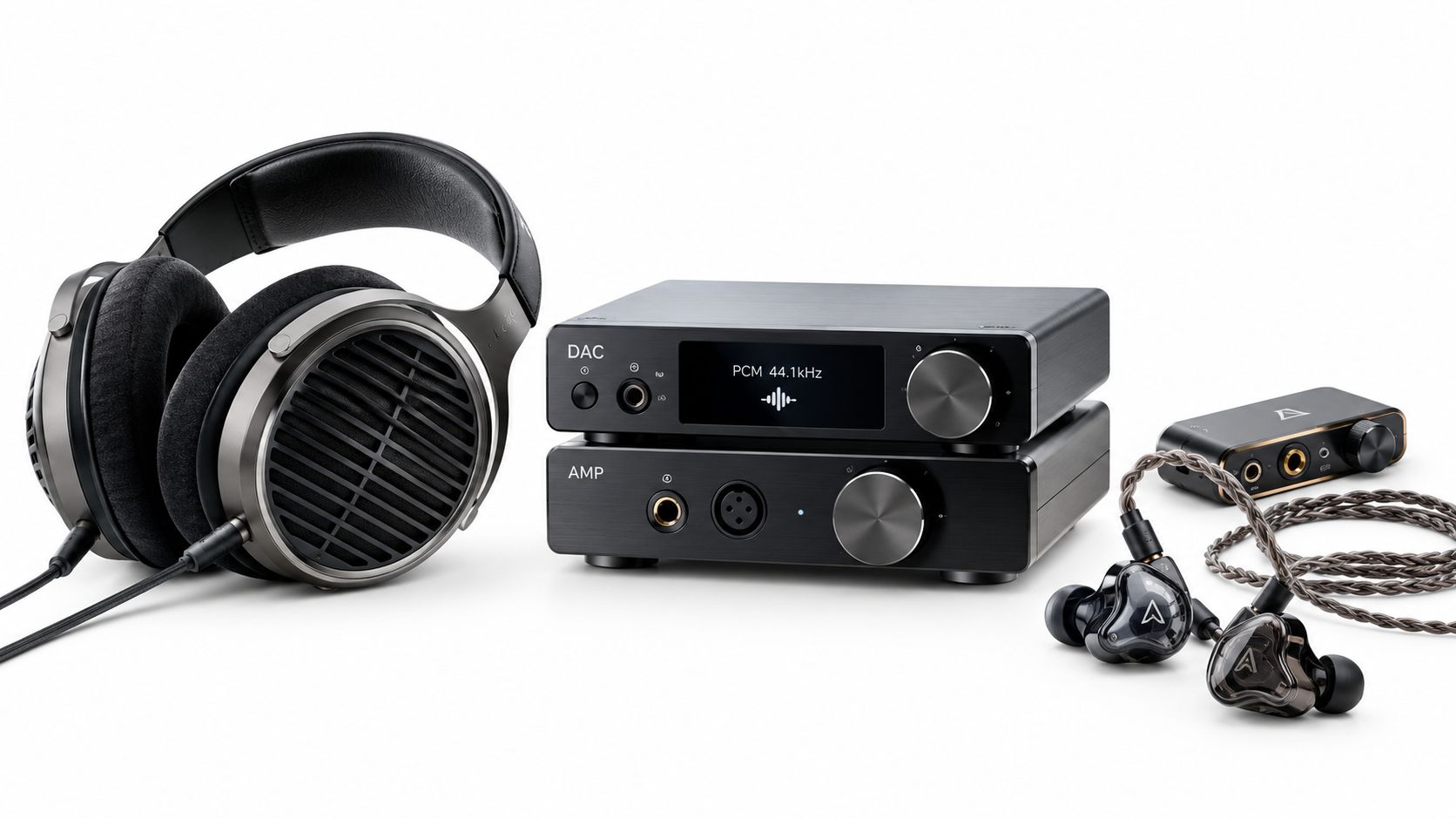
A mid-impedance dynamic headphone, around 150 to 300 ohms, needs voltage control more than hype. Give it a clean amplifier and the midrange stays open instead of turning brittle. That keeps vocals centered and guitars textured without adding a fake edge.
A compact desktop unit with clean voltage control makes sense here. The goal is simple, stable drive, not a sales pitch about magic synergy.
For a plain explanation of the output stage, the guide to how a headphone amplifier works is the useful place to start.
Planars Punish Weakness
Planar headphones are less forgiving. Demanding planar headphones can starve on voltage and current even when a DAC amp posts clean noise figures. The failure mode is usually plain. Bass loses grip, orchestral swells flatten, and electronic music stops hitting with physical force.
A desktop unit with parametric EQ is a smart match if you want to trim treble without changing the headphone's basic character. A quiet low-noise portable dongle suits a sensitive IEM when the genuine need is silence, not brute force. These are deliberate matches, not universal winners.
A great headphone with the wrong amplifier sounds polite or brittle.
When Desktop Power Beats Portable Convenience
Desktop gear earns its own answer because external power changes headroom and system integration. A proper volume control, balanced output, preamp connectivity, and room for EQ belong at a permanent listening station. A dongle can sound excellent, but it cannot turn a phone battery into a real power supply.
Demanding planars make the point fast. A low-sensitivity planar that needs real current exposes weak amplification immediately. An ultra-low-sensitivity vintage headphone asks for even more system planning. Long balanced cable runs, a speaker rig fed through a preamp, or a desktop EQ setup all favor the mains-powered box.
Power Is Useful When The Load Requires It
A desktop DAC/amp with integrated EQ and preamp outputs makes sense when you want conversion, headphone drive, and tone control in one box. A standalone desktop DAC feeding a separate amp makes sense when you already trust the amplifier and only want cleaner source duties. A high-end integrated desktop source belongs to the listener who values a fully built front end and owns headphones that can expose the difference.
There is no magical desktop sound. There is headroom, control, and integration.
A portable unit can still embarrass a mediocre separates stack at moderate listening levels. A compact desktop unit often proves that point. If the headphone is easy to drive and the desk setup does not need line outputs or EQ, splitting the system into separate boxes adds clutter without adding music.
Choose The Desk You Actually Have
Use desktop power when your headphone asks for it, your system needs line outputs, or you want EQ without draining a phone. Keep portable when you listen in several places, use efficient headphones, or value a short signal path over a permanent rack.
The desktop wins on integration.
How To Pick Without Spiraling Into Spec Sheets
Use four questions. Answer them in order and stop shopping when the answers align.
Can you hear the problem now? Compare your current setup at safe, matched listening levels. If you can't identify a consistent problem, the bottleneck may be headphone fit, tuning, source quality, or the room, not the DAC amp.
Where does the box live? A commute favors a dongle or battery portable. A fixed desk favors a compact desktop unit. A full-size stack needs a real place to breathe, not a precarious shelf beside a coffee mug.
What does the headphone require? Check impedance and sensitivity, then compare those demands against the amplifier's voltage and current output. Ignore the DAC chip until the amplifier side clears the load.
What is the system ceiling? My rule is simple: keep the DAC amp at no more than one third of the total headphone system's value. Treat that as a spending guardrail, not a law of physics. If the headphone, fit, and source still need attention, spend there first.

Supermarket Sound publishes DAC-focused guides and equipment reviews as part of that wider decision process. The useful output isn't a shopping list. It's a diagnosis.
Once those four answers agree, stop researching. More tabs won't change the sound.
Honest Questions Buyers Still Ask
Does Balanced Always Sound Better?
No. Balanced output matters when the circuit delivers more voltage and current, and when your wired headphone supports the compatible connector. On a desktop unit, it can provide meaningful headroom for a difficult planar. On a portable dongle, it may mostly change the cable and connector.
Use balanced for power and channel separation when the design supports it. Don't buy a cable just to make the word appear in your setup.
Can USB Ruin A Good DAC Amp?
USB isn't automatically clean because the box has a serious DAC inside. A noisy front-panel port, long active cable, or unpowered hub can introduce dropouts, connection problems, or power instability. Connect the DAC amp directly to a reliable port first, then add complexity only when the system remains stable.
The transport has a floor.
When Should You Stop Chasing The Chain?
Stop when the source is clean, the amplifier has headroom, and the headphone still sounds wrong. Room treatment matters for speakers, fit matters for IEMs, and headphone tuning often matters more than swapping a competent DAC amp for a flagship.
If you already have a solid $200 DAC amp that drives the headphone cleanly, move downstream before moving upward. Change the headphone, adjust the fit, improve the room, or use EQ.
The next upgrade should solve a problem you can name.
If your current setup sounds strained, noisy, or underpowered, start with the headphone's impedance and sensitivity, then choose the form factor that matches where you listen. If it already sounds clean and controlled, keep your money, adjust the downstream bottleneck, and stop letting the phrase best DAC amp do your thinking for you.

