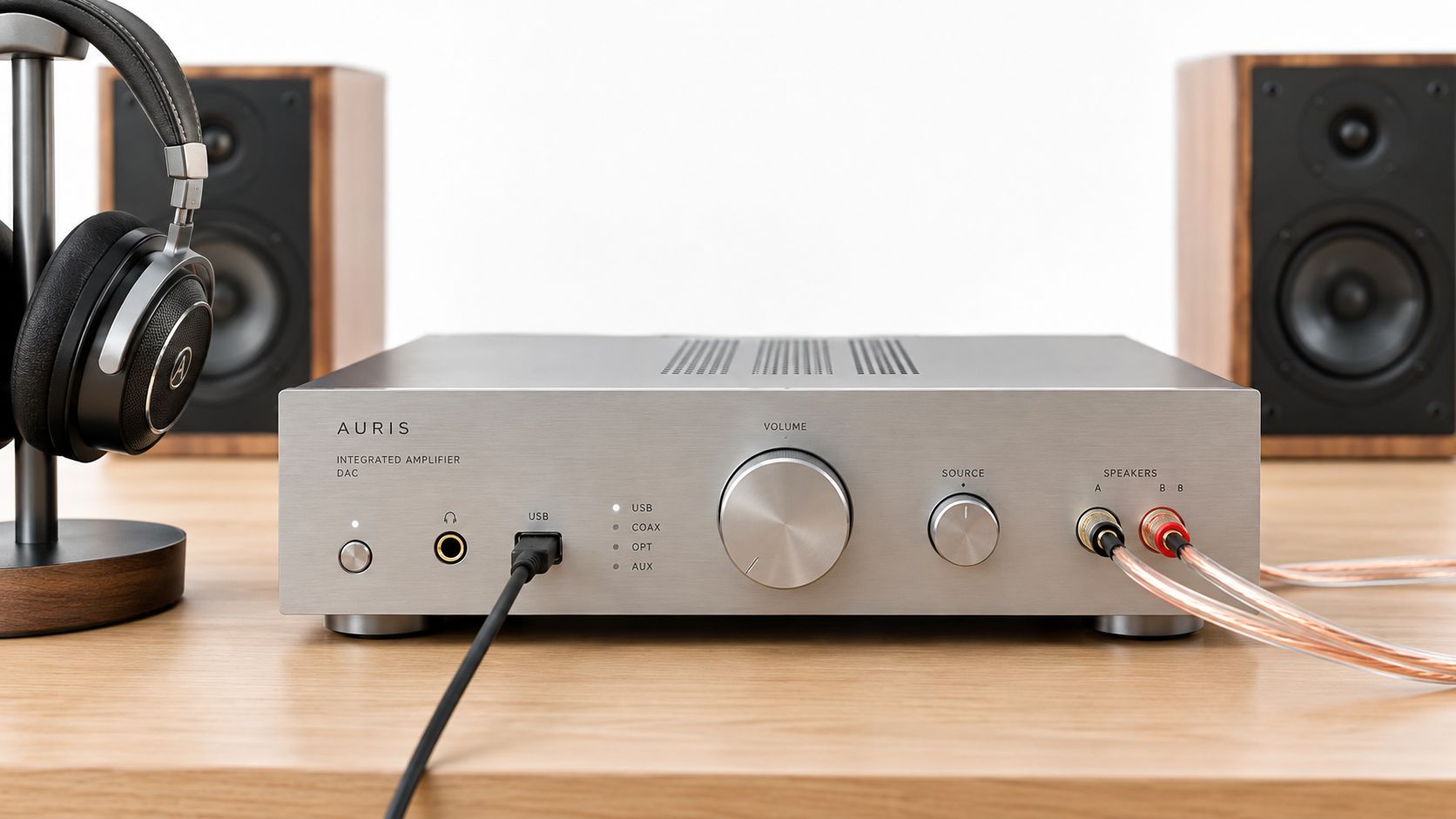
The DAC is usually the least important part of an integrated amplifier with DAC. The power stage decides whether your speakers sound composed or starved, while the converter mostly decides how neatly your source enters the system.
That's the unfashionable answer, and it's the one I've reached after living with enough all-in-one boxes to stop treating chipset names as listening tests. A competent built-in DAC can remove a box, a power cord, and a nest of cables. It can't rescue an amplifier that loses its grip when the bass gets demanding.
I'm Marque Hersh, founder of Supermarket Sound. The site has to rank to survive, so yes, I care about search terms. I care more about whether an integrated amp makes music sound spacious, weighty, and unstrained in a real room.
Table of Contents
- Why the DAC Is Not the Star of an Integrated Amp
- What an Integrated Amplifier with DAC Actually Does
- Integrated Amp with DAC Versus Separates
- Digital Inputs and Resolution Ceilings That Matter
- Matching the Amplifier Section to Your Speakers and Headphones
- When an Integrated Amp with DAC Is the Wrong Box
- A Short Buying Heuristic You Can Take to a Demo
Why the DAC Is Not the Star of an Integrated Amp
The power stage determines whether an integrated amplifier sounds composed or strained. Marketing gives the DAC the larger headline, listing its converter brand, supported formats, input count, and resolution ceiling. Those details matter only after the transformer, output devices, thermal design, and current delivery can handle the speakers connected to the terminals.
A power amplifier works into a reactive load, not a fixed number on a specification sheet. Speaker impedance changes across the frequency range, sometimes dropping where the music demands the most control. If the output stage cannot supply enough current, bass authority disappears first. The image then becomes less stable, transients lose impact, and fine detail gets masked by strain.
A well-designed 75W integrated provides a useful benchmark for the figures that belong together. It can deliver 2 × 75 watts into 8 ohms, tolerate a minimum 2-ohm load, offer frequency response from 5 Hz to 100 kHz, maintain a signal-to-noise ratio above 100 dB, keep crosstalk below -100 dB, and hold distortion below 0.01% at 50 watts into 8 ohms at 1 kHz, as documented in this integrated amplifier and DAC review.
Those specifications do not make the DAC irrelevant. They show the condition the converter must meet: its signal needs a capable analog stage downstream. A quiet DAC feeding a weak amplifier still produces a cramped result. The power section passes its limitations straight to the speakers.
The power stage sets the personality
I hear amplifier changes as changes in behavior. One design keeps bass lines taut as an arrangement grows dense. Another lets the kick drum spread, softening the presentation and reducing organization. The DAC may change texture or spatial cleanliness, while the amplifier section determines how confidently the system handles real musical demand.
Start with the speakers, room, and listening level. Then examine how the amplifier behaves into difficult loads. Only after that should you decide whether the digital section is quiet and capable enough to disappear into the analog signal path.
My rule: buy the amplifier for the speakers you own, then judge the DAC for the sources you'll actually connect.
The built-in DAC is a clean compromise. It removes one box, one power cord, and a nest of cables. Choose that convenience, but make the power stage earn its place first.
What an Integrated Amplifier with DAC Actually Does
The power amplifier is the load-bearing section of an integrated amplifier with DAC. The digital converter earns its place by removing another box, while the rest of the circuit turns sources into usable speaker power.
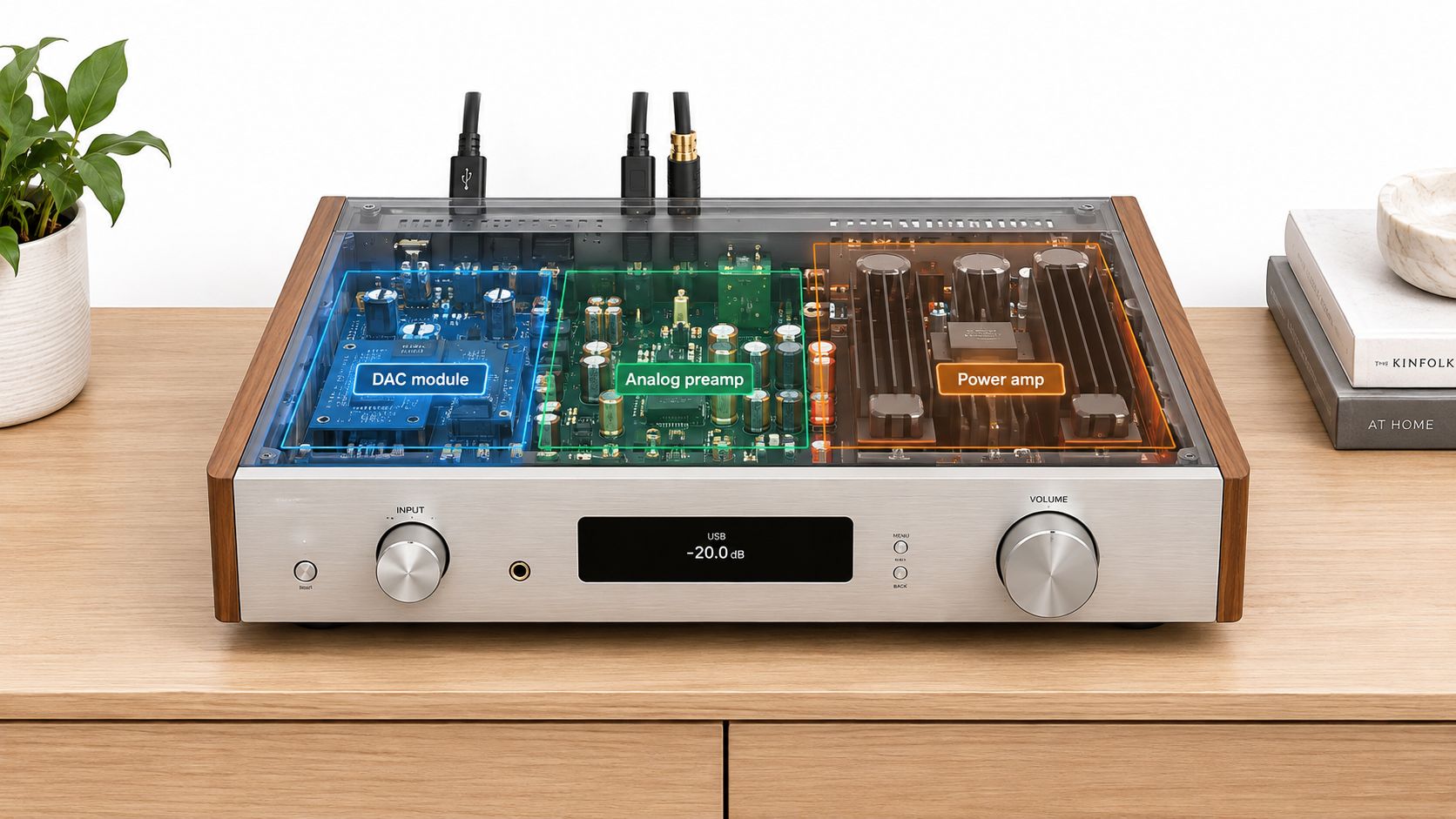
Digital data enters through USB, optical, coaxial, or sometimes a network connection. The DAC converts those coded samples into an analog waveform. Filtering and the analog preamp stage follow, handling source selection and volume. The power stage then raises the signal to the voltage and current required by passive speakers.
Three sections, one signal path
An integrated unit contains three functional areas:
- Digital conversion: USB, optical, coaxial, and network inputs arrive here. The DAC manages clocking, conversion, and output filtering.
- Analog control: RCA and phono inputs, source selection, and volume control belong here. This section determines how incoming analog and converted digital signals enter the system.
- Power delivery: The output devices and power supply drive the speakers. Current capability, heat management, and stability with the speaker load become audible here.
The handoff between digital conversion and analog amplification deserves attention. Poor circuit layout can let switching noise enter the analog path, while grounding faults can create hum across connected equipment. Clocking errors, commonly discussed as jitter, also occur at the boundary between digital timing and analog reconstruction. Ignore the terminology and judge the result: the completed amplifier should keep unwanted artifacts below audibility.
A built-in headphone socket usually draws from the analog side. It inherits the volume control and may share part of the preamp path, but its output stage can use separate circuitry. A headphone jack therefore represents its own engineering choice, not a miniature copy of the speaker amplifier.
Input consolidation is the useful trick
Map your sources before you judge the DAC. A television can connect through optical, a computer through USB-B, a disc transport through coaxial, and a turntable through a phono input when the amplifier provides one.
A typical mid-range integrated specification sheet illustrates this layout with optical and coaxial digital inputs plus USB-B, allowing a computer to connect directly without an external DAC box, as shown in its published specification sheet.
That is the practical win. One enclosure handles source selection, conversion, volume, and speaker power.
The built-in DAC is a clean compromise. It removes one box, one power cord, and a nest of cables. Choose that convenience only after the power stage matches your speakers and listening level. A converter matters when it solves a source or system problem. Otherwise, it is another box waiting for an excuse, as discussed in this guide to whether a DAC is worth it.
Integrated Amp with DAC Versus Separates
A stack of separate DAC, preamp, and power amp gives you more independence. It also gives you more cables, more gain stages, more sockets, and more opportunities to buy the wrong thing in the wrong order.
An integrated amplifier with DAC usually wins in a normal listening room because the designer can match the preamp and power stage, shorten the signal path, and put the controls in one enclosure. You get one warranty and fewer decisions. The system also occupies less rack space, which matters when the rack shares a wall with actual furniture rather than an audio showroom.
One planning note from the brief deserves correction before it becomes folklore. The often-repeated claim that an integrated delivers “roughly forty percent of the price for eighty percent of the performance” has no verified source here, so I won't dress it up as a measured rule. The qualitative point stands. In many rooms, a well-designed integrated gives you most of the practical performance you need without making the system a second job.
The trade-off is modularity
Separates earn their footprint when the system's demands become specific. A dedicated DAC can have its own power supply and analog output stage. A standalone preamp can offer more refined input management. A separate power amplifier can provide more headroom for difficult speakers. You can also upgrade one part without replacing the others.
That modularity matters if your source chain keeps changing. It matters even more if you hear a clear bottleneck and want to replace only that bottleneck. An integrated unit locks more of the system's character inside one chassis. Convenience becomes a constraint when your taste moves faster than the product cycle.
| Factor | Integrated amp with DAC | Separate DAC, pre, and power amp |
|---|---|---|
| Rack space | One chassis and a shorter cable run | Multiple boxes with more placement demands |
| Signal path | Matched sections inside one design | More connections and independent gain stages |
| Upgrade path | Broad changes usually require replacing the unit | You can change one section at a time |
| Power supply layout | Shared enclosure, with internal separation depending on design | Dedicated supplies can isolate sections more thoroughly |
| System management | One remote, one warranty, fewer failure points | More flexibility, but more setup and troubleshooting |
The integrated amplifier versus receiver comparison covers the broader product distinction, but the buying decision here is simpler. Choose the integrated when you want a compact, coherent system. Choose separates when the room, speakers, or upgrade plan makes that compactness expensive.
Separate boxes don't create better sound by existing. They create better options.
For most modest and medium-sized rooms, integration is the sane starting point. A separates rig earns its keep when the system has enough scale and complexity to use what the extra boxes provide.
Digital Inputs and Resolution Ceilings That Matter
The DAC's resolution badge should not decide the purchase. The amplifier section carries the speakers, while the DAC mainly removes one box and a cable run from the rack. Choose the digital inputs around your actual sources, then confirm that the power stage still suits the system.
A crowded rear panel can include USB, optical, coaxial, HDMI, Bluetooth, network, and professional digital connections. That variety looks impressive, but input count says nothing about sound quality. A single well-implemented USB input can serve a computer or music server better than several unused sockets.
Optical is a sensible television connection because it breaks the electrical connection between the TV and amplifier. Coaxial suits a disc transport or streamer. Bluetooth earns its place when quick phone playback matters more than the final degree of transparency. Network input helps when you want streaming services or a stored library handled inside the amplifier.
Resolution limits vary by input and model. For example, a USB input on this class of product can support up to 384 kHz and 32-bit PCM plus 11.2 MHz DSD, while optical and coaxial inputs may stop at 24-bit/192 kHz, as described in this AI-503 review.
Read the input row, not the headline
Judge the sockets before reading the chipset name.
| Input | Typical max resolution | Best source match | Practical verdict |
|---|---|---|---|
| USB | Can reach high PCM and DSD limits on some models | Computer or music server | Prioritize implementation over the ceiling |
| Optical | Often supports up to 24-bit/192 kHz | Television or electrically noisy source | Useful, quiet, and easy to live with |
| Coaxial | Often supports up to 24-bit/192 kHz | Disc transport or streamer | A sensible connection for legacy digital gear |
| Bluetooth | Depends on the supported codec | Phone, guest device, casual listening | Convenient, not automatically reference quality |
| Network | Depends on the amplifier's platform | Streamer library or connected services | Valuable if you want one networked source |
| HDMI | Depends on the model | Television and home entertainment system | Choose it when TV integration is central |
Most music people stream or rip does not require extreme sample-rate support. I would take a stable USB implementation and clean analog output over a badge promising a number I will never feed it.
A flexible integrated specification shows what useful digital integration looks like, with one coaxial S/PDIF input, three optical S/PDIF inputs, one USB input, and one network input, alongside analog connections, according to its published specifications. That arrangement makes sense when each socket has a job. Counting unused inputs is spec-sheet theater.
Bluetooth and legacy formats
Bluetooth lets you send a track from a phone without starting the full source chain. It becomes a poor substitute when wireless connectivity replaces a proper wired input your system already needs.
MQA decoding belongs in the legacy column now. Do not pay extra for it unless you already have a specific reason to use it. The format badge should rank below the amplifier's ability to control your speakers.
Choose inputs from the rack backward. Start with the television, computer, transport, streamer, and turntable you own. Check the supported formats afterward. An unused socket is not part of your system.
Matching the Amplifier Section to Your Speakers and Headphones
Headline wattage tells only part of the story. I care more about how an amplifier behaves when a speaker's impedance falls and the music demands current at the same time.
A 50-watt amplifier that maintains its authority into 4-ohm loads can sound more convincing than a higher-rated design that folds under the same demand. The audible symptoms are easy to recognize: bass transients lose their edge, orchestral climaxes flatten, and the soundstage shrinks as you turn the volume up.
Speaker sensitivity gives you another useful starting point. It's commonly expressed in dB/W/m, describing how loudly a speaker plays from a given amount of amplifier power at a stated distance. Every 3 dB drop roughly doubles the amplifier power the speaker demands, so a lower-sensitivity speaker can make a modest integrated amplifier work much harder than its nominal wattage suggests.
Three speaker situations
An 86 to 88 dB-sensitive floorstander in a medium room needs an amplifier with real current delivery, especially if its bass impedance dips. I'd avoid choosing by the front-panel watt figure alone. Bring familiar music and listen for whether the kick drum stays compact when the arrangement fills out.
A 90 dB standmount usually gives a modest integrated amplifier more breathing room. That doesn't make amplifier quality irrelevant. It means the speaker asks less of the power stage, leaving more margin for dynamics and cleaner low-level information.
Planar or magnetostatic panels can behave like current-hungry loads rather than easy voltage loads. Some integrated amplifiers handle them beautifully. Others sound polite until the music asks for scale. The only honest answer comes from the impedance behavior, amplifier design, and a proper audition.
The detailed principles behind this are laid out in my guide to impedance matching. The short version is simple. Match the amplifier to the electrical load, not the marketing headline.
Listen for grip when the bass arrives. Brightness can impress for ten minutes. Compression gives the game away.
Headphones inherit different problems
The headphone output deserves its own test. High-impedance dynamic headphones, including models in the 300 to 600-ohm range, generally want voltage swing. Low-inertia planar headphones can demand current. Sensitive IEMs may reveal hiss that the speaker output completely hides.
A single-gain headphone stage often struggles to serve all three audiences. The high-impedance headphone may sound underpowered, while an efficient IEM exposes noise or gives you a tiny usable range on the volume control. Don't assume the presence of a headphone jack means the amplifier understands your collection.
Play a demanding track at a realistic level. Turn it up gradually. If the bass loses its shape or the center image hardens, the amplifier has reached its comfort limit. Specs start the conversation. Your ears finish it.
When an Integrated Amp with DAC Is the Wrong Box
The power stage decides whether an integrated amplifier earns its place. The DAC removes one box from the rack. Consolidation stops making sense when your sources, speakers, or future upgrades exceed the assumptions built into the chassis. Choose this format when your source list is controlled, the speakers suit its output stage, and a short signal path matters more than unlimited expansion.
A serious turntable owner can outgrow the built-in phono stage, especially after adding a moving-coil cartridge or a specialized phono preamp. The amplifier may continue handling digital sources well, but one headline convenience becomes an unused input.
Complexity exposes the constraint
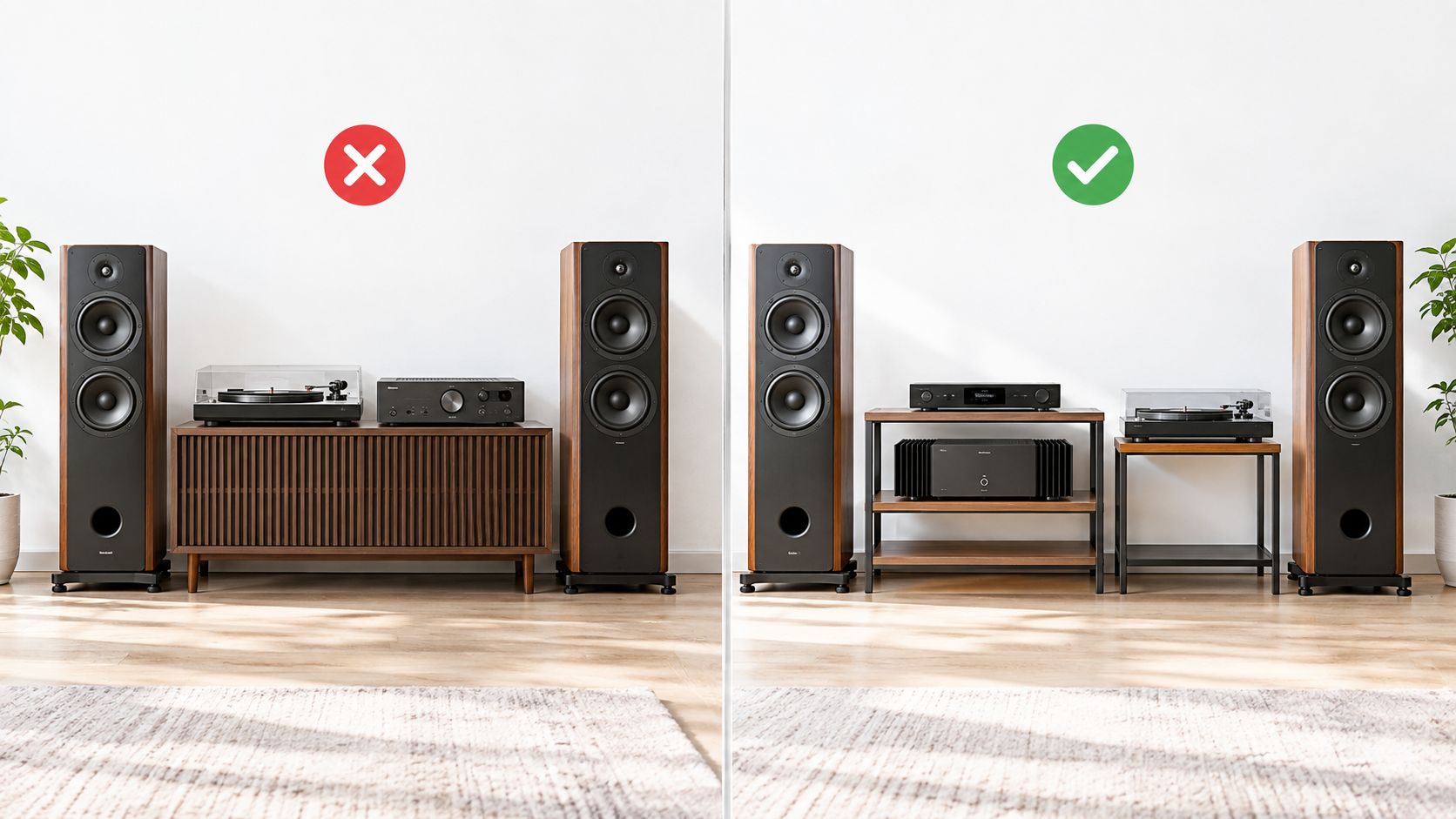
A system serving a television, music server, gaming console, streamer, and turntable needs more than a clean DAC section. If the amplifier lacks suitable television integration or enough useful inputs, you will swap cables or add another box. That defeats the original reason for buying an integrated amplifier.
Low-sensitivity speakers in a large room create a harder limit. You may need more headroom, a larger power supply, or a separate power amplifier later. An integrated amplifier can sound excellent at moderate levels, then lose composure when the room demands scale.
Headphone users face a different version of the same trap. Someone moving among IEMs, high-impedance dynamic headphones, and inefficient planar headphones needs suitable gain and output behavior. One shared headphone socket rarely handles every load gracefully. Treat the headphone section as a separate purchase decision, not a bonus feature.
Simplicity has an expiry date
The category now spans basic optical and coaxial designs, network-connected models, and units with dedicated R2R or higher-performance DAC boards, as discussed in coverage of recent network-connected integrated approaches. More digital capability can make the box useful, but it also makes a poor architecture harder to escape.
Buy the integrated when a smaller system serves your music and room. Do not buy it because fewer boxes sounds morally superior.
A growing system needs room to grow.
A Short Buying Heuristic You Can Take to a Demo
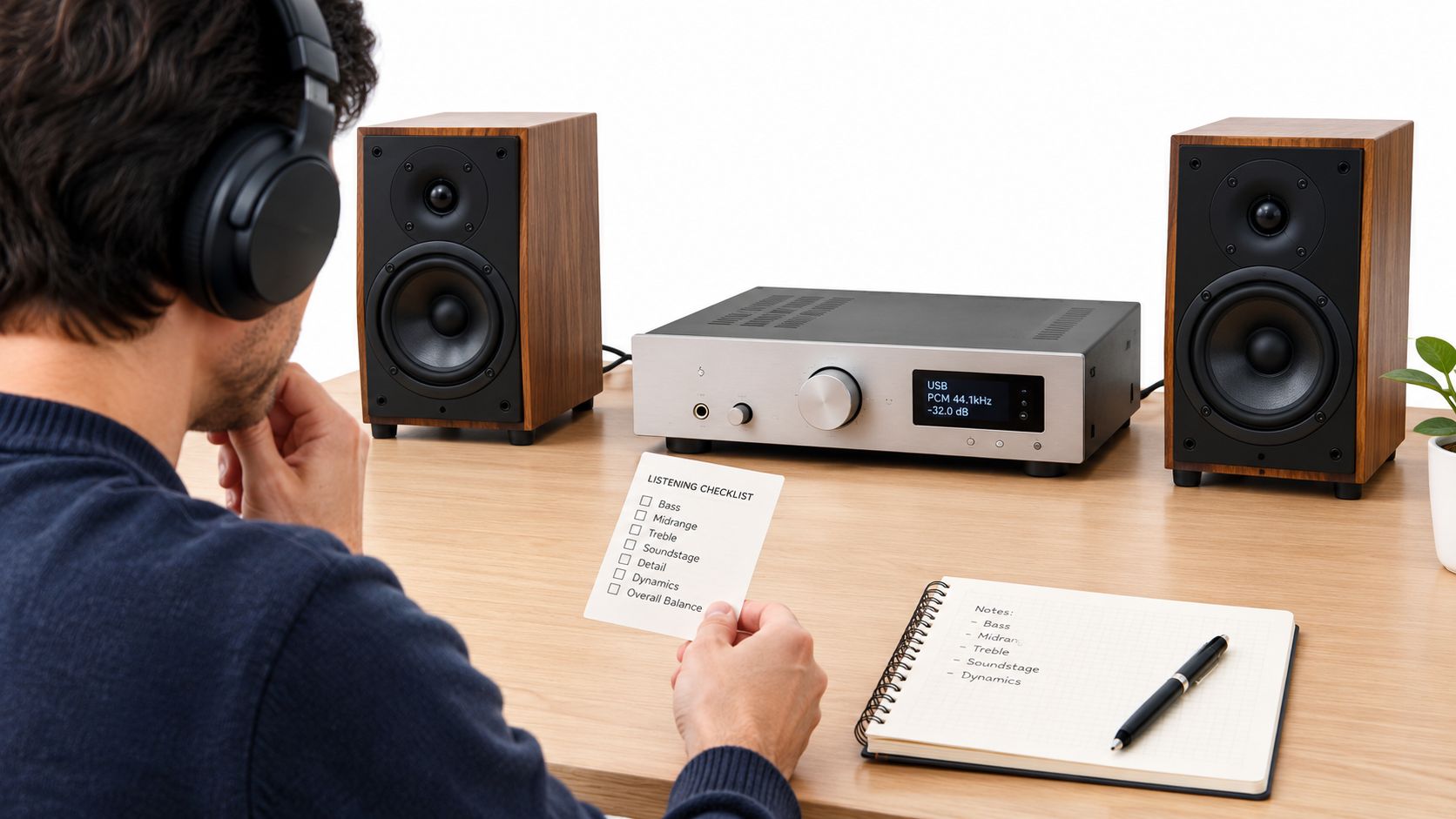
Start at home, not in the dealer's room. Write down your speakers' sensitivity, impedance behavior, and the size of the room. Then decide how loudly you listen. An amplifier that suits a compact standmount at moderate level may not keep control of a demanding floorstander when the room gets large and the music becomes dense.
Bring music you know. Don't let a showroom-friendly jazz recording make the decision for you. Use a track with bass transients, crowded midrange, and enough dynamic contrast to expose strain. Listen for weight, space, and composure. Added sparkle is the easiest trick in audio.
The practical audition order
- Confirm the load first. Ask whether the amplifier can maintain control with your speakers, not just whether its printed wattage looks attractive.
- Use realistic volume. Quiet listening reveals noise and texture. Louder listening reveals compression and power-supply limits.
- Check the actual inputs. If your source is a television, verify optical or HDMI support. If it's a computer, confirm USB. Don't buy a feature for a streamer you'll never own.
- Test the headphone output. Plug in your most sensitive headphones and listen between tracks. Hiss is a deal-breaker. Then try the least efficient pair and check whether the presentation turns thin or strained.
- Play complex music. A good integrated keeps the bass organized while voices, cymbals, and harmonic detail remain distinct.
A model should leave you wanting to play another record, not another upgrade. If the amplifier compresses when the volume rises, walk away. If sensitive headphones expose audible hiss from the output stage, walk away faster.
The point of an integrated amplifier with DAC is fewer boxes and a shorter signal path. Any model that immediately forces you back toward separates has failed its own premise.
Choose the power stage first. Choose the inputs second. Let the DAC earn its place by disappearing.
Before you buy, list your speakers, room, headphone loads, and real digital sources, then take that list to a dealer and audition an integrated amplifier with DAC at the volume you actually use. If the amplifier keeps bass tight, stays composed through dense passages, and connects every source without awkward workarounds, it has done the job. Put your money there, not on a prettier chipset label.

