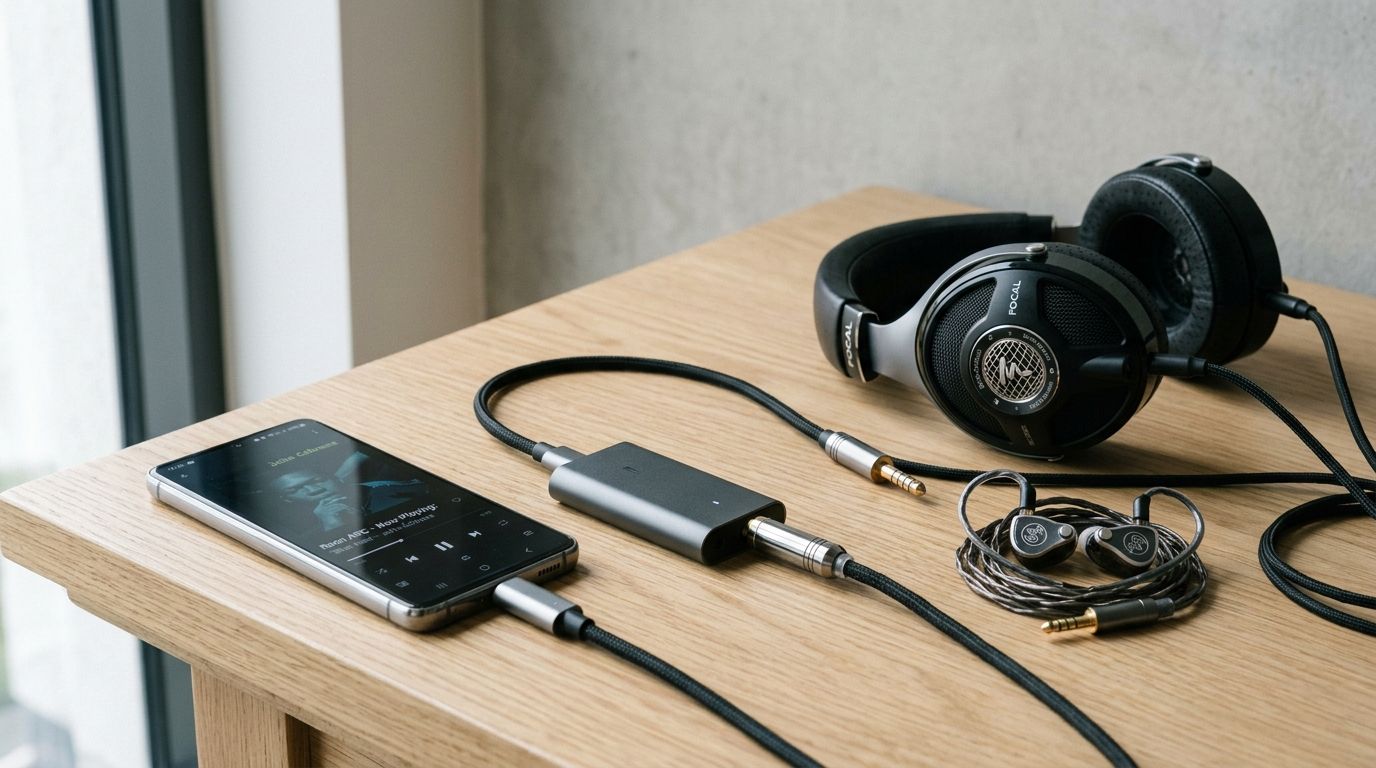
Shopping for the best portable DAC amp starts with the wrong question. Power grabs attention, then leaves people with a hot, heavy box that is overkill for IEMs, awkward with a phone, and out of battery before the return flight. Start with the right questions instead. What headphones are you driving, what device are you plugging into, and how long do you want the unit to run?
That is the split I see all the time. Small dongles win on convenience and low noise, while battery-powered units win on headroom, and neither side is automatically better unless it fits the headphone already in your drawer. A proper portable DAC amp guide should begin there, because the same unit that sounds fine with easy-to-drive headphones can hiss with sensitive IEMs, drain a phone too fast, or feel clumsy in daily use. If you want the plain-English version of what a DAC does and why the amp side matters, this simple DAC guide covers the basics without the usual spec-sheet fog.
The roundup crowd loves to talk about output numbers and chipset names. I care about whether the thing suits the headphones you own, the device you carry, and the way you listen. That is the difference between gear that gets used every day and gear that gets left in a drawer.
Table of Contents
- The Wattage Trap and Why It Costs You Money
- What a Portable DAC Amp Actually Does
- The Three Specs That Matter and the Two That Don't
- Four Ways People Actually Use a Portable DAC Amp
- Pairings That Actually Sound Right
- Real-World Friction Nobody Mentions in the Roundups
- The Shortlist and the One Rule That Picks It
The Wattage Trap and Why It Costs You Money
The loudest box sells easiest. Power reads well in a product page, and “more” feels like progress, until you plug it into sensitive IEMs or try to carry it with a phone all day.
Match the box to the headphone, not the headline
I've seen people pay for output they never touch, then wonder why the setup feels awkward. They started with wattage instead of the headphone in front of them. Portable units now span a wide price range and a wide output range, which tells you the category is no longer weak. The tradeoff just moved somewhere else, usually into battery life, size, or noise. For a practical buying lens, see this guide to choosing the best DAC for headphones.
Practical rule: if your headphones are easy to drive, chase quiet first, power second.
That part rarely makes it into the SEO pages. Portable DAC/amps are split between dongles, battery-powered units, and Bluetooth DAC/amps because portable means different things depending on the listener. Pick the wrong kind of portable and you get the problems that matter in real use, hiss with IEMs, thin dynamics on full-size headphones, or a phone battery that gives up halfway through the commute.
I'd rather hand someone a smaller box that disappears in use than a heavy unit that wins on paper and loses in the pocket. That is not a knock on performance. It is just the sensible way to buy.
What a Portable DAC Amp Actually Does
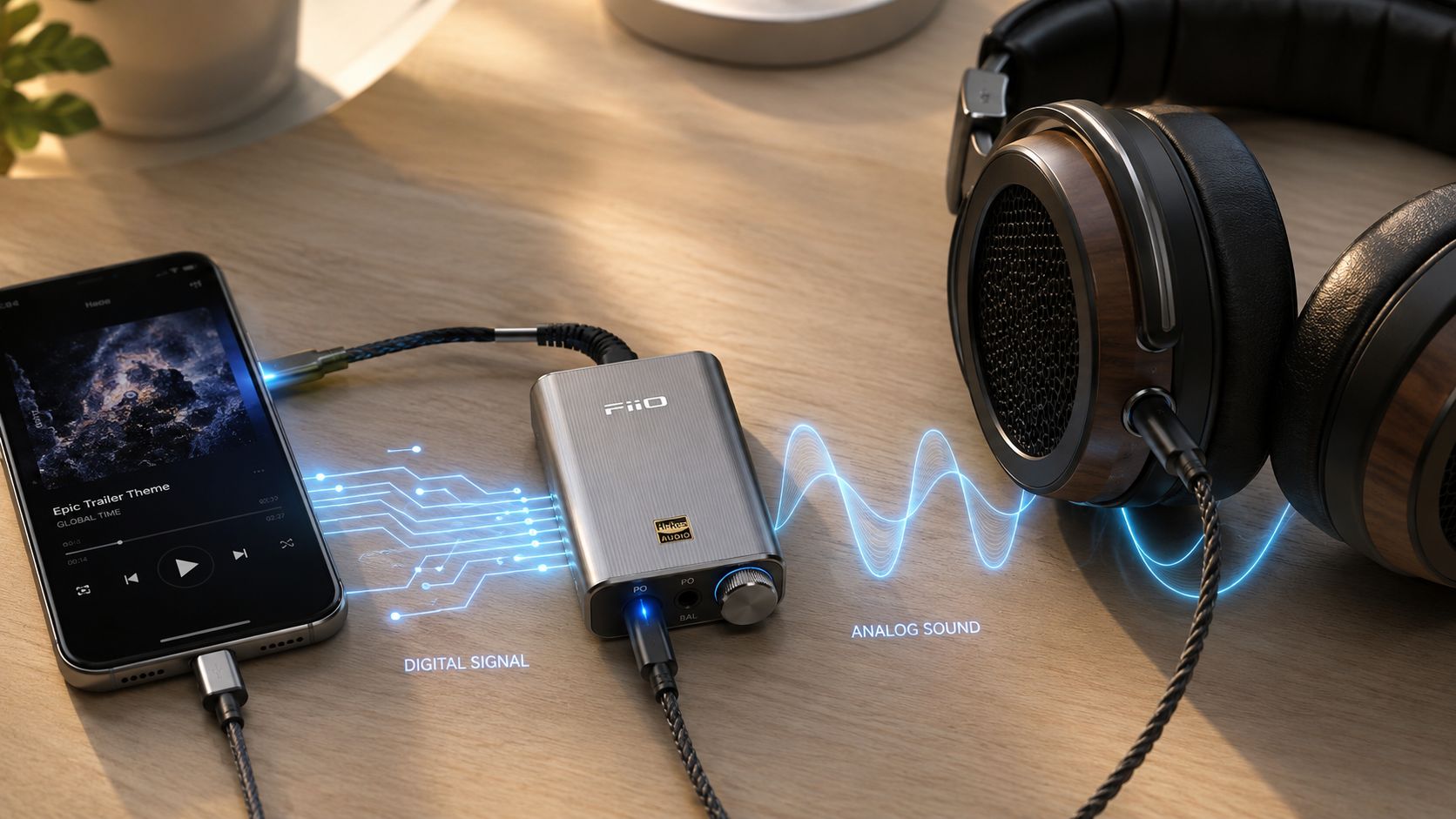
A DAC turns digital audio into analog voltage. An amp takes that voltage and gives it the current and swing needed to move headphone drivers with control. That split matters because the right portable unit is not about raw power on paper, it is about matching the headphone you already own, or the one you plan to buy.
Why the dongle form factor matters more than people admit
Portable used to mean compromised. The digital side is in much better shape now. A portable headphone amp/DAC roundup pointed to SNR ≥125 dB, THD+N <0.0006%, and noise below 1.7 µV in the 2026 measurement-focused roundup. That is already clean enough that the decision is not whether the box sounds broken, it is whether it behaves well with your headphones and your phone.
The form factor matters because the wrong portable device is annoying in exactly the ways buyers feel day to day. A dongle has to work with a phone or tablet, stay quiet with sensitive IEMs, and avoid eating battery life for breakfast. If you need a plain explanation of what the conversion stage does before you start comparing outputs, see this simple guide to DACs.
Balanced output gets more attention than it deserves, but the basic idea is real. It usually gives the amplifier more voltage swing than single-ended output, and that can help with harder-to-drive headphones. In practice, a 4.4mm balanced jack often gives fuller-size headphones more room to breathe, while a single-ended jack is usually fine for easier loads.
Balanced does not make music better by itself. It gives the amplifier a better setup to do its job.
I care more about output behavior than chip names. A clean DAC section is nice. The part you hear is whether the amp still has enough grip when the headphone gets awkward, whether it stays quiet enough for sensitive earbuds, and whether the battery survives the commute without turning the whole thing into a hassle.
The Three Specs That Matter and the Two That Don't
Most product pages make the wrong numbers look important. They pile marketing on top of marketing, then bury the details that decide whether a portable DAC amp works with your headphones, your phone, and your listening habits. Ignore the noise and read the page like a buyer who already knows what problem needs solving.
Read the page like a buyer, not a fan
The first spec that matters is output power into the impedance you use. A portable buying guide says most portable DAC/amps land between 100 mW and 1,500 mW into 32Ω, and that 100 mW is already enough for IEMs while 150 mW at 300Ω is the practical floor for full-size Sennheiser-class headphones as laid out in the 2026 portable buying guide. That is the number to care about, not a logo on the chassis or a chip name on the box. If you want a broader buying framework for headphone matching, this guide to the best DAC for headphones keeps the decision focused on the load, not the marketing.
The second and third specs are SNR and noise floor. Those matter because sensitive IEMs reveal bad gain behavior fast. A portable amp can have plenty of power and still be the wrong pick if it hisses at low volume or feels coarse with easy-to-drive earbuds. So the question is simple: does it stay quiet enough for the headphones you own?
Here is what I skip when I am sorting devices for customers:
- Hi-res badges: they tell me almost nothing about whether the amp stage is quiet or strong enough.
- Chipset bragging: a chip name is not the same thing as a good implementation.
- Frequency-response charts without tolerance: they are easy to print and easy to misuse.
Rule of thumb: if the product page hides the output conditions, treat the headline number as advertising, not guidance.
For a plain-English breakdown of the conversion chain itself, I keep sending people to my simple DAC explanation. The point is straightforward. Your ears care far more about how the unit handles your headphones than about the badge on the box.
Four Ways People Actually Use a Portable DAC Amp
The category stops being confusing once you sort buyers by headphone, not by fantasy use case. I see four real camps, and each one cares about different things.
The four listener profiles
| Profile | Headphone Type | Prioritize | Skip |
|---|---|---|---|
| IEM-first | Sensitive in-ears | Quiet background, low gain, compact size | Raw wattage |
| Full-size can driver | Higher-impedance headphones | Voltage swing, balanced output, stable headroom | Tiny dongles with weak drive |
| Hybrid desktop/casual | Mixed listening, desk and travel | USB-C compatibility, flexible power, decent battery behavior | Units that only make sense on a desk |
| Bluetooth-first | Wireless over-ears, video, casual use | Latency, convenience, self-powered operation | Cable-only purism |
IEM-first means quiet first, always
If you mainly use IEMs, more power can become a problem instead of a benefit. Sensitive earphones expose hiss, channel imbalance at low volume, and sloppy gain structure. For that listener, the best portable DAC amp is the one that disappears, not the one that tries to impress.
Full-size cans need swing, not hype
If you're driving 300 ohms, the floor changes. A portable unit needs enough voltage swing to keep dynamics intact, and balanced output helps there because it gives the amp more room to breathe. That's where small boxes that look “strong enough” on paper sometimes flatten out in practice.
Hybrid and Bluetooth users buy convenience
The desk-and-backpack crowd wants a device that behaves on a laptop, a tablet, and a phone without a ritual every time they move rooms. Bluetooth-first listeners care even more about convenience and latency, especially for video. They're not chasing purity for its own sake. They're chasing a system that stays out of the way.
Pairings That Actually Sound Right
The core question is not which portable DAC amp looks strongest on paper. It is which one behaves properly with the headphone you already own, or the one you plan to buy next. That means quiet operation with sensitive IEMs, enough voltage for harder full-size headphones, phone and tablet compatibility, and a battery situation you can live with.
Sensitive IEMs want the quiet box
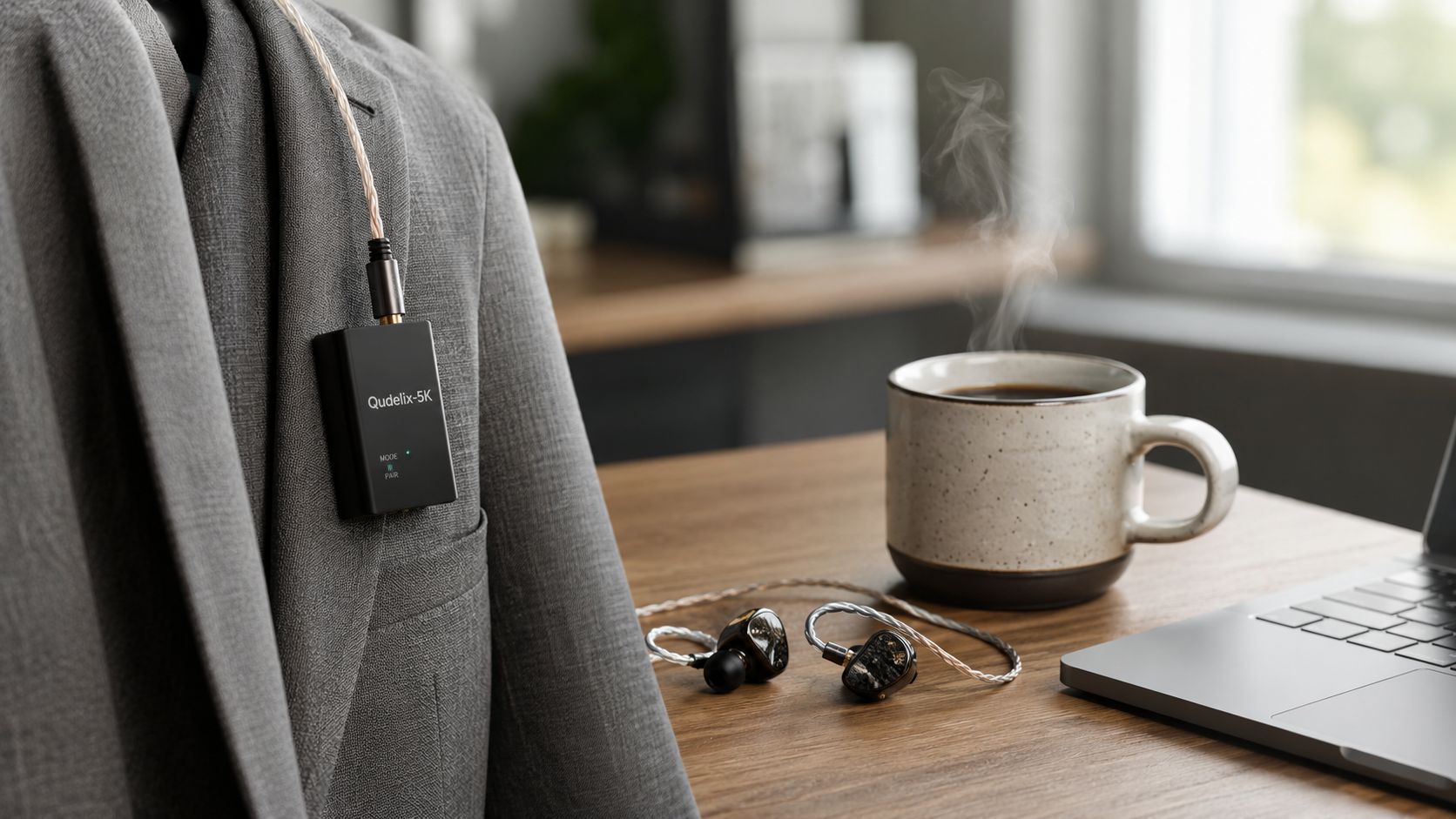
Sensitive IEMs punish sloppy gain, hiss, and channel imbalance. For that job, you want a quiet pocket unit that stays calm at low volume and does not add grain where there should be black space. If your earphones are easy to drive, restraint sounds far more convincing than raw output.
That is why a disciplined little dongle with IEM-specific control often makes more sense than a louder unit that never settles down. The point is not to impress the spec sheet. The point is to keep the background clean so the earphone can do its job.
A person who mainly listens to balanced armature monitors should read my breakdown of dynamic drivers versus balanced armatures before chasing power they do not need. Driver type changes how forgiving the whole chain feels, and that matters more than people admit in product roundups.
Full-size headphones need swing, not bragging rights
Planar headphones and higher-impedance cans need a portable unit that can keep dynamics intact when the music gets busy. You are looking for voltage swing, stable headroom, and a sound that holds its shape when the track asks for more than a tiny dongle can give. A firmer, battery-powered unit usually earns its keep here because the presentation stays more solid from top to bottom.
I care less about a huge watt number than I do about whether the music keeps its body. If the sound gets pinched, flat, or thin when the arrangement opens up, the match is wrong.
Bluetooth-first setups are about convenience
Wireless over-ears and casual listening setups live or die on friction. If the unit is easy to pair, easy to carry, and does not turn every listening session into a small project, people use it. Latency matters too, especially for video, so a clean Bluetooth DAC amp is the right call for anyone who values convenience over cable ritual.
This is the category where self-powered operation pays off. If the device behaves like a hassle-free companion instead of an accessory you need to baby, it gets carried. If it feels fussy, it stays in the drawer.
Power-first users want a carryable brick
Some listeners want desktop behavior they can move from room to room. They need more drive, more body, and the kind of output that keeps demanding headphones under control without sounding strained. That is the lane for a heavier portable unit with a stronger battery and a firmer sound.
You give up pocket friendliness. You get better grip on harder headphones, and for some people that trade is worth it every time.
Real-World Friction Nobody Mentions in the Roundups
The cleanest spec sheet in the world won't save a portable DAC amp that is annoying to live with. That is the part most roundups skip. They chase numbers and miss the boring, practical stuff that decides whether you keep using the thing or toss it back in a drawer.
Phone compatibility is the actual test
A good portable DAC amp has to behave with the phone or tablet you already own. Most USB-C dongles cooperate with modern Android phones, but some setups still need the right mode or an adapter chain before they work properly. iPhone users can run into similar friction depending on the port and the unit. Those details are exactly what glossy roundups gloss over, and they are the details that matter on a normal day.
Power draw changes the whole mood
Some portable DAC amps run on their own battery. Others pull power from the host phone or tablet. That difference is not cosmetic. A self-powered unit feels like a real piece of gear. A bus-powered one can feel like an attachment, and if it drains your phone too fast, you stop taking it out with you.
Battery life is part of the product's identity in this category, not a side note. Moon Audio lists the Chord Hugo 2 at about 7 hours of battery life and the iFi Audio iDSD Diablo 2 at 12 hours in its portable DAC guide. That gap says plenty. Portable does not just mean small. It means useful for the stretch of time you are away from a charger.
Practical setup move: if your source device keeps throwing adapter errors, stop blaming the headphones and check the host chain first.
Bluetooth latency is its own problem. For music, plenty of people can live with it. For gaming and video where lip sync matters, it can be a dealbreaker. Say that plainly and choose the mode that fits the job.
The Shortlist and the One Rule That Picks It
The rule is simple. Buy for the headphone that matters most, not the box that looks strongest. Everything else follows from that.
My clean shortlist by use case
- For sensitive IEMs: choose the quiet, low-gain pocket unit. You want silence, control, and a small footprint.
- For full-size headphones: choose the portable with real voltage swing and balanced output. That's where headroom stops being a marketing word.
- For desk-plus-travel use: choose the flexible hybrid unit. It should behave on USB-C, survive a backpack, and not turn setup into a ritual.
- For wireless listening: choose the Bluetooth-first unit that keeps latency sane and battery behavior predictable.
The hard tradeoffs don't disappear just because the packaging looks premium. More power usually means more size, more draw, or more cost. Less friction usually means less output. Wireless convenience usually means you accept latency and a slightly different sonic ceiling.
I'm fine with that trade. What I won't buy is a portable DAC amp that tries to be everything and ends up being annoying at the only moments that matter.
Pick the headphone first, then the box. That's the whole game.
If you want the next step after this, use the headphone already in your bag, or the one you're planning to buy, and compare it against the constraints above before you spend a cent. That's the kind of shortlist I'd walk a customer through at Supermarket Sound.

