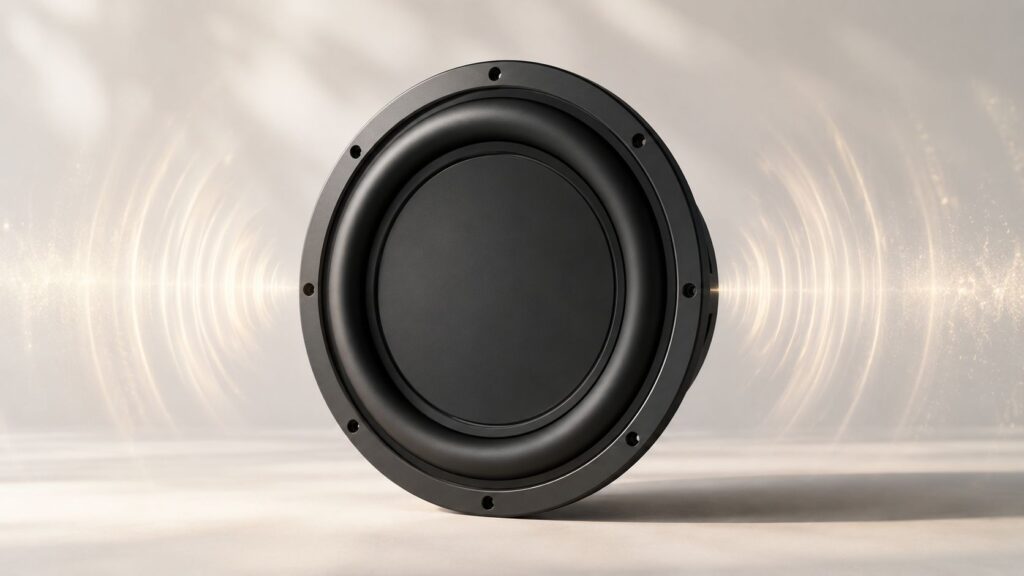

A lot of ported subs sound big only because they blur time. The surprise is that a properly tuned 12 inch passive radiator system can hit the same low-end target in a compact box while sounding less like pressure for its own sake and more like an instrument occupying space, and the hardware backs that up. A radiator-based design like the Kicker ReFLEX system is tuned to 34 Hz in 0.7 cubic feet with a 12-inch passive element instead of a second powered woofer, which tells you the trick isn't magic. It's controlled mechanical work, in a small volume, done on purpose. See the Kicker ReFLEX passive radiator details.
I've built enough boxes to know the romantic version of DIY bass is nonsense. Passive radiators are not easier than ports. They're touchier, more expensive, and brutally honest about bad assumptions. But when the tuning is right, the in-room difference is tactile. Kick drums have a leading edge. Bass guitar notes stop where they should. The room pressurizes without that plasticky whoosh and aftertaste that gives cheap ported designs away in ten seconds.
That Port in Your Subwoofer Is a Crutch
A port is often the cheapest way to fake authority.
Not always. Not every bass-reflex design is bad. But a lot of them are built around the same compromise: squeeze more apparent output from a small budget, accept some boom, and hope the room flatters the result. In a showroom that can sound impressive. In a living room, it can sound like the subwoofer is late to its own party.
Cheap output is not the same thing as good bass
The problem isn't that ports go low. The problem is how many ported boxes get there. Air moving through a tube is a blunt mechanical solution. Once velocity climbs, the box starts talking along with the driver. You hear turbulence, you hear overhang, and you hear that familiar one-note bloom that makes every kick drum feel cut from the same cardboard template.
A good passive radiator build attacks the same low-end goal from a different angle. Not venting the box, but turning the box into an air spring that drives a second diaphragm. Not a hole, but a load-bearing moving surface. That matters to the ear because the bass keeps more shape.
Bass should sound like texture and weight, not a fog machine pointed at the floor.
The appeal of 12 inch passive radiators in small rooms is that they let you chase extension without dragging a ridiculous port length into the cabinet. If you've ever mocked up a low-tuned port and realized the tube wants to occupy half the enclosure, you already understand the appeal. A radiator gives you the low tuning target without turning the inside of the box into plumbing.
What you hear in the room
The difference isn't academic. It's physical.
With a boomy ported sub, the room gets loud first and musical second. With a well-tuned passive radiator sub, the note shows up first. You still get floor energy. You still get that chest-level shove on the right material. But you can also follow the contour of the line. The sub sounds less like it's adding bass and more like it's finishing the sentence your mains started.
That's why I keep coming back to passive radiators for tight spaces. They don't hand you free bass. They force you to earn it.
And the payoff is audible.
The Silent Partner in Your Subwoofer
A passive radiator is not a speaker. It doesn't have a motor, it doesn't get wired to the amp, and it doesn't make decisions. It inherits the pressure changes created by the active driver and turns that downstream energy into useful bass.
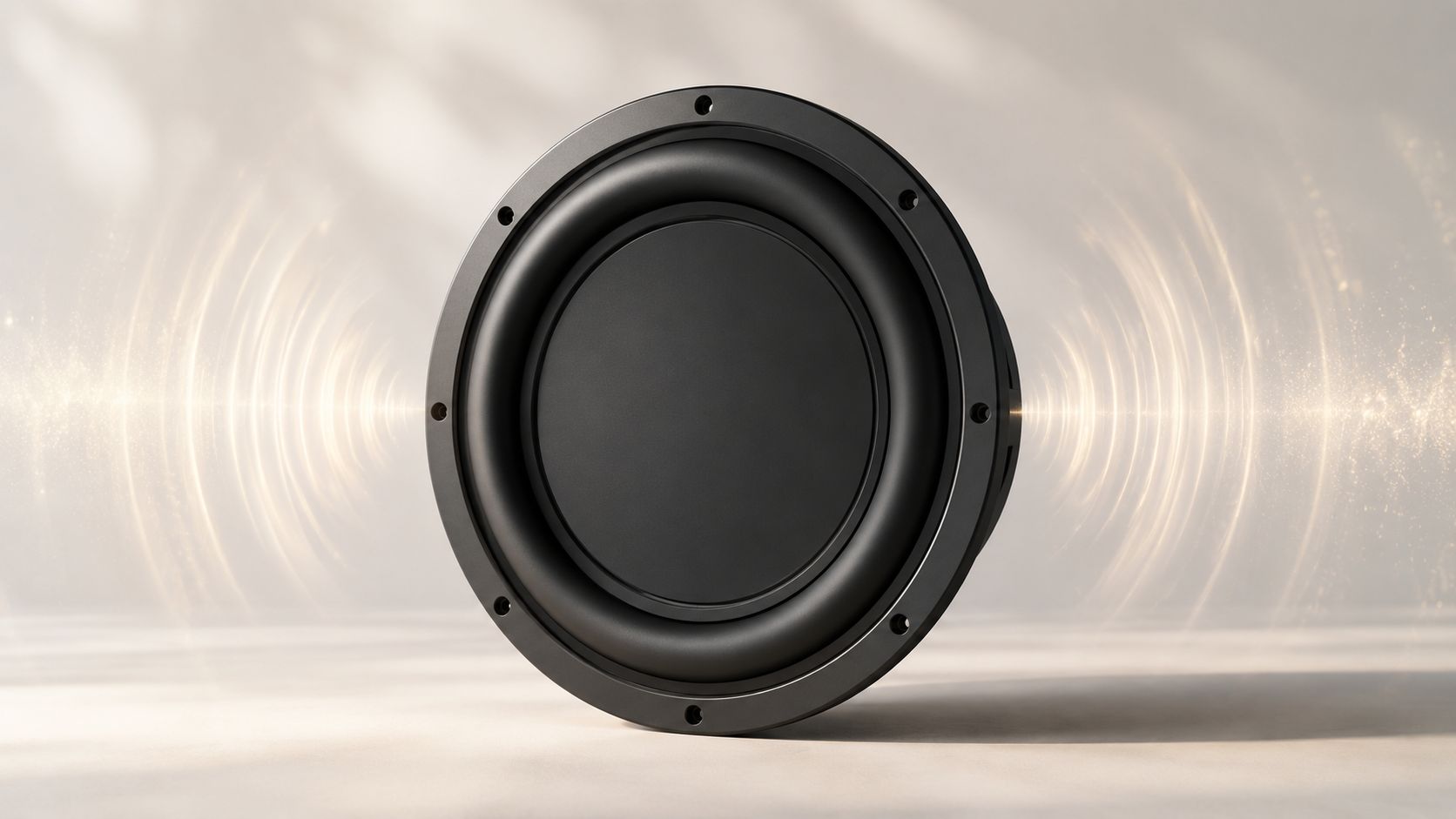
If you're new to sub basics, my beginner's guide to subwoofers covers the broader subject. The short version here is simpler. A passive radiator behaves like a tuned acoustic piston inside a sealed system.
It works like a spring, not a second woofer
The easiest way to understand it is to stop thinking about electricity and think about pressure.
When the active woofer moves inward, the box pressure drops and the radiator gets pulled. When the active woofer moves outward, the box pressure rises and the radiator gets pushed. That exchange is rhythmic, mechanical, and heavily shaped by the radiator's mass and suspension. It's closer to a spring-loaded trampoline than a spare speaker cone bolted on for decoration.
A lot of beginners call the radiator dead weight. That's exactly wrong. It isn't dead. It's tuned. Its whole reason to exist is to resonate where you need help and convert box pressure into low-frequency output that would otherwise be wasted inside the cabinet.
The displacement rule that saves builds
Here's the rule too many people learn after they bottom out a build on the first hard sweep. The passive side can't be undersized.
According to Parts Express on passive radiator design, the fundamental rule is twice the air displacement capability (Vd) of the active driver. Since Vd is Xmax multiplied by effective surface area (Sd), a 12-inch driver with 10mm Xmax needs a matching 12-inch passive radiator with at least 20mm Xmech, or you use multiple radiators if one unit can't cover the travel. Ignore that and the radiator becomes the bottleneck. Then the whole alignment starts starving the signal right where you wanted confidence.
Practical rule: In a passive radiator box, the unpowered part often needs to move more than the powered part. Build for that first.
That single idea clears up a lot of DIY confusion. Cone size alone doesn't tell you enough. A big radiator with weak travel can fail. A smarter match works because the moving system has the headroom to breathe.
This is not decorative hardware.
It's the floor.
Why Mass and Volume Are Load-Bearing Variables
Passive radiator tuning isn't one knob. It's a three-way negotiation between box volume, radiator compliance, and moving mass. Change one and the others answer back.

That's why radiator builds can go from sublime to useless with what feels like a minor tweak. You aren't just assembling a subwoofer. You're tuning a mechanical system where the box air is part of the suspension.
The box is the spring
In a sealed passive radiator enclosure, the trapped air is doing real work. Smaller volume means a stiffer air spring. Larger volume gives the moving system more freedom. Neither is automatically better. The right volume depends on the driver, the radiator, and the target behavior in-room.
People get fooled by internet shorthand, hearing "small box, deep bass" and stopping their research. A compact enclosure can absolutely work, but only if the moving system is chosen to live there. If not, the sound gets thick, pinched, and weirdly reluctant, like the bass is trying to squeeze through a locked door.
The radiator has its own mechanical temperament
The radiator isn't just a disc with a surround. It has compliance, damping, travel limits, and a native behavior before you ever add weight.
A useful concrete example is the Dayton Audio DS315-PR 12 product page. Its published parameters include Fs of 18.6 Hz, Xmax of 13 mm, 147.1 grams of moving mass, Cms of 0.5 mm/N, and Vas of 162.4 liters. Effective piston area is listed at 480 sq. cm, with Qms of 4.27 and Rms of 4 kg/s. Those numbers aren't trivia. They tell you the radiator was engineered as a controlled moving element, not a token substitute for a port.
The physical fit matters too. That unit requires 12.36-inch overall diameter, a 10.71-inch cutout, and 3.50-inch depth. You don't discover those dimensions after the glue dries. You plan around them.
Mass is the tuning wrench
Most of the practical tuning happens through added mass. More weight lowers the resonant frequency. Less weight raises it. That's the part people love because it feels hands-on, and the part people hate because it means trial, error, and opening the box again.
Add mass carefully. Every washer changes the behavior of the whole system, not just the passive part.
Here's the interaction in plain terms:
- Smaller box: The air spring stiffens, the system resists movement more, and tuning choices get less forgiving.
- More added mass: Resonance drops, bass digs lower, and the system can gain weight at the expense of speed if you overdo it.
- Softer compliance: The radiator moves more easily, which can help low extension but can also make the alignment feel less disciplined if the rest of the design doesn't support it.
A short table makes the trade-offs clearer:
| Variable | Push it one way | What you tend to hear |
|---|---|---|
| Box volume | Smaller | Tighter packaging, but greater risk of stiffness and congestion |
| Added mass | Heavier | Lower tuning, more depth, slower feel if taken too far |
| Compliance | More yielding | Easier movement, but less control if the system isn't balanced |
The useful thing about 12 inch passive radiators is that they give you a physical tuning mechanism a fixed port can't match. You're not stuck with a tube length after the sawdust settles. You can trim the character of the box to the room. In practice, that's often the difference between bass that measures well and bass that sounds right by the couch.
That's the whole sport.
The Real Fight Ported Versus Passive Radiator
This matchup is less about ideology than priorities. Ports win on price and simplicity. Passive radiators win on refinement in small spaces.
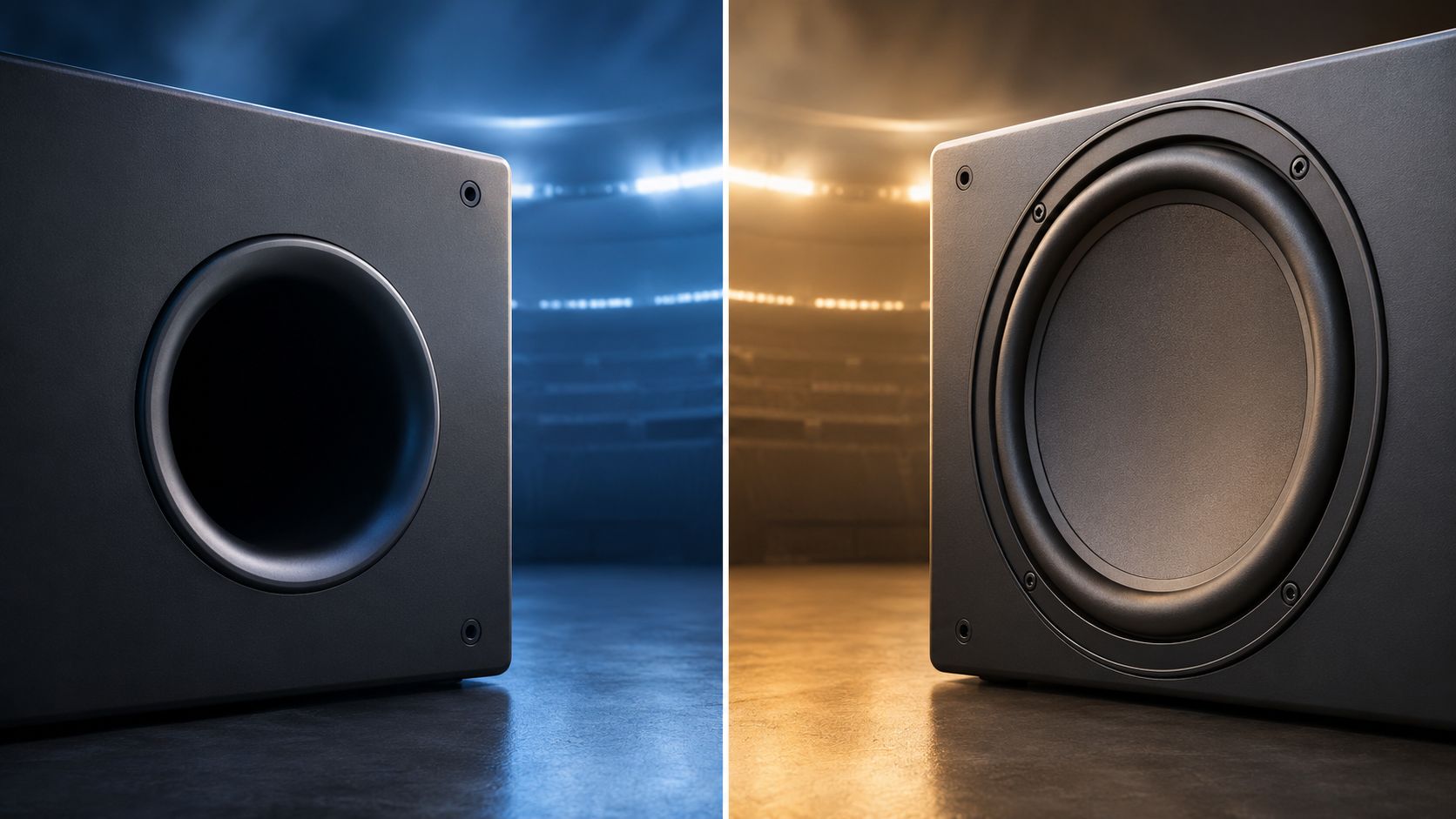
If I were building a cheap output box for raw impact, a port is still the obvious shortcut. It's a hole and some math. If I care how bass starts, stops, and integrates with the mains in a normal room, I stop treating the port like sacred tradition.
Where the port still wins
A ported design is attractive because it's straightforward. You can build one cheaply. You can model it quickly. And if the enclosure is large enough to support a sensible vent, it can produce satisfying extension and output without buying extra moving hardware.
That's the honest point in its favor.
But ports get awkward fast when the box gets compact and the tuning drops. Then the vent wants more length, more flare, more internal real estate, and more forgiveness than the cabinet has. That's when the compromise starts showing up as audible air noise or a broad, lazy swell that flatters movie explosions and muddies everything else.
Why the passive radiator sounds cleaner
A radiator-based system keeps the enclosure sealed to outside air. No vent noise. No chuffing. No tube resonance trying to sneak into the party. The pressure stays inside the box and drives the radiator instead.
For systems where crossover integration matters, that cleaner behavior is a big deal. If you're blending a sub carefully, your subwoofer crossover settings matter just as much as the cabinet alignment. A radiator box gives you one less artifact to fight.
A good passive radiator sub doesn't sound “faster” because physics changed. It sounds cleaner because one source of mess is gone.
The catch is that a passive radiator setup only works when the passive side has enough displacement headroom. According to the Dayton Audio passive radiator guidance, the passive radiator should have at least double the air displacement volume (Vd) of the active woofer or woofers. If it doesn't, the radiator becomes a mechanical choke point and distortion arrives right where you expected authority.
That's the cost of elegance. You don't get to cheat.
Here's a quick side-by-side:
| Design | Main strength | Main weakness | Best fit |
|---|---|---|---|
| Ported box | Lower cost, simpler build | Air noise and larger vent demands in compact low-tuned boxes | Budget-first output builds |
| Passive radiator box | Cleaner low end in smaller spaces, tunable by mass | More complexity and more expensive hardware | Compact hi-fi and careful DIY tuning |
Later in the listening chain, this becomes obvious.
If the room is modest and the goal is believable bass instead of inflated bass, the passive radiator usually wins for me. Not because it's exotic. Because it wastes less.
That's the difference.
Two Paths for a 12-Inch Radiator Build
Theory gets useful only when it survives plywood, glue, wiring, and the moment you realize the terminal cup is exactly where your brace wanted to live.
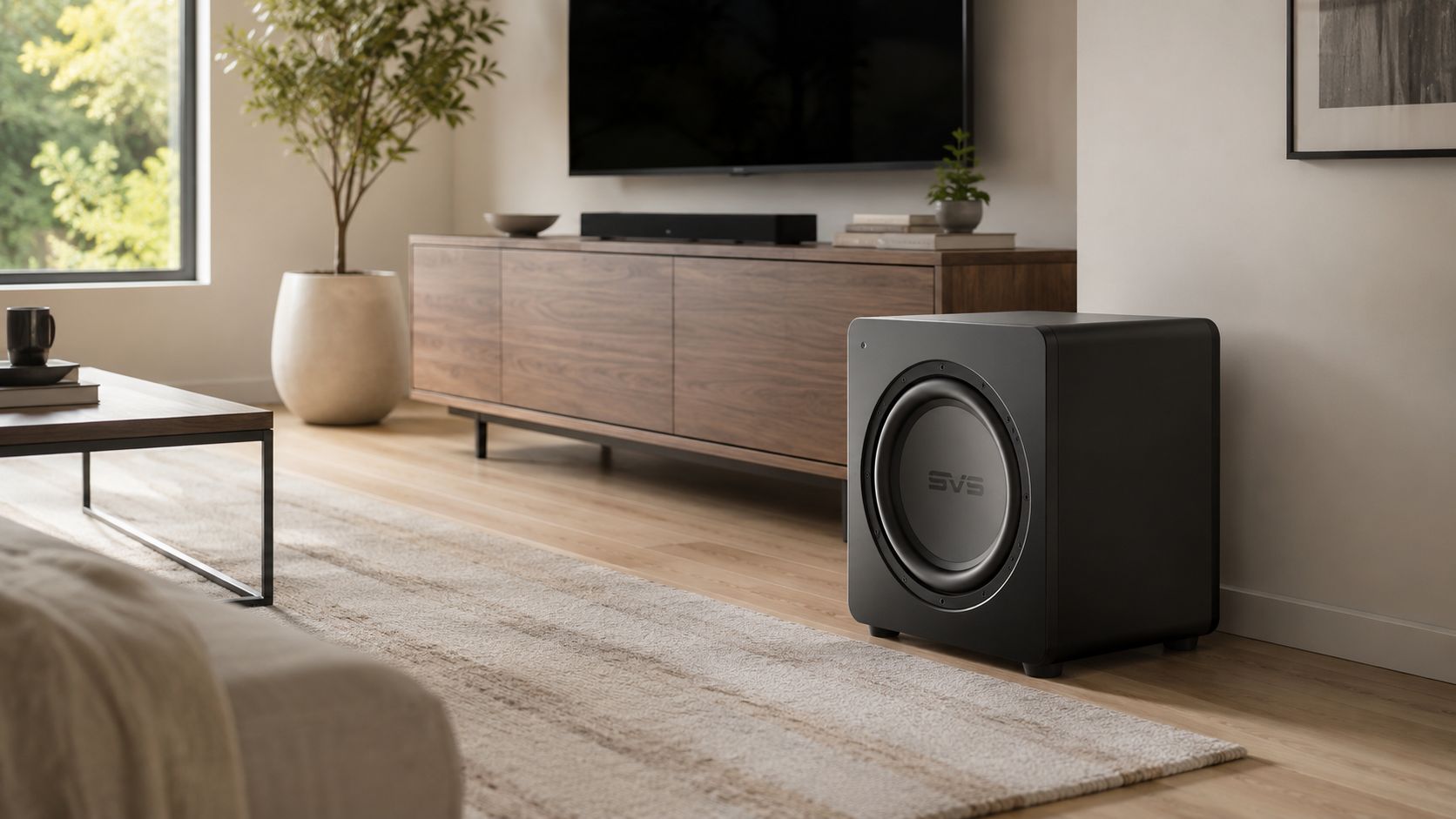
I tend to think about 12 inch passive radiators in two very different builds. One chases compact authority for film and full-range systems. The other chases articulation, where bass lines need to breathe instead of just dominate.
Path one for compact weight
The first path is the bruiser. Small footprint, heavy bracing, no wasted panel area, and enough radiator travel to stay composed when the source gets ugly.
A useful benchmark comes from this Earthquake and PSI passive module demo, which notes a minimum sealed enclosure volume of 9″ x 14″ x 14″, approximately 1.2 cubic feet, for tuning near 34 Hz. The same benchmark also points out that adding weight to the radiator's spoke or frame lowers resonant frequency. That's the practical heart of the build. Start with a compact sealed volume that the hardware can support, then tune by mass instead of pretending one simulation answers every room.
For this kind of box, my priorities look like this:
- Bracing first: Small panels still flex. If the cabinet talks, your tuning work gets buried.
- Radiator clearance: The passive side needs room to travel. Crowding it is a silent mistake until it isn't silent.
- Mass access: Leave yourself a sane way to add or remove weight without dismantling the entire project.
This build is for people who want floor energy in a room that doesn't tolerate a refrigerator-sized enclosure. The sound, when it's right, is dense and grounded. Not bloated. Not hollow.
Path two for speed and texture
The second path is the music-first build. Here the win isn't the deepest possible note. The win is bass that keeps its shape when the arrangement gets busy.
I like the logic behind a system tuned to 34 Hz in 0.7 cubic feet with a 12-inch passive element, because it points to a useful target for a compact musical alignment without pretending every setup needs subterranean ambition. That kind of tuning tends to land in a zone where bass guitar still has pitch and kick drums still have skin.
A lighter-touch alignment usually rewards common sense:
If the sub sounds impressive on the first explosion but clumsy on every bass run after that, the tuning is wrong for music.
The oversized-radiator approach can work beautifully here. More surface area on the passive side gives the system authority without making the active driver feel overworked. The result, to my ears, is bass that arrives with more shape and less haze. You hear the front edge, the bloom, and the stop.
What usually goes wrong on the bench
Most radiator failures don't come from exotic mistakes. They come from ordinary impatience.
- Bad assumptions about box volume: People build around external dimensions, then forget bracing and driver displacement stole real airspace.
- Mass loading by instinct alone: A handful of washers can improve tuning. It can also turn the box into syrup.
- Weak mechanical planning: Loose hardware, poor sealing, and lazy cutouts ruin the point of the design.
This is why DIY passive radiator work is addictive. You hear every decision. The good ones stay. The sloppy ones announce themselves immediately.
As they should.
The Final Note Is Not a Conclusion
A passive radiator build is not for everyone. It's for the listener who hears the difference between loud bass and shaped bass, then cares enough to chase the second one.
If you enjoy tuning by ear, reopening a cabinet, changing mass, and listening again, this path makes sense. It's one of the rare DIY projects where the mechanical work and the listening work feel tightly linked. You can hear the screws, the seal, the stuffing, the judgment. That's satisfying in a way off-the-shelf fixes rarely are.
Who should build one and who shouldn't
You should build with 12 inch passive radiators if the room is small, the enclosure has to stay compact, and you want bass that reads as weight and timing instead of just event noise. You should also do it if you're willing to finish the job with placement. A smart box shoved into a bad spot is still a bad system, and careful speaker placement for amazing bass matters more than is often acknowledged.
You probably shouldn't build one if your main requirement is immediate gratification. A sloppy radiator alignment is worse than a decent ported box. It can sound thick, underdamped, and weirdly theatrical. None of that is charming.
Buy a finished sub if you want easy. Build a passive radiator sub if you want ownership.
That's the line.
I'm not above SEO, and you're not here because the phrase “12 inch passive radiators” is poetry. You're here because you want better bass in a real room, and because most generic guides stop at the math and never tell you what the result feels like. My answer is simple. A good passive radiator sub doesn't just go low. It lands in the room with grip.
That's the secret.
Author: Marque Hersh
Publisher: Supermarket Sound
Author profile / sameAs: Marque Hersh on Steam

