
Soundstage isn't inside your headphones. It's inside your brain, and your headphones are only convincing enough to make you forget that.
That's the part the marketing copy never wants to say out loud. What is soundstage in headphones? Not a magic chamber. Not a premium-only feature. Not proof that a driver has ascended to audiophile heaven. It's a perceptual illusion of space, and the biggest piece of that space usually comes from the recording first, then from how well your headphones translate it. The hardware interprets. The music supplies the room.
I'm not above SEO, so yes, we're using the phrase people search for. But the answer is less glamorous than the ads. If you want to understand soundstage, stop staring at product pages and start asking a better question: does this headphone let me hear the space that was already captured?
Your Headphones Are Lying to You
The biggest myth in headphone audio is that soundstage lives inside the headphone. It doesn't.
A pair of headphones can make space easier to hear, or flatten it into a blob, but it cannot manufacture a believable stage from a dead, cramped recording. That mistake sends people straight into spec-chasing and price-chasing, which is why so many new buyers end up paying for promises instead of results.
Headphones are a weird setup if you stop and think about it for five seconds. Two small drivers sit next to your ears. Left goes left. Right goes right. Nothing about that resembles hearing a band in a room. Yet your brain still hears a vocal out front, a snare tucked behind it, and reverb hanging somewhere beyond your head. That illusion is the whole game.
Expensive Doesn't Create Space
Price does not create stage. The recording sets the boundaries first. The headphone either preserves those spatial cues or smears them.
Use a simple test. Put on a dry, close-miked track with barely any room sound. Then switch to a well-recorded live album or an orchestral piece with clear hall ambience. If the second track opens up and the first one stays boxed in, good. That means you're hearing the recording, not buying into fantasy. If every song suddenly sounds “huge,” you're usually hearing coloration, not truth.
That is the part audio marketing keeps dodging. People talk like a headphone “has” soundstage the way a chair has legs. Wrong frame. A headphone is an interpreter. Some are better at staying out of the way.
So ask the useful question: does this headphone preserve depth cues, room reverb, and placement, or does it shove everything into the same line between your ears?
That's where beginners get thrown off. They hear a wider presentation on one pair and assume the headphone created the space from scratch. It didn't. It translated the recording with more or less honesty. If you want help sorting that out before you buy, this beginner's guide to buying headphones will keep you focused on what matters.
The lie sounds convincing. That's why it sells.
Soundstage Is the Room Not the Furniture
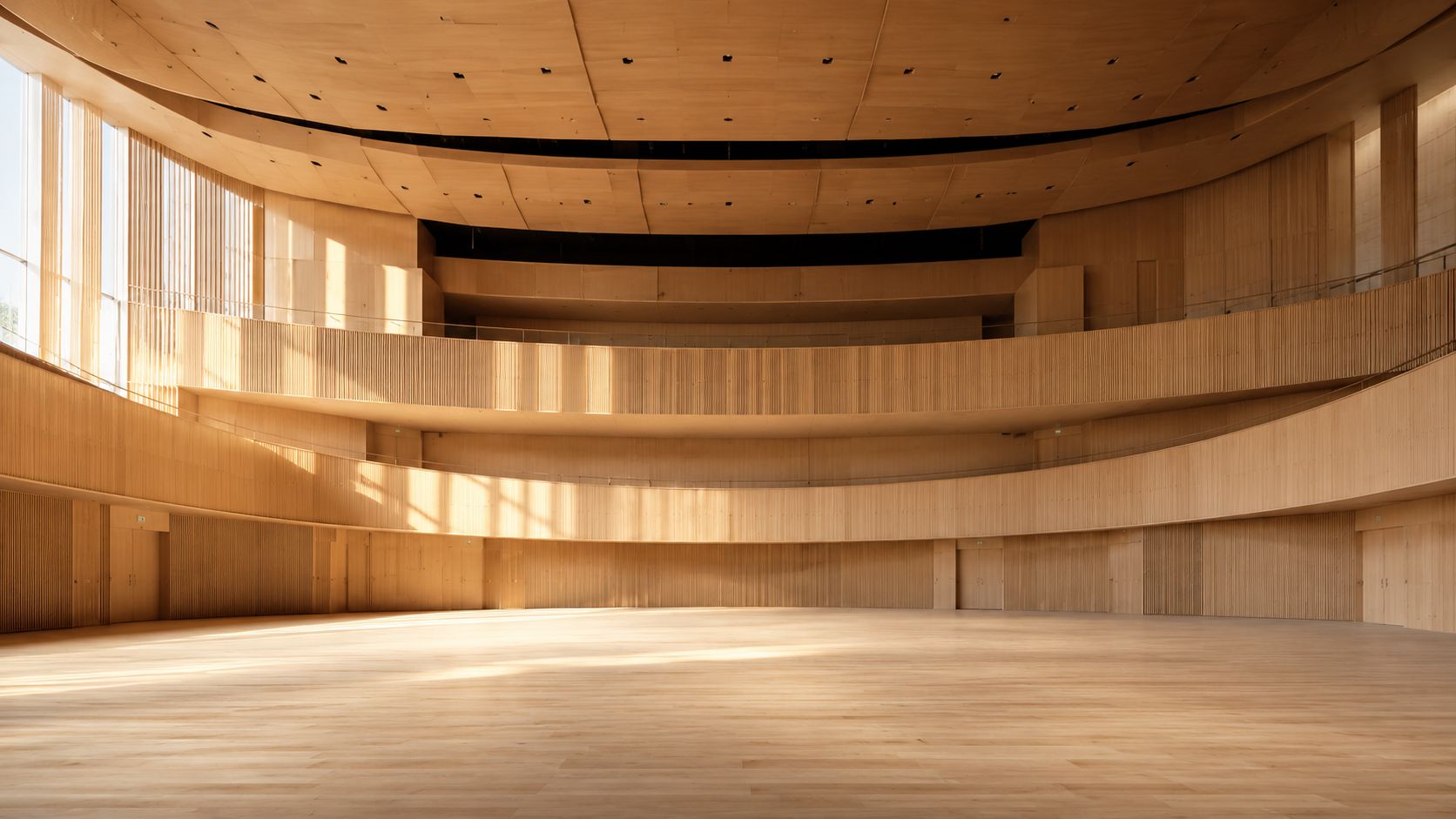
Soundstage is not detail, and it is not imaging. Stop lumping them together.
Detail is how much low-level information you hear. Imaging is how precisely a sound locks into a spot. Soundstage is the size and shape of the presented space. If the singer is dead center and the snare sits slightly behind them, that is imaging. If the whole performance feels boxed in, roomy, tall, shallow, close, or distant, that is soundstage.
The mistake is treating soundstage like a headphone trick. It is mostly a perception job built from cues already sitting in the recording. Your headphones do not build the room from scratch. They either preserve those cues or get in their way.
Width Is the Obvious Part, Not the Whole Part
A lot of people hear left and right spread and call it done. That is lazy listening.
A believable stage has three parts that matter in practice:
- Width is how far the presentation reaches side to side.
- Depth is the sense that some sounds are closer while others sit farther back.
- Height is the feeling that cymbals, ambience, and reverberant cues are not all stuck on the same horizontal strip.
That is why two headphones can seem equally “wide” but still give very different results. One can sound flat and pasted to your ears. The other can let the room around a drum kit or the air above a vocal come through in a way that feels natural.
If you want a simple comparison, soundstage is the room. Imaging is the furniture inside it.
Hear It in Five Minutes
Use two tracks. Pick one dry, close-miked studio song and one live or acoustic recording with obvious room sound. Keep the volume matched. Then ask three blunt questions:
| What to listen for | What it tells you |
|---|---|
| Do you hear room decay trailing off behind the notes? | The recording contains spatial cues, and the headphone is preserving them |
| Do some sounds seem nearer while others sit farther away? | You are hearing depth, not just left-right spread |
| Can you place instruments without the whole mix turning into a blob? | Imaging is working inside the stage |
If every instrument forms one flat stripe across your forehead, the stage is small or the cues are getting smeared. If the live track opens up while the dry track stays intimate, you are hearing the recording correctly.
That difference matters more than people think. A headphone with honest staging will let cramped recordings stay cramped and spacious recordings breathe. One with a fake sense of space often makes everything sound vaguely “big,” which is impressive for ten minutes and useless after that.
Power can also muddy this if your headphones are being underdriven. With harder-to-drive models, a weak source can flatten dynamics and blur spatial cues, which is one reason people end up shopping for a headphone amp for high-impedance headphones in the first place.
Here's a solid visual and listening companion if you want to hear people talk through the concept while you test it:
Miss this distinction and you will keep confusing sharp placement with actual space.
What Creates a Stage and What Kills It

Stop treating soundstage like a headphone feature you can buy off a spec sheet. The recording starts it. The headphone either preserves it, shrinks it, or smears it.
The order matters because it tells you where to blame the problem. A roomy, well-recorded track already contains distance, placement, and the small reflections that make a space feel believable. A dry, flattened mix does not. No headphone fixes that. It can only present what the recording gives it.
The Recording Sets the Ceiling
Some tracks arrive with air around the instruments. Some arrive already collapsed into a dense strip down the middle.
That is why cheap earbuds can sound surprisingly spacious on one album, while an expensive flagship can still sound boxed-in on another. The headphone is the interpreter. The recording writes the room.
A quick test proves it. Put on a good live recording, then switch to a close-miked studio pop track at the same volume. If both seem equally wide, your headphone is adding a fake sense of bigness. If the live cut opens up and the studio track stays tight, the headphone is doing its job.
Open Backs Usually Keep More of the Space Intact
Open-backs usually stage better because they get out of the way. They let the ear hear fewer cup reflections and less pressure buildup, so spatial cues survive more easily. Closed-backs tend to push the image inward and make everything feel more packed together.
That does not make closed-backs bad. It makes them a tradeoff. If you need isolation, buy closed-backs and accept the smaller sense of space. If stage is high on your list, start with open-backs and stop pretending the enclosure does not matter.
Driver Layout Matters More Than Fancy Tuning Talk
A headphone can measure nicely and still stage poorly. If the driver fires straight in, the cup shape is awkward, or the ear has little room to interact with the sound naturally, the presentation gets flat fast.
Angle matters. Cup shape matters. Pad depth matters. Those physical choices change how your ear reads direction and distance. Marketing copy about "air" usually covers for weak design.
Amplification can help a difficult headphone keep its dynamics and control, which makes spatial cues easier to follow, but it does not create space out of nowhere. If you want the practical version of that, read this guide to headphone amps for high-impedance headphones.
Use this order when you listen:
- Recording first. If the mix has no depth or room information, the stage is already limited.
- Enclosure second. Open-backs usually preserve space better than closed-backs.
- Driver layout third. Angle, pad depth, and cup design affect whether that space stays believable.
Get that hierarchy right and soundstage stops feeling mysterious. It becomes easier to hear which albums are spacious, which headphones are honest, and which ones are just putting a halo around everything.
Stop Reading and Start Listening
You won't learn soundstage from adjectives alone. You have to catch it in the act.
Start with a headphone you know well. Not your dream pair. Not the one a forum told you to worship. Use something familiar, because the point is to notice space, not newness.
Three Tracks That Expose the Trick
Put on “Tundra” by Amber Rubarth from Sessions from the 17th Ward. Don't listen for whether you like the song. Listen for the room. You should notice the scale of the venue before you notice the melody. Pay attention to sounds at the edges. Hear whether they sit beside her, behind her, or nowhere believable at all.
Then switch to “Letter” by Yosi Horikawa. This one is cruel in a useful way. The little writing sounds and paper textures either appear on a surface in front of you or they collapse into your skull like audio confetti. If your headphone stages well, those noises don't just appear left and right. They occupy a place.
If an object sounds located but not housed, you're hearing imaging without much stage.
Finish with “My Foolish Heart” by Bill Evans Trio from Waltz for Debby. Through this, people finally get it. The room isn't decorative. The audience matters. Glass clinks, chatter, and the soft mess of a live space should wrap around the performance without stealing focus from it.
A Listening Routine That Actually Works
Use the same volume for all three tracks. Don't keep turning things up. Louder can fake excitement and trick you into hearing “more space” when you're really hearing more spotlight.
Try this sequence:
Listen for the walls first
Before you track instruments, ask whether the recording suggests a venue at all.Find one object off-center
A shaker, a backing vocal, a room reflection. Lock onto one thing and ask where it sits.Check front-to-back distance
Is the singer pressed against your nose, or do they exist a few feet ahead?Switch to a crowded track
Good staging doesn't vanish the moment the arrangement gets busy.
What Failure Sounds Like
A weak stage usually gives you one of three bad outcomes:
Forehead audio
The phantom center cuts straight through your face instead of floating ahead of you.Flat wallpaper
Everything spreads left to right, but nothing has depth.In-head clutter
Details are present, but they feel trapped between your ears.
Once you hear the difference, you stop treating “wide” as automatically good. Some headphones stretch width and lose coherence. Others keep the room believable. That's the target.
The Gear That Gets Out of the Way
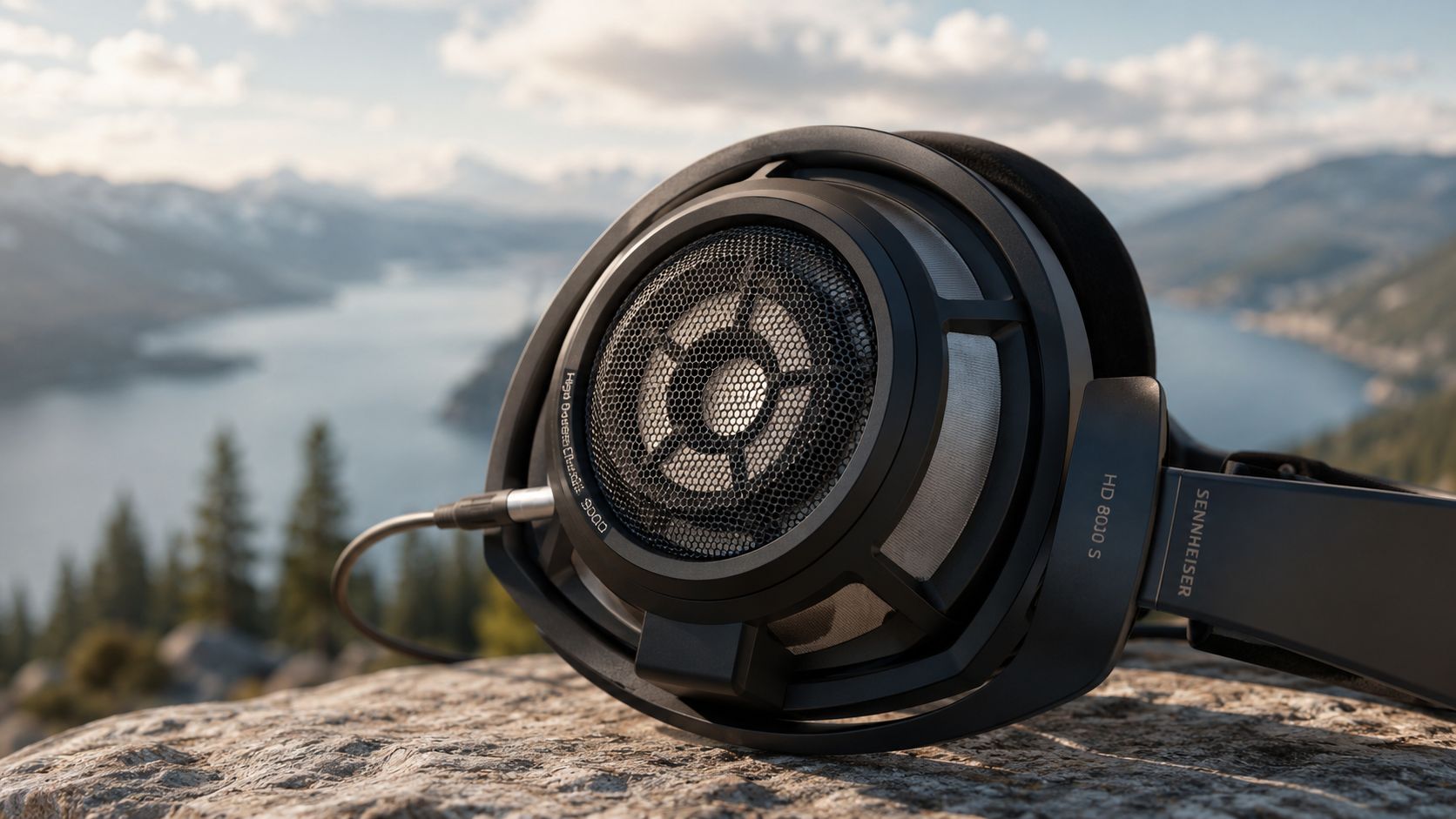
A headphone does not manufacture space. It either lets the recording speak, or it crowds the whole scene back into your skull.
That is the only frame that matters here. Stop asking which model has the "biggest" soundstage. Ask which one adds the least confusion to the spatial cues already baked into the track.
Some headphones push air and distance forward with very little effort. Others pull everything inward, sharpen the center, and make the performance feel closer and smaller. Neither approach is automatically right. The problem starts when a headphone exaggerates width, hollows out the middle, or turns every recording into the same fake panoramic trick.
Open designs usually get out of the way more easily. Closed designs usually trade some sense of openness for focus, density, and isolation. That trade can be good. A tight, believable image beats a stretched one every time.
The better test is simple. Put on a live recording you know well. Then switch to a dense studio mix. If the headphone preserves the venue on the live track and keeps separation intact when the arrangement gets busy, it is doing its job. If both tracks collapse into the same left-right blob, the gear is imposing its own personality too hard.
A good stage is not about sounding huge.
It is about sounding honest.
That is why coherence matters more than spectacle. You want stable placement, a center that stays locked, and room cues that do not vanish when the mix gets crowded. If you want a practical way to train that instinct, use this stereo listening basics guide and listen for consistency across very different recordings.
Good gear interprets. Bad gear editorializes.
Buy the headphone that gets out of the way.
The Stage Is Set by the Recording
So what is soundstage in headphones?
Not a spec. Not a badge of luxury. Not a mystical cloud that only appears once your wallet starts sweating. It's a convincing illusion of width, depth, and height, and the recording lays down most of the blueprint before the headphone ever touches your ears.
Your gear still matters. Of course it does. A bad headphone can starve the signal, flatten the room, and shove everything back inside your head. A good one gives those cues space to breathe. But the headphone is not the stage. It's the lens.
If you want to get better at hearing this stuff, spend less time comparing marketing blurbs and more time doing deliberate listening. My stereo listening basics guide is a good place to sharpen that instinct.
The room is already in the music.
Your job is to hear it.
Author: Marque Hersh
Publisher: Supermarket Sound
Author profile / sameAs: Steam profile for Marque Hersh

