Most advice on entry level audiophile headphones is backwards. People obsess over the headphone, then plug it into a wheezing laptop jack and act surprised when the whole thing sounds like the band got locked in a pantry.
That's the fundamental beginner mistake. Not buying the “wrong” flavor. Not missing some sacred neutral tuning curve. Buying a serious headphone before making sure your source can drive it. Downstream inherits that mistake, and every glowing recommendation you read after that becomes useless.
I'm not above SEO, so yes, I know why you're here. You want names, types, and a clean answer. Here it is. Entry level audiophile headphones are not toys, not fashion, and not a cheap side quest. They're the floor. If you get the floor wrong, the room never stands up straight.
Your First Step Is Not Entry Level
“Entry level” is one of the dumbest labels in audio. It sounds like bargain-bin plastic. In reality, it's the primary purchase point for 41% of U.S. audiophile users investing over $300, and that market is projected to hit USD 6.47 billion by 2035 according to Business Research Insights on the audiophile headphone market. That's not a toy aisle. That's the load-bearing floor for serious listening.
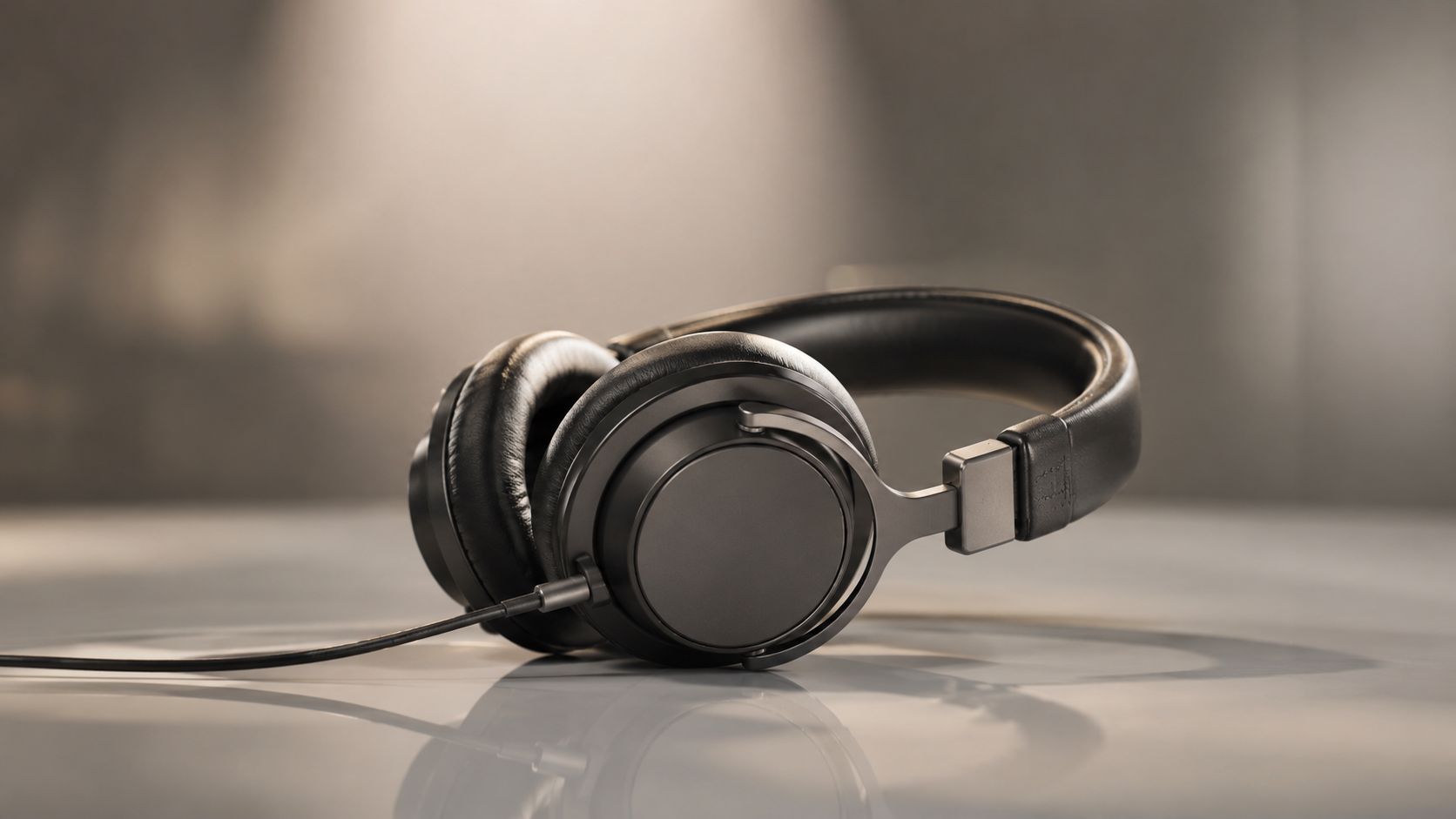
Most “beginner” guides talk down to people. They act like your first decent headphone should be some harmless starter fish you'll outgrow in a month. Wrong. Your first real pair should teach you what you like. Warmth. Bite. Slam. Air. Vocal intimacy. Space. That first right purchase matters more than a spreadsheet of specs.
Cheap Is Not the Goal
If your whole plan is to find the cheapest thing that internet strangers won't mock, you're already off track. Entry level in this corner of audio doesn't mean cheap. It means foundational.
A good first pair should do three things:
- Show you your taste: Not what a forum decided your taste should be.
- Scale with better gear: A proper amp or DAC later should reveal more, not expose a dead end.
- Make you want to listen longer: Not admire a graph and then turn the music off.
Entry level audiophile headphones aren't the bottom rung. They're the first rung that can actually hold your weight.
That's the standard I care about. Not “good for the money.” Good enough to start the habit properly. Good enough to keep you from crawling back to supermarket sound because your first “audiophile” setup was thin, quiet, and joyless.
The First Decision Open Air or a Closed Room
Before brand names start flying around, pick your battlefield. Open-back and closed-back headphones don't just sound different. They live differently.
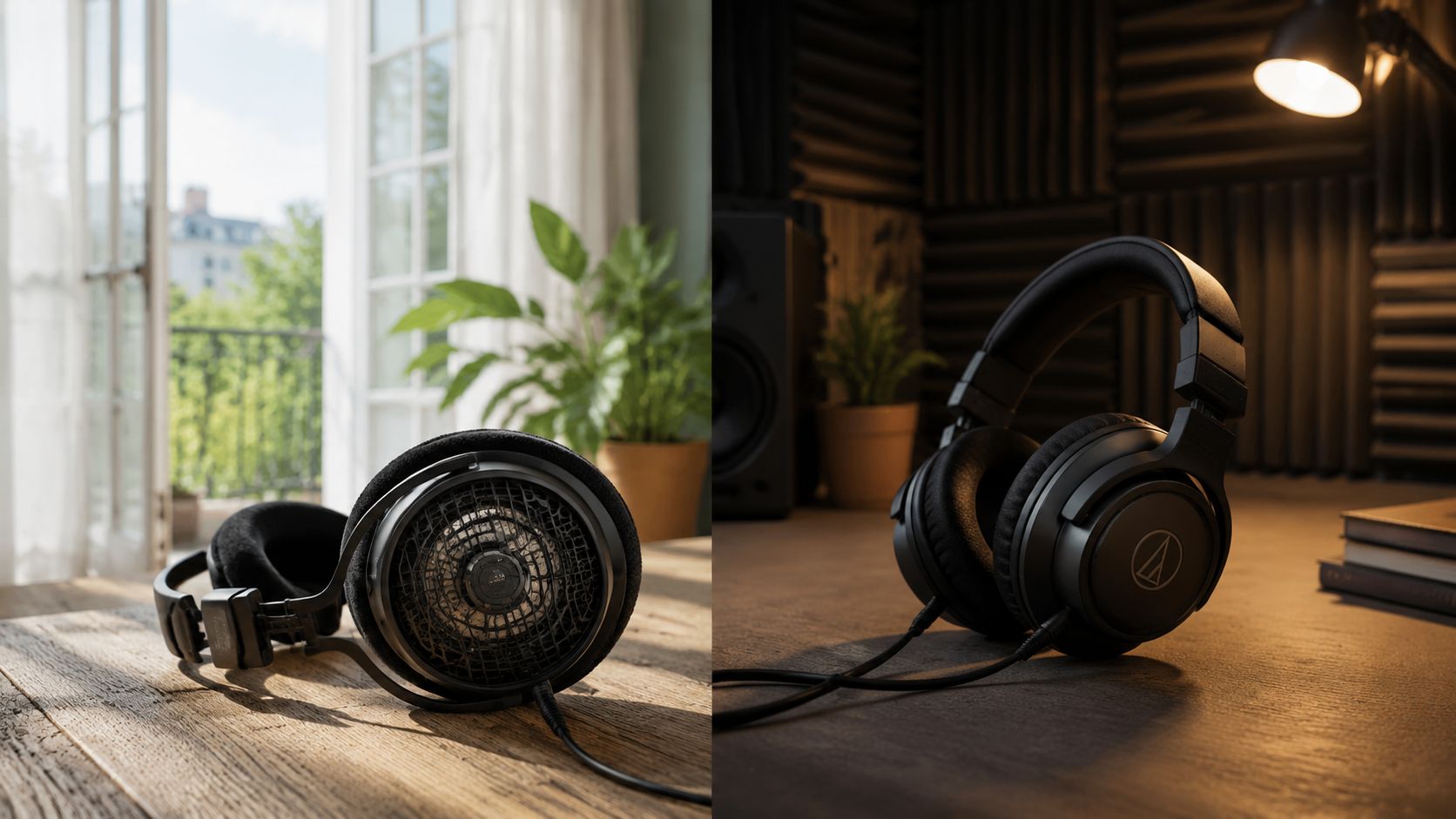
Open-backs are like listening in a hall with the doors cracked wide. Sound breathes. Instruments feel less glued to your skull. Space opens up around vocals, cymbals decay more naturally, and acoustic recordings stop sounding trapped in a lunchbox.
Closed-backs are a treated room with the door shut. More isolation. More punch. More privacy. Usually more bass weight too, or at least more bass pressure. They can feel direct, physical, and focused in a way open-backs often don't.
Open-Back Means Space and Leakage
If you listen at home in a quiet room, open-back is usually the smarter first move. To my ears, they give beginners the clearest “oh, that's what people mean by hi-fi” moment. The stage gets wider, the center image gets less congested, and midrange-heavy music gains breathing room.
They also leak sound. A lot.
That means two things:
- People around you hear your music: Great if you live alone. Annoying if you don't.
- You hear the room: Fans, traffic, keyboard clatter, somebody reheating leftovers nearby. All of it.
If your listening happens at a desk in peace, open-back is usually the better teacher.
Closed-Back Means Control and Containment
Closed-back makes more sense if you need isolation, listen around other people, or want bass with more physical shove. Rock drums hit harder. Electronic music carries more body. You get a sealed-in presentation that can feel addictive with the right tuning.
The tradeoff is simple. You usually give up some openness and natural spread. The image can feel more “inside the head,” less out in front of you. Bad closed-backs sound boxed in. Good ones sound intentional.
Choose for your room first. Your music library comes second. If your environment fights the headphone, you lose before the first track starts.
A lot of readers need a visual rundown before this clicks, so here's one worth watching:
My Rule for First-Time Buyers
I keep this simple.
| Listening situation | Better first pick |
|---|---|
| Quiet room, home desk, late-night album listening | Open-back |
| Shared space, office, commuting, privacy needed | Closed-back |
| You crave air, imaging, and natural presentation | Open-back |
| You crave impact, isolation, and focus | Closed-back |
Don't romanticize versatility. A headphone that suits your actual life beats the “technically better” option every time.
Finding Your Flavor Dynamic, Planar, and the Myth of Neutral
The cult of neutral has wasted more beginner money than bad build quality ever did. People get told their first headphone should be flat, proper, disciplined, “reference.” Then they put on their favorite records and wonder why everything feels emotionally sanded down.
No thanks.
The better question is what kind of sound keeps you listening. Because the obsession with neutral tuning is a trap. 68% of new buyers in 2025 prioritized a “fun” or “musical” sound over technical neutrality, according to this referenced discussion of buyer preferences. Good. They were right.
Dynamic Feels Like Muscle
Dynamic drivers are the old reliable workhorse. Done well, they give music body, punch, and a kind of physical elasticity. Kick drums feel rounded and alive. Bass guitars have wood and string, not just outline. Vocals often land with more chest and flesh.
I reach for dynamics when I want the song to move, not pose.
That doesn't mean dynamic always equals warm or soft. It means the presentation often feels more tactile. More shove. More grip. Less “look how much detail I found under a microscope.”
Planar Feels Like Speed
Planar magnetic headphones tend to sound fast, clean, and controlled. Notes can start and stop with a crisp edge. Complex passages stay separated. Dense electronic production often benefits because the layers don't smear together.
The danger is that beginners read “more detail” and assume “more enjoyment.” Not always. Some planars sound airy and ghostly in a beautiful way. Others sound so disciplined they forget to sweat.
If those terms are still fuzzy, my no-bullshit audiophile glossary will save you a lot of forum archaeology.
A good tuning serves the music. A bad recommendation serves the graph.
Stop Pretending Neutral Is Morally Superior
If you love indie folk, small jazz ensembles, vocal records, and acoustic textures, a neutral-ish tuning can be lovely. If you live on hip-hop, metal, synth-pop, club tracks, or anything that needs color and momentum, strict neutrality can starve the signal.
Here's the shortcut I give friends:
- Want warmth and weight: Look for a fuller low end and relaxed treble.
- Want sparkle and edge: A brighter tuning can wake up dull recordings.
- Want slam and excitement: Mild V-shape is not a sin. It's often the point.
- Want honesty with long-session comfort: Neutral-ish works, if you enjoy it.
Taste matters more than dogma. It always has.
The Hidden Cost Why Your Headphones Sound Quiet
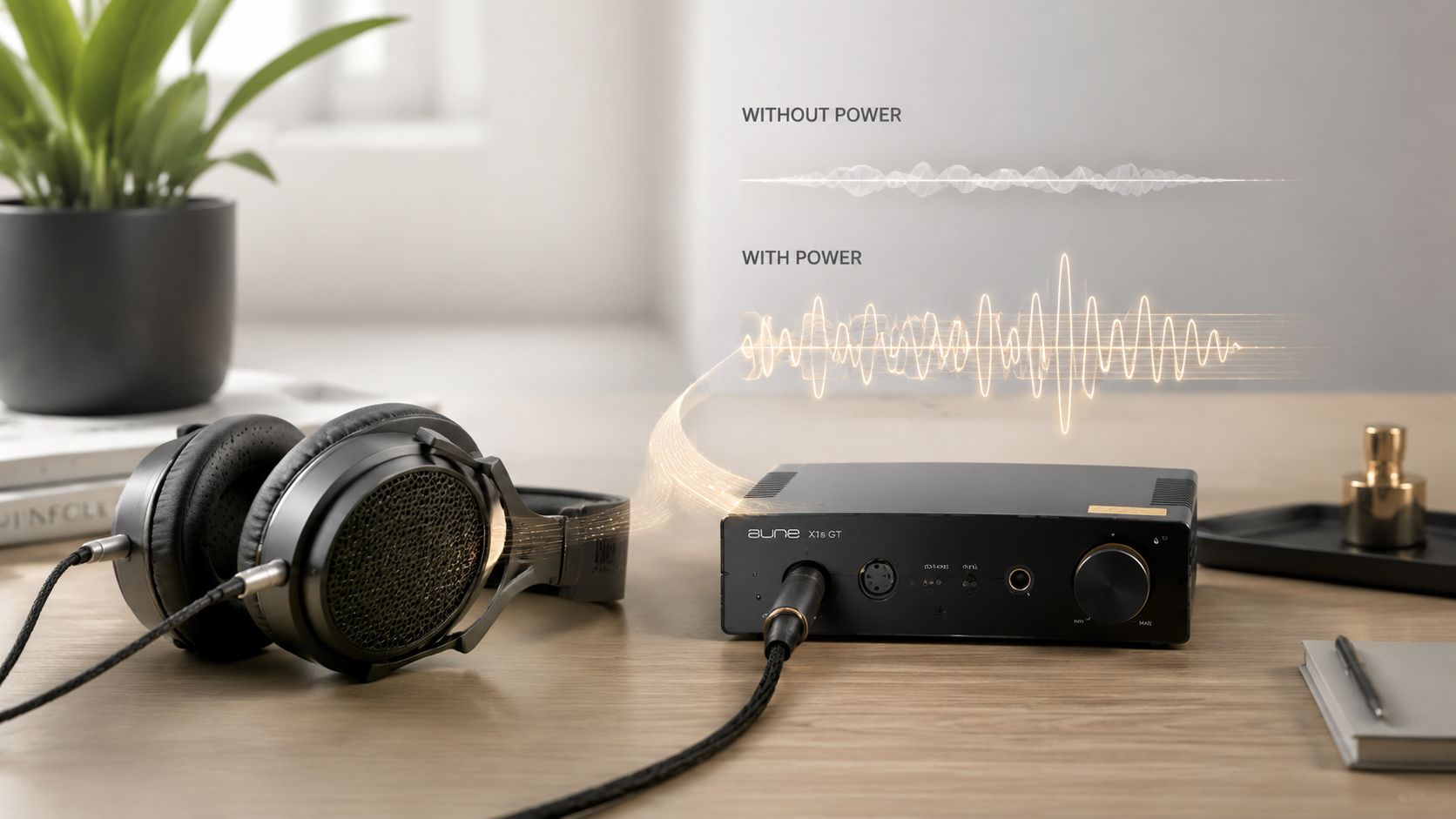
Most entry-level audiophile headphones are frequently dismissed, not due to their inherent quality, but because users connect them to weak sources and attribute the resulting poor sound to the headphones themselves.
Comfort isn't the main problem. Power is. 54% of beginners buy open-back headphones without realizing their source can't drive them, and 41% of beginner forum threads are about “quiet” headphones, according to this source on beginner amplification problems. That tracks exactly with what I keep seeing. Thin bass. Flattened dynamics. Low volume. Then the buyer decides audiophile gear is overrated.
It isn't. Their chain is.
Impedance and Sensitivity Without the Nerd Costume
You don't need an engineering degree here. You need plain English.
Impedance is resistance. Higher resistance usually means the headphone asks more from the source.
Sensitivity is efficiency. A more sensitive headphone gets louder more easily. A less sensitive one needs more push.
That's the whole beginner version. Resistance and efficiency. If you buy a headphone that wants real power and feed it a sleepy laptop jack, the sound won't just be quieter. It can lose authority. Bass gets soft or distorted. Dynamics flatten. The music feels like it's apologizing for existing.
What a DAC and Amp Actually Do
People hear “DAC/amp” and picture a chrome brick for weirdos. It's simpler than that.
- DAC: Converts the digital file into analog audio your headphones can use.
- Amp: Supplies the muscle to drive the headphone properly.
Sometimes those jobs are in one box. Sometimes they're separate. For a beginner, a combo unit is usually enough. The point is not gadget worship. The point is making the headphone perform like the reviewer heard it.
If you want the plain-language version of when amplification matters, read my guide to headphone amps for high-impedance headphones.
Don't diagnose a starving headphone by its volume knob alone. Listen for bass control, vocal body, and whether crescendos actually swell.
A Quick Reality Check Before You Buy
Ask yourself these questions before you hit checkout:
| Question | If the answer is yes |
|---|---|
| Are you using only a phone or basic laptop jack? | Be careful with harder-to-drive open-backs |
| Are you buying for home listening at a desk? | Budget for amplification if needed |
| Do you hate weak bass and low headroom? | Don't gamble on underpowered gear |
| Do you want plug-and-play simplicity? | Choose an easier load or add a small DAC/amp |
This isn't optional. The source is part of the headphone. Ignore that, and your first serious purchase becomes an expensive misunderstanding.
A Short, Opinionated Shopping List
Skip the giant buyer's guide sludge. A first shortlist should do one job: keep you from buying a headphone your current gear turns into a half-asleep version of itself.
So here's the list I'd give a friend.
The Safe Bet That Still Deserves the Hype
The Sennheiser HD6XX is still one of the smartest first serious buys, and it typically sells for around $220 on Drop's HD6XX product page. It earns that reputation because the tuning is mature, not flashy.
This headphone does not fake detail by stabbing you with treble. It gives you mids that sound like flesh and wood instead of cardboard and chrome. Vocals have weight. Guitars have texture. Bass is restrained, but it is shaped well enough that you miss it only if you want slam more than truth.
It also exposes the mistake a lot of beginners make. Run it from weak gear and it sounds sleepy, flat, and oddly smaller than its reputation suggests. Feed it properly and the whole thing locks in. The HD6XX is not hard to love. It is easy to underdrive.
The Better Pick for People Who Want Less Fuss
The HD660S makes more sense if you want some of that familiar midrange-first tuning without as much drama about source gear. It is the easier recommendation for people using modest desktop gear and for listeners who want a little more warmth and body from the start, as noted earlier.
To my ears, it sounds more cooperative than the HD6XX. The low end has more meat, the presentation feels less reserved, and the whole headphone comes across like it wants to get out of bed. If you are treble-sensitive, or just sick of bright headphones pretending to be “resolving,” this is a better call.
The Planar Option, With a Catch
A good entry planar makes sense for one type of listener. Someone who wants speed, separation, and that etched, airy presentation that can make dense mixes feel cleaner.
With electronic, ambient, and layered modern production, that sound can be addictive. Reverb tails hang longer. Hi-hats stay distinct instead of turning into spray. The image feels less crowded.
But often, bad advice emerges. A lot of affordable planars want more current than a basic laptop jack or phone dongle can comfortably give them. If your chain is weak, the result is usually the same story: the bass goes soft, dynamics shrink, and you end up blaming the headphone for a problem you bought upstream.
Buy planar because you like the flavor. Do not buy planar because a forum convinced you “neutral detail” is the adult choice.
The Fun Pick for Used Buyers
If you are shopping used and want excitement instead of manners, the Fostex TR-X00 is still a sharp buy. It often lands around $400 on the used market, based on this forum recommendation for beginner gear.
This is the anti-boring option. Bass hits with intent. Drums crack. The treble has some spark. It sounds like a headphone built by someone who remembers music is supposed to be fun.
It is not a neutral reference. Good. Plenty of “safe” starter headphones are so careful they forget to be alive.
Marque's Starter Pack
| Model | Type | Sound Profile | Best For |
|---|---|---|---|
| Sennheiser HD6XX | Open-back dynamic | Neutral-ish, midrange-focused, intimate | Vocals, acoustic, rock, long listening, buyers with proper amp support |
| Sennheiser HD660S | Open-back dynamic | Warmer, more efficient, balanced | Listeners wanting HD-series tone with less power fuss |
| Affordable open-back planar option | Open-back planar | Fast, airy, detail-forward | Electronic, ambient, layered production, buyers with enough current |
| Fostex TR-X00 | Closed-back dynamic | Refined V-shape, energetic, punchy | Home listeners who want excitement and bass impact |
The right first headphone is the one that fits your taste and your gear at the same time. Ignore either half, and your “entry level audiophile” purchase turns into a very expensive lesson.
How to Listen Not Just Hear
New headphones are often evaluated like they're speed-dating. Thirty seconds of one track. Swap. Another thirty. Swap again. That method is great if your goal is confusion.
Live with a headphone for a few days. Listen to full albums. Let your ears stop hunting for novelty and start noticing comfort, fatigue, tone, and whether the gear makes you forget the gear exists.
Stop Sniping at Test Tracks
Test tracks have their place, but they can turn your brain into a hall monitor. You start waiting for the cymbal hit, the bass drop, the vocal breath. That's hearing, not listening.
Use music you know well. Records where you already understand the emotional center. Then ask better questions:
- Do vocals sound like people or cutouts
- Does bass feel shaped or just loud
- Do you want one more song, then another
- Are you relaxed, or are you auditing the treble
That last one matters more than people admit.
A headphone earns its place when you stop checking it and start following the music.
Brain Burn-In Is Real Enough
I don't mean magical driver mythology. I mean your perception adjusts. A brighter headphone can sound shocking for an hour and perfectly normal after a week. A warmer one can sound thick at first, then natural once your ears stop expecting cheap consumer tuning.
So don't judge too fast. If a headphone is clearly wrong for you, you'll know. But if it's merely unfamiliar, give it time.
Feed It Better Music
You don't need to become a file-format monk. Just don't use garbage recordings as your sole reference. Well-mastered music tells you far more about a headphone than a crushed stream from some random upload.
Pick a few albums with different production styles. One sparse. One dense. One bass-heavy. One vocal-centric. That spread teaches you more than a hundred forum comments.
Your ears learn by repetition. That's the hobby.
Where the Path Leads Next
Your first pair should not be your last word on sound. It should be your first clear sentence.
Once you know your taste, the upgrade path gets obvious. If the headphone already suits you, improve the source. Better power, cleaner conversion, less strain. If the source is sorted, then add contrast. Keep one pair for intimacy and another for scale. One for long nights. One for impact.
The used market is your friend here. It lets you try smarter gear choices without paying the full retail tax for every curiosity. That matters, because audio is one of those hobbies where experience beats theorizing every time.
If you want to move beyond a desk-bound setup later, a good beginner's guide to portable music players and DAPs is the next sensible stop. Not because everyone needs one, but because some headphones wake up when the source stops being an afterthought.
And yes, a lot of people eventually own more than one pair. That doesn't mean your first buy failed. It means your ears finally started asking better questions.
Buy the first right one. Power it properly. Learn your taste.
Then the fun starts.
Author: Marque Hersh
Publisher: Supermarket Sound
Author profile: Marque Hersh on Steam

